
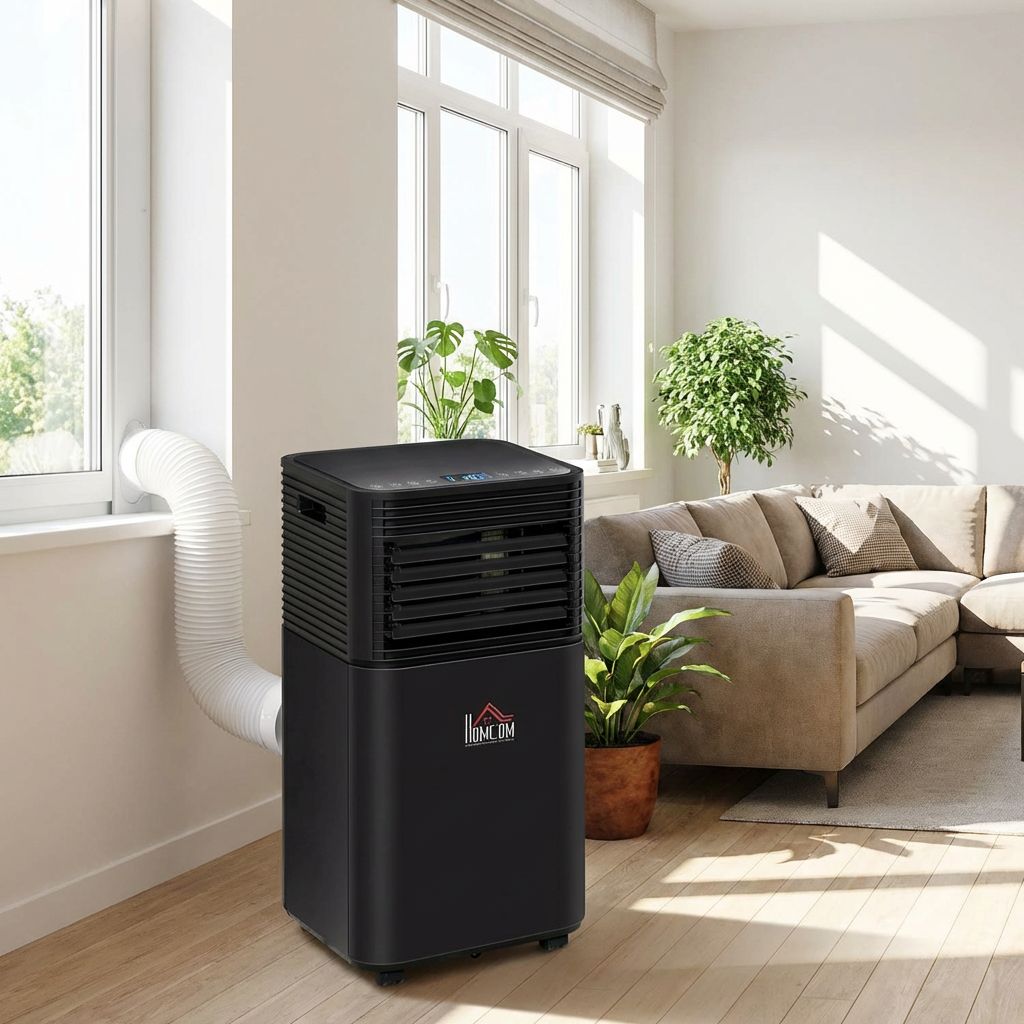
The question “are Homcom air conditioners any good” usually sits somewhere between curiosity and caution. It is less about a single unit and more about what the HOMCOM name tends to signal in day-to-day ownership: what kind of build choices are typical, what setup tends to involve, and what expectations are realistic for comfort, noise, and upkeep.
There is also a common mismatch in what people mean by “good”. Sometimes it means “will it noticeably cool a room”; sometimes it means “will it be tolerable at night”; sometimes it means “will it be straightforward to live with”. Those are different tests.
Quick Orientation For What This Query Really Means
-
What it is: HOMCOM is a consumer brand that appears largely through online retail, often positioned around practical, space-conscious home equipment and furniture-adjacent categories.
-
How people typically encounter it: through marketplace listings, brand storefronts, and third-party retailers, often with heavy reliance on star ratings and short-form reviews.
-
Safe assumptions: “Good” is usually about fit to context (room size, heat load, ventilation route, tolerance for sound) more than brand name alone.
-
Misleading assumptions: treating any “portable” unit as plug-and-play in every room, or assuming rated capacity guarantees comfort without considering installation constraints.
What “Good” Means For Air Conditioning In Real Homes
Air conditioning performance is not just a property of the machine; it is a property of the room-plus-installation system. Two homes can use the same capacity and report very different outcomes because heat gains differ. Large sun-facing glazing, poor insulation, internal heat sources, and open-plan layouts can dominate the experience.
In UK housing especially, “portable” often implies compromises: a flexible placement, but also a need to route warm exhaust air out of the room. If that pathway leaks, the room is effectively being cooled and reheated at the same time. Guidance from the UK government on improving home energy efficiency highlights how draughts and uncontrolled air movement affect comfort and energy use, which is directly relevant to how any room-cooling setup behaves in practice: https://www.gov.uk/improve-energy-efficiency
How Portable Cooling Units Tend To Behave
When people ask “are Homcom air conditioners any good”, they are often picturing a single outcome: a rapid, dramatic temperature drop. Portable units can deliver perceptible cooling, but the feel is shaped by airflow pattern, humidity, and how well the exhaust is managed. Comfort is not only air temperature; air movement and moisture load change the perceived result.
Humidity is an under-discussed part of the story. In a muggy spell, even modest dehumidification can make a room feel easier to occupy. The UK Met Office notes how humidity interacts with perceived heat and discomfort during warm conditions: https://www.metoffice.gov.uk/weather/learn-about/weather/types-of-weather/temperature/humidity
Brand-Level Signals That Usually Matter More Than Hype
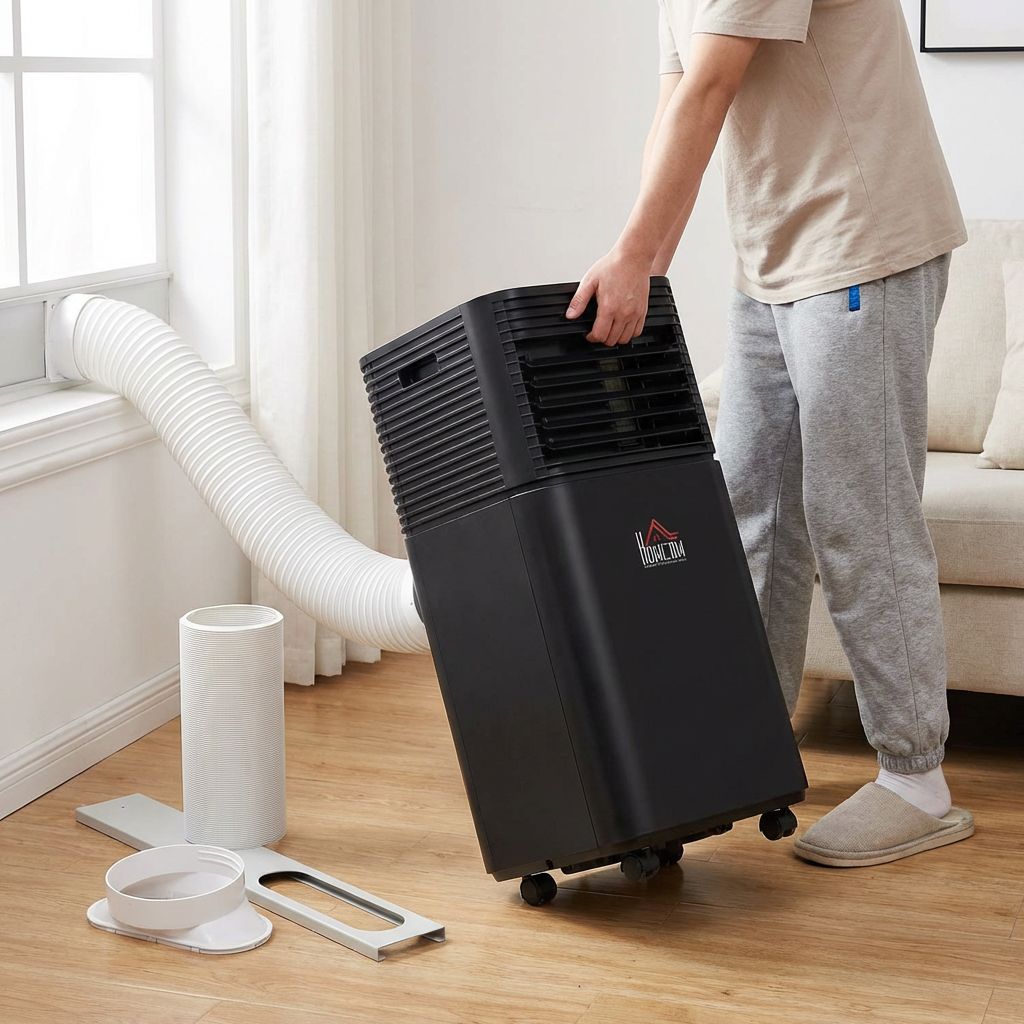
At brand level, “good” is often a bundle of small, unglamorous details: parts fit, clarity of documentation, consistency of controls, and how predictable the unit is over weeks of use. With portable air conditioning, the ergonomics of ownership can matter as much as raw cooling: moving the unit, keeping filters clear, managing condensate behaviour, and living with noise character rather than just headline decibel numbers.
One listing that frequently comes up in searches is the HOMCOM Portable Air Conditioner 5000 BTU, but the more useful approach is to treat any such listing as a prompt to check fundamentals—capacity claims, exhaust routing, and room conditions—before translating “good” into expectations.
What “Any Good” Usually Means For HOMCOM Air Conditioners
When people ask “are homcom air conditioners any good”, the question is rarely about a single headline claim. It tends to bundle several expectations into one: acceptable cooling in the stated space, tolerable noise, predictable controls, and no surprises around installation. With portable units in particular, perceived quality is heavily shaped by the gap between an idealised setup and the reality of a typical room.
One useful way to keep the question grounded is to separate capacity from comfort. A unit can move a lot of heat, yet still feel disappointing if the room layout, air leakage, or humidity load is working against it. Conversely, a modest unit can feel “good” in a well-prepared space because the whole system (room + sealing + airflow path) is doing less fighting.
Room Conditions That Change The Outcome
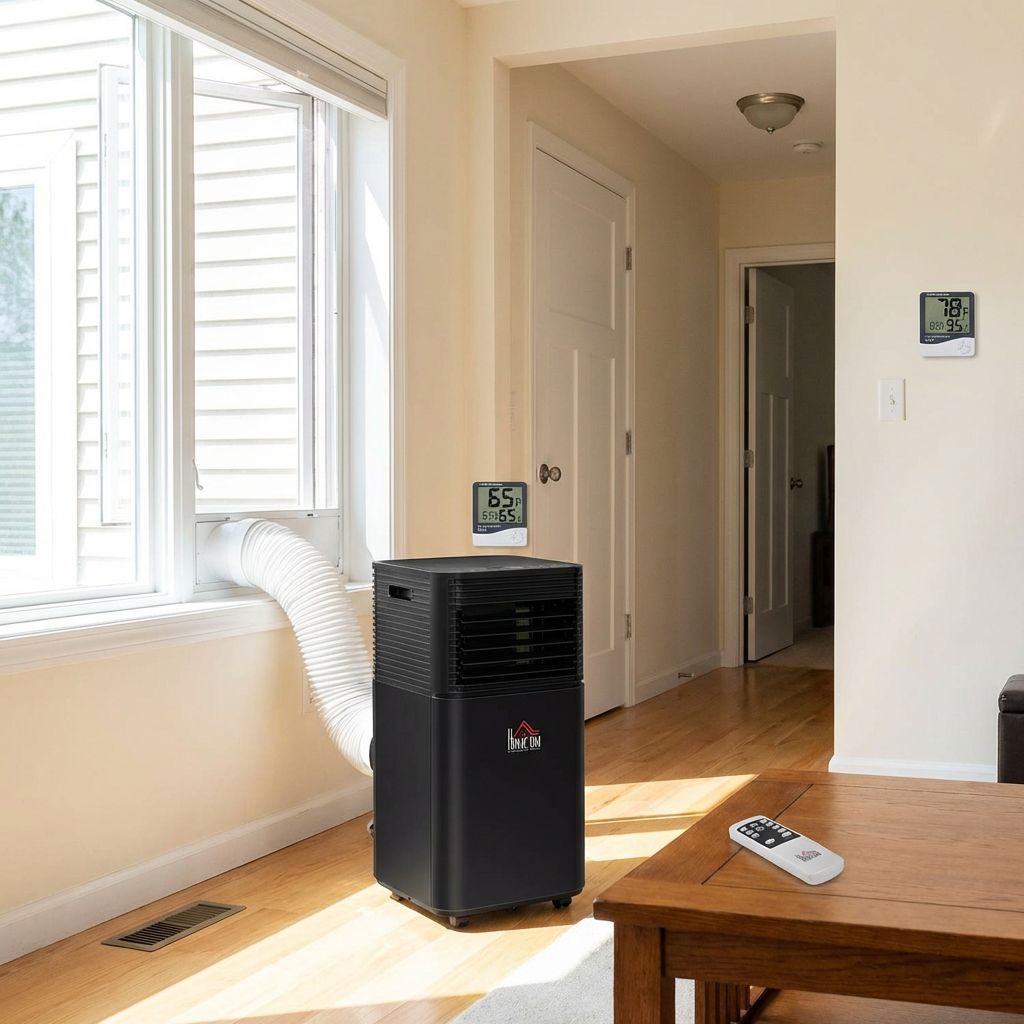
Portable cooling is unusually sensitive to the room as a “container”. Sun exposure, insulation quality, and how often doors open matter more than many expect, because they set the rate at which heat is reintroduced.
In practical terms, the same unit may feel very different across these contexts:
- High solar gain (large south-facing glazing): temperature may stabilise rather than drop quickly, even though the unit is operating normally.
- Leaky openings around window kits or gaps under doors: cooled air is lost and warm air is drawn in, reducing the net effect.
- High humidity: comfort may improve even with small temperature change, because dehumidification affects how warm the air feels.
- Open-plan layouts: cooling disperses into connected areas, so the “effective room size” becomes larger than the nominal floor area.
This is where “are homcom air conditioners any good” becomes a question about matching expectations to the physics of the space, not just the brand name.
Noise, Air Movement, And Perceived Quality
Noise perception is not only about decibels. Tonality (a low hum versus higher-frequency fan noise), vibration transfer into flooring, and whether the airflow is directed or diffuse all influence whether the unit feels intrusive. Bedrooms tend to be less forgiving than living rooms, especially at night when background noise drops.
Air movement also changes comfort. A stronger, more focused stream can feel immediately effective near the unit, yet leave corners stagnant. A more diffuse stream can make the room feel more even, but less dramatic. Neither is universally “better”; they simply create different comfort patterns.
Setup Quality Often Dominates Brand Perception
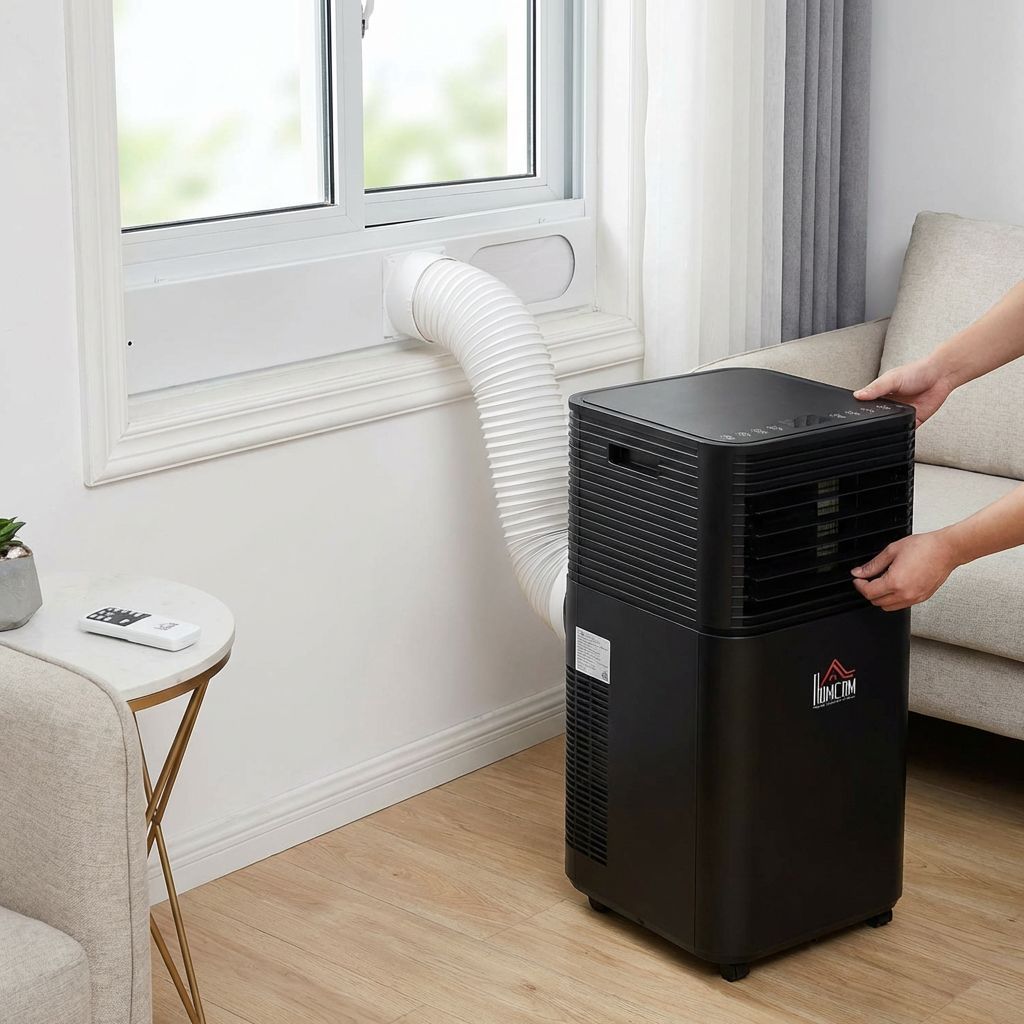
Searches like “how to set up homcom air conditioner” are common because installation details are where many “good vs not good” judgements are formed. Portable units depend on a credible exhaust path; if hot exhaust air recirculates indoors, the system is working against itself.
Two recurring setup realities shape outcomes:
- Exhaust integrity: a short, straight run and a well-sealed window interface typically matters more than small differences in control features.
- Placement: crowding the rear intake or pushing the unit into a tight corner can reduce airflow, increasing noise and reducing cooling efficiency.
For a neutral baseline on how air conditioners are tested and what performance terms mean, the UK’s Office for Product Safety and Standards provides broader product and standards context at https://www.gov.uk/government/organisations/office-for-product-safety-and-standards, while the U.S. Department of Energy explains cooling and efficiency concepts in plain technical language at https://www.energy.gov/energysaver/air-conditioning.
Reliability Signals Without Turning It Into A Product Review
Because “are homcom air conditioners any good” is often asked in the shadow of user ratings, it helps to treat reviews as symptom reports, not lab measurements. Patterns matter more than individual stories: repeated mentions of difficult sealing or unexpected noise usually point to installation constraints, whereas repeated mentions of early shutdowns or error states may point to maintenance, drainage handling, or environmental limits.
Only one contextual illustration is needed: a listing such as the HOMCOM Portable Air Conditioner exists within the broader portable-unit reality where room sealing, exhaust routing, and humidity load can dominate day-to-day satisfaction.
Are HOMCOM Air Conditioners Any Good: What That Question Usually Misses
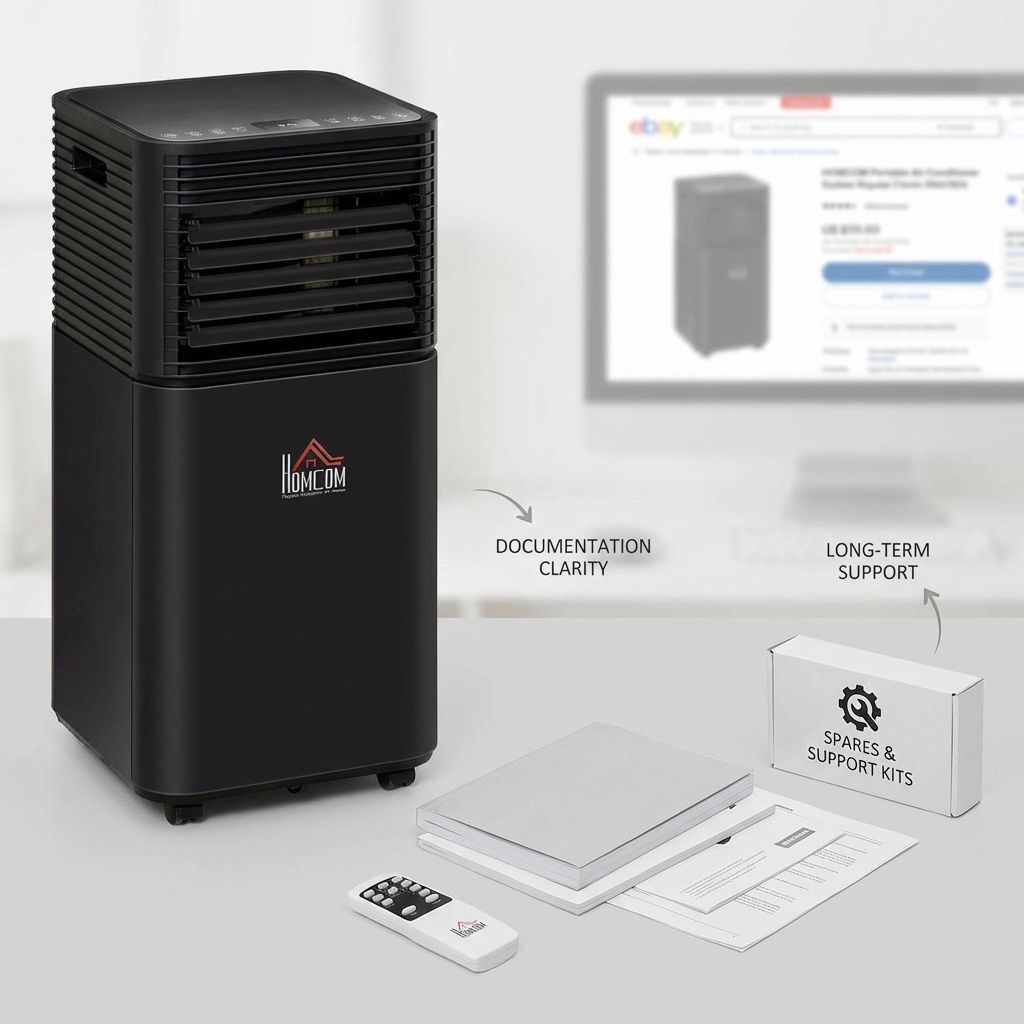
When people ask are homcom air conditioners any good, the hidden assumption is often that “good” is a single trait. In practice it is a bundle: basic performance under typical conditions, consistency between batches, clarity of documentation, and the likelihood that support and spares exist when something goes wrong. A brand-level question is also shaped by where the brand is encountered—marketplaces, third-party sellers, and reposted listings can blur what is official, what is current, and what is simply re-used content.
A useful way to keep the question grounded is to separate claims from verification. Claims are what a listing or manual states; verification is what can be checked independently (for example, whether safety and environmental compliance information is presented in a way that matches UK expectations). For portable cooling products in the UK, consumer-facing guidance from the Office for Product Safety and Standards helps frame what “reasonable assurance” looks like in practice, especially around product safety responsibilities and how to act if a product seems unsafe: https://www.gov.uk/guidance/product-safety-advice-for-consumers
How To Read Brand Signals Without Turning It Into A Review
Brand reputation online is frequently built from fragments: star ratings, short comments, and repeated talking points. None of these are useless, but they are easy to overweight. For a query like are homcom air conditioners any good, the goal is not to crown a winner; it is to avoid false confidence from thin evidence.
Signals that tend to be more informative than general praise or frustration include:
- Whether the description and manual are consistent about basic constraints (room size assumptions, operating limits, and what accessories are included), because inconsistencies often indicate copied or outdated text.
- Whether safety and compliance information is presented clearly and non-defensively (not buried, not vague), which matters more than any single “feature” claim.
- Whether reports of problems describe repeatable scenarios rather than one-off events; patterns are more meaningful than isolated complaints.
For anyone trying to interpret what “good” should mean in a UK context, it is also worth anchoring expectations to how cooling is typically discussed by public bodies. The UK Health Security Agency’s hot weather guidance focuses on practical risk reduction and realistic limits of cooling strategies rather than miracle outcomes, which is a helpful mindset when reading brand claims: https://www.gov.uk/government/publications/beat-the-heat-coping-with-heat-and-covid-19
Where Expectations Commonly Drift Out Of Range
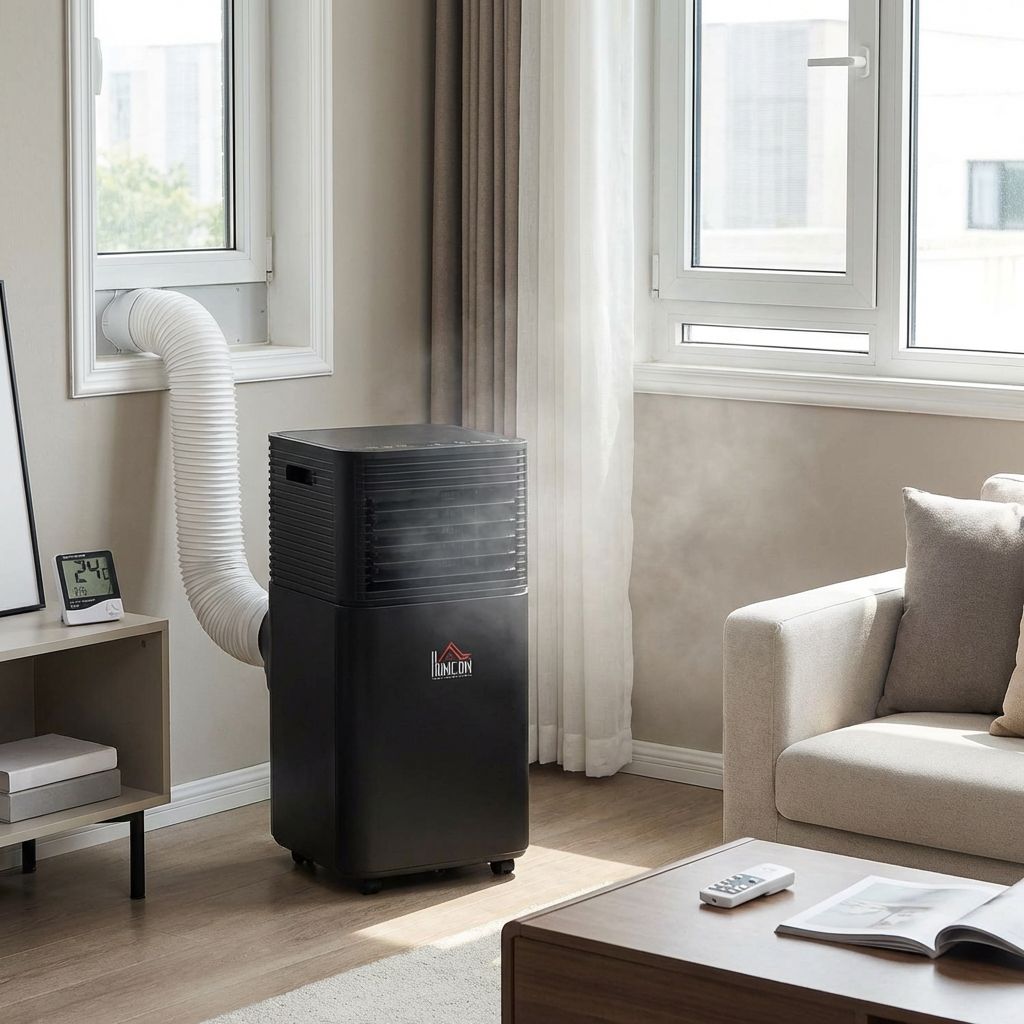
Portable cooling is an area where expectations drift because numbers look authoritative. A brand name can absorb that confusion: the result is that are homcom air conditioners any good becomes shorthand for “will it feel like a built-in system?” That is not a brand question; it is a constraints question shaped by room heat gain, ventilation, and how well the exhaust path is managed.
Practical limitations that are often misattributed to “quality” include:
- Noise perception: the same sound level can feel very different depending on room acoustics and time of day, so subjective reports are hard to generalise.
- Dehumidification expectations: moisture removal can improve comfort, but it does not automatically translate to a “cold” feeling in every setting.
- Heat rejection realities: if warm air is not effectively removed from the space, cooling performance will appear inconsistent even when the unit is functioning normally.
At this level, “good” becomes “aligned with the physics of the space.” That alignment is not readable from branding alone, and it is why brand-level certainty should stay cautious.
FAQ: Clearing Up Confusion Around The HOMCOM Brand Query
Why Does “Are Homcom Air Conditioners Any Good” Bring Up So Many Different Results?
Because the query is brand-led, search results often mix official brand content, marketplace listings, and third-party pages that reuse similar titles. That can make older information look current, even when it is not.
How Can Official Information Be Distinguished From Reposted Content?
Look for consistent manufacturer identity details, clear UK-facing safety information, and documentation that matches the product’s current naming and specifications. Reposted content often shows mismatched details or generic text that does not line up across sections.
Do Star Ratings Answer Whether A Brand Is “Good”?
They can highlight broad satisfaction, but they rarely explain context, installation constraints, or environmental conditions. The most useful reviews are the ones that describe a stable scenario and specific outcomes, not just approval or disappointment.
Is It Normal To See Different Specifications For What Looks Like The Same Item?
Yes, and it may reflect listing errors, regional variants, or older text being reused. When specs conflict, treat the listing as unreliable until the documentation and compliance details are consistent.