HOMCOM Kids Truck Engine Toy Set
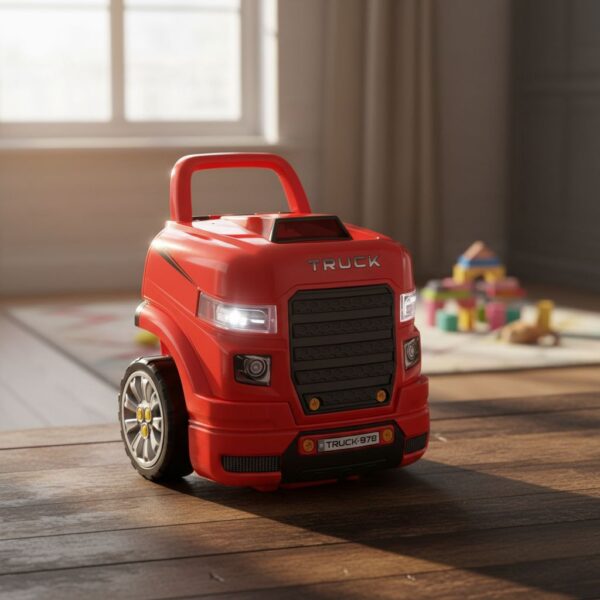
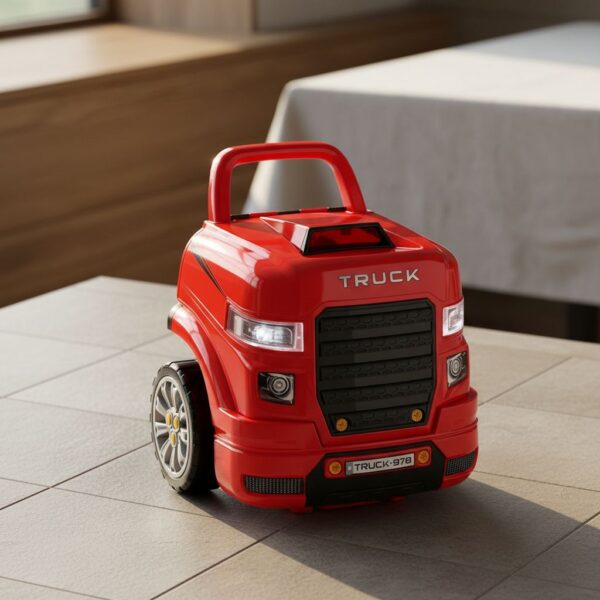
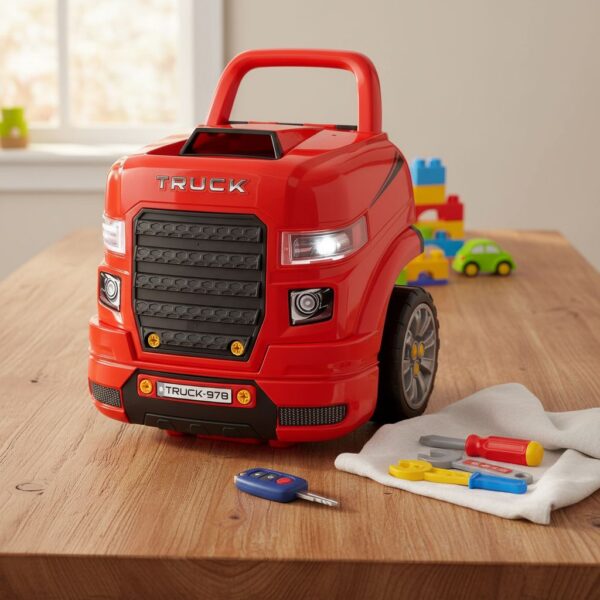
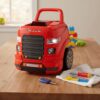
HOMCOM Kids Truck Engine Toy Set is a hands-on vehicle-themed play station designed to bring “garage” play into a child-friendly, manageable setup. It combines familiar driving cues—like a steering wheel and horn—with simple workshop-style interaction, which helps children practise coordinated hand movements and basic cause-and-effect in a way that feels like real-world role play.
Key characteristics of HOMCOM Kids Truck Engine Toy Set
- Vehicle-themed service station playset with steering wheel interaction
- Includes horn and light features for cause-and-effect play
- Take-apart workshop style supports hands-on, tool-like handling
- RC car key element adds simple pretend-driving routine
- Designed for ages 3–5 in a bold red colourway
Overview of HOMCOM Kids Truck Engine Toy Set
As a Kids Truck Engine Toy Set, the core value is structured pretend play: a child can “arrive,” “drive,” “check the vehicle,” and “fix” it within one compact station. This kind of loop matters because toddlers and preschoolers learn best through repetition—doing the same sequence again and again, with small variations. The set’s layout encourages that pattern without requiring a large room or multiple separate toys.
From a home-ergonomics perspective, a play station works best when it supports short, frequent sessions rather than one long sitting. The steering wheel and interactive features create natural start-and-stop moments, which helps prevent frustration and keeps play purposeful. In practice, the child can switch between “driver” and “mechanic” roles, reducing monotony and encouraging imaginative language.
The HOMCOM Truck Engine Toy Set also fits well into shared spaces because it has one main activity hub. That can be useful in living rooms or playrooms where adults want to keep toys contained and easy to tidy, while still offering enough variety to hold attention.
Benefits of HOMCOM Set
The HOMCOM Set supports early skill-building through play that looks and feels like everyday experiences. Steering, pressing controls, and handling take-apart pieces ask for controlled force and directional movement—important building blocks for developing fine motor precision. Because the play is vehicle-based, it often prompts children to narrate what they are doing (“turn,” “stop,” “fix”), which naturally reinforces communication during independent or shared play.
For ages 3–5, comfort and usability are closely tied to how quickly a child gets feedback. Features like a horn or light provide immediate response to an action, helping children understand that their input matters. That quick feedback loop can make play more satisfying, especially for children who lose interest when tasks feel too abstract.
Another practical benefit is role flexibility. A single station can be used by one child focusing deeply, or by two children taking turns—one “drives” while the other “services.” In a home setting, turn-taking is a real-life social skill, and a focused play object like this workshop-style station makes those turns clearer and easier to manage.
Finally, the theme can be a helpful bridge into tidying routines. When play has a “workshop” concept, it is easier to frame pack-away as “putting tools back,” which often reduces resistance compared with general clean-up instructions.
Structure and interaction of HOMCOM Set
As a furniture and ergonomics specialist, the focus here is on structure and user interaction rather than materials chemistry. The value of this Set comes from its “activity zoning”: different functions are grouped so a child can predict where actions happen. Predictable zones reduce cognitive load—children do not have to search for what to do next—and that typically leads to longer, calmer play sessions.
The take-apart workshop element is especially relevant to practical learning. When children separate and re-attach parts, they practise alignment, sequencing, and controlled pressure. Those are the same foundational movement patterns later used for everyday tasks such as fastening, turning knobs, or manipulating simple tools under supervision. The key is that the actions are self-contained and repeatable, so the child can refine technique over time.
Ergonomically, the steering wheel is more than a theme piece: it encourages bilateral coordination (stabilising with one hand while turning with the other) and helps children experiment with left-right movement in a playful context. The horn and light functions add multi-sensory cues that keep attention anchored to the task, which can be useful for children who benefit from clear feedback.
Because the product is a set-format station, it can also support “micro-play” throughout the day. Short sessions—five minutes here and there—are often more realistic in family routines than long blocks of time. A dedicated play hub makes it easier for children to return to the same activity without needing a full re-set each time.
How to use this Set
Place the station on a stable, level surface with enough space around it for turning and stepping back. For comfortable play, the goal is to let the child stand or sit without hunching forward for long periods; occasional posture changes are normal and healthy at this age.
Introduce the play in simple sequences. A good starting routine is “drive” first (steering wheel and key), then “check” (look at the engine area), then “fix” (use the take-apart elements), and finally “finish” (horn or light as a signal the job is done). These mini-scripts help children organise play, and they also make it easier for adults to join in briefly without taking over.
For shared play, set clear roles to reduce conflict: one child manages the steering wheel while the other handles the workshop portion, then swap after a short interval. Keeping turns short tends to work better for 3–5-year-olds than waiting until a “game” feels complete.
To keep the station tidy and ready for next time, encourage a quick reset at the end of each session—returning parts to their place before moving on. Consistent reset habits protect play value because missing pieces are a common reason interactive sets stop getting used.
Technical specifications of HOMCOM Kids Truck Engine Toy Set
| Feature |
Details |
| Brand |
HOMCOM |
| Format |
Set |
While detailed dimensions and materials are not provided in the available product data, the set’s listed interactive elements—RC car key, steering wheel, horn, and light—indicate a multi-activity station designed around simple, direct controls. For everyday use at home, the most important practical point is ensuring the play area remains stable and uncluttered, so the child can move between “driving” and “servicing” without bumping into surrounding furniture.
Frequently asked questions about HOMCOM Kids Truck Engine Toy Set
HOMCOM Kids Truck Engine Toy Set is a hands-on vehicle-themed playset designed to support early learning through pretend play. It combines a take-apart workshop concept with interactive controls such as a steering wheel, horn, and light, helping children practice coordination, sequencing, and simple cause-and-effect. For best day-to-day use, it helps to set the play area on a stable, level surface and keep the smaller parts together between sessions, so the set stays complete and play remains frustration-free.
How do you set up and use HOMCOM Kids Truck Engine Toy Set for the first time?
Place the set on a flat, stable floor area where a child can stand or sit comfortably without overreaching. Before play, check that the interactive parts (steering wheel, horn, and light) respond as expected, then introduce the activities in simple steps: steering and “driving” first, then the take-apart elements. Keeping the first session short helps a child learn the layout. This set works best when an adult demonstrates one action at a time and then lets the child repeat it independently.
Is the Kids Truck Engine Toy Set easy to assemble, and what should be checked after assembly?
Assembly is typically straightforward for an adult, but it is worth allowing time to sort parts and follow the intended sequence so pieces align correctly. After assembly, confirm that the structure sits evenly without wobble, and that moving elements rotate or press smoothly without sticking. A practical safety step is to verify that any small parts used for the take-apart play are accounted for before and after each session. This helps keep the play area tidy and reduces the chance of parts being misplaced.
What play skills does the HOMCOM Set support for ages 3–5?
For children aged 3–5, the HOMCOM Set supports fine-motor control through grasping, turning, and positioning parts during workshop-style play. It also encourages bilateral coordination (using both hands together), which is important for everyday tasks. The steering wheel and other controls can help with upper-limb coordination and basic spatial awareness, especially when a child practices “parking” or “turning” in pretend scenarios. To keep play ergonomic, aim for a posture where elbows can bend comfortably rather than reaching up or leaning heavily forward.
How can the HOMCOM Truck Engine Toy Set be used without becoming noisy or overstimulating?
Interactive features like a horn and light can be engaging, but some households prefer quieter play. A helpful approach is to set simple “sound rules,” such as using the horn only during specific pretend moments (for example, “arriving at the garage”). Short, structured play sessions can reduce overstimulation while still keeping the set enjoyable. It also helps to pair the set with calm role-play prompts—like “check the engine” or “turn the wheel slowly”—so the child focuses on the repair-and-drive storyline rather than repeated button pressing.
How durable is Kids Truck Engine Toy Set HOMCOM in everyday use?
Durability in a play workshop depends largely on how the set is used: repeated forceful twisting, stepping on parts, or dragging the set across rough surfaces will increase wear. For everyday longevity, encourage using the take-apart functions as intended and storing loose components together after play. Placing the set on a mat can improve stability and reduce sliding, which also lowers stress on joints and connection points. A quick periodic check for loosened connections helps keep the play experience smooth and consistent over time.
Does the set include an RC car key, and how should it be introduced safely?
The product naming indicates an RC car key feature as part of the overall play concept. For safe, frustration-free use with ages 3–5, introduce the key as a role-play tool first—“start the car,” “lock/unlock,” or “service mode”—before expecting more complex sequences. Keep the key with the set between sessions to avoid misplacement, and establish a routine of returning it to the same spot after play. Supervision is important whenever a child is handling smaller accessories, especially during tidy-up.
How should the HOMCOM Set be cleaned and stored to keep it in good condition?
For routine cleaning, use a soft, slightly damp cloth to wipe high-touch areas such as the steering wheel and work surfaces, then dry them to prevent residue buildup. Avoid harsh cleaners that can dull plastic surfaces or affect printed details. Storage matters for longevity: keep the set in a dry indoor space, away from direct heat sources, and collect smaller parts in a dedicated container or bag. If the play area is shared, a consistent storage routine reduces missing parts and keeps the set ready for regular use.
User experience with HOMCOM Kids Truck Engine Toy Set
Across repeated parent discussions and recurring feedback on kids’ role-play and “take-apart” vehicle toys, HOMCOM Kids Truck Engine Toy Set is generally perceived as a high-engagement play option for preschoolers who like pretending to fix, drive, and explore how things work. The overall sentiment tends to be positive when expectations match what this type of activity set is best at: imaginative play, basic cause-and-effect learning, and hands-on interaction rather than realistic mechanics. Many comments emphasize that the set keeps children busy because it combines several play cues in one place (workshop-style actions, vehicle sounds, and driving-style controls), which helps reduce boredom and encourages repeat play sessions.
A common theme is that the Kids Truck Engine Toy Set lands well as a shared activity: adults or older siblings often help the first few times, then children get more independent once they learn where pieces go and what each control does. In that sense, the set is frequently described as a “learning-through-play” toy, where the fun comes from manipulating parts, pressing buttons, and rehearsing familiar real-world routines like starting a car, steering, and “repairing” a vehicle.
Main strengths reported for HOMCOM Kids Truck Engine Toy Set
- High replay value for preschoolers who enjoy role-play, especially “car service station” scenarios and pretend problem-solving.
- Multiple interaction points in one set (controls and parts) that help keep attention longer than single-function toys.
- Often seen as a good bridge between pretend play and early mechanical curiosity, encouraging children to talk through steps and sequences.
Strengths commonly associated with HOMCOM Kids Truck Engine Toy Set
- Engagement through variety: The steering-style elements, sound cues, and workshop actions create quick “mini goals” (press, turn, fit, remove) that suit short preschool attention spans.
- Supports routine-based pretend play: Many families mention that children naturally imitate adult behaviors—starting a car, honking, turning the wheel, or “checking” parts—making it easy to invent stories without needing extra prompts.
- Good for cooperative play: The set is frequently used in parallel play (two kids doing different actions) or cooperative play (one “drives” while another “repairs”), which can reduce conflicts compared with toys that only allow one main role.
Usage nuances to consider
- Adult setup and early guidance may be needed: Several discussions note that children in the lower end of the age range often benefit from an initial walkthrough—where parts belong, how to “complete” a pretend repair, and how to avoid misplacing small components.
- Best results depend on play style: Kids who prefer open-ended role-play and button-and-control interaction tend to stay interested longer than children who expect realistic building complexity or highly technical assembly.
Who tends to benefit most from HOMCOM Kids Truck Engine Toy Set?
This HOMCOM Set most often suits children around preschool age who are drawn to vehicles, pretend driving, and “helper” roles. It tends to work especially well in homes where playtime includes everyday imitation—copying what adults do with cars, tools, and routines—because the toy provides clear cues for that kind of storytelling. The product also fits families looking for a play station that can occupy a child independently after a short learning phase, while still offering opportunities for adult-child interaction (naming parts, practicing sequences, and taking turns).
For households with limited floor space, the set is typically discussed as a “single-zone” activity: a dedicated spot where kids can return to the same theme without needing to spread multiple toys across the room. It can also be a helpful option for children who benefit from structured pretend play—there are defined actions to repeat—while still leaving room for imagination (mechanic shop, road trip, rescue mission, and similar scenarios).
In terms of developmental fit, recurring feedback suggests the Kids Truck Engine Toy Set is most appreciated when used to reinforce basic skills such as following simple steps, naming functions (turn, press, fit, remove), and practicing patience while assembling and disassembling. Some parents also mention that it can encourage more verbal play, with children narrating what they are doing—an added benefit for families who like toys that spark conversation.
Recurring theme in parent feedback: the set is most enjoyed when treated as a pretend-play station that invites repeat “repair and drive” stories, rather than a realistic mechanical model.