HOMCOM Freestanding Kitchen Cupboard
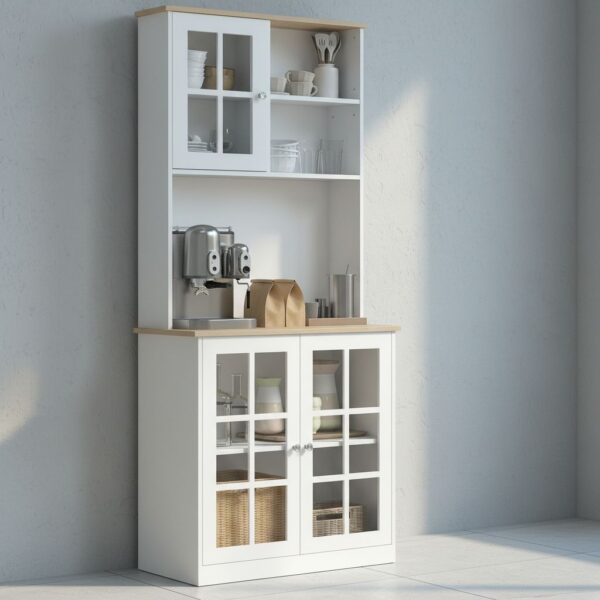
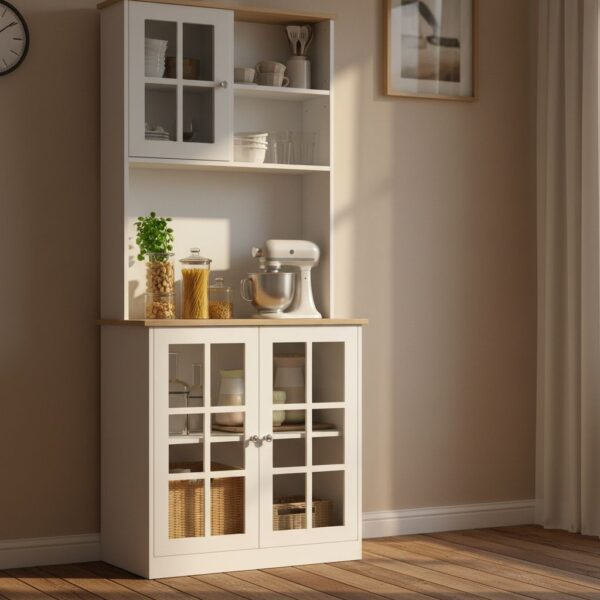
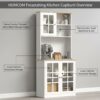
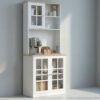
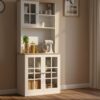
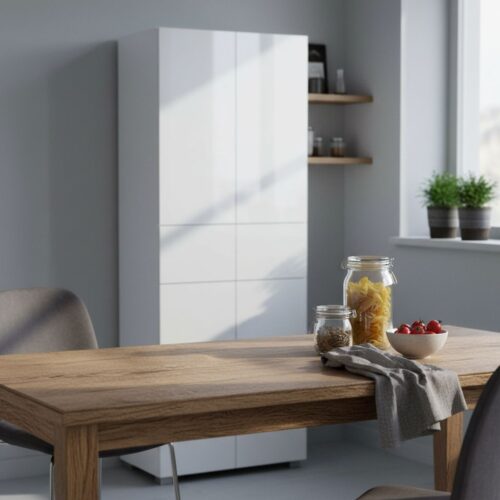
HOMCOM Freestanding Kitchen Cupboard is a tall, freestanding storage unit designed to organise everyday kitchen items while keeping work surfaces clearer. With a mix of closed compartments and glazed doors, it helps separate frequently used pieces from items that look better stored out of sight, while still making it easy to check what’s inside at a glance.
Key characteristics of HOMCOM Freestanding Kitchen Cupboard
- Tall freestanding cabinet layout for vertical storage in compact kitchens
- Grid glass doors help locate items without opening compartments
- Adjustable shelves support varied heights for jars, plates, and appliances
- Integrated countertop zone creates a practical secondary work surface
- White finish suits bright kitchens and visually lightens tall furniture
Overview of HOMCOM Freestanding Kitchen Cupboard
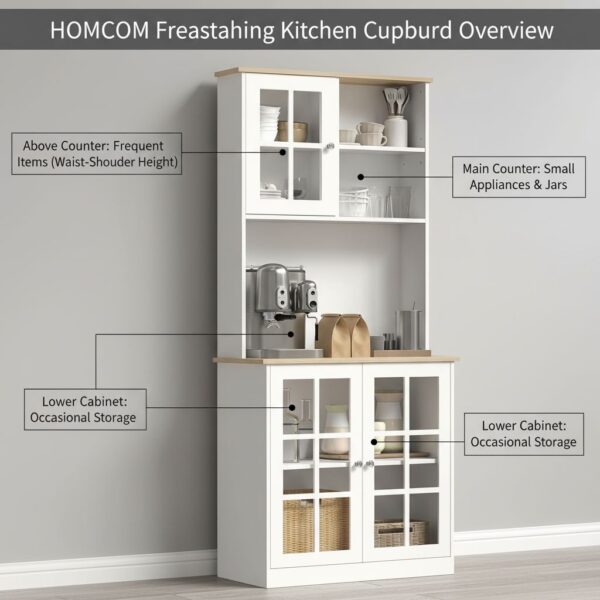
This Freestanding Kitchen Cupboard is built around a simple, ergonomic idea: keep the items used most often between waist and shoulder height, and reserve higher or lower zones for occasional storage. A tall cabinet like this can reduce repeated bending to base cupboards and limit the “countertop creep” that happens when small appliances and jars have no defined home.
As a HOMCOM Kitchen Cupboard, the layout is intended to balance visibility and tidiness. The glazed upper doors can work well for glassware, mugs, or neatly stacked plates, while the lower enclosed storage is useful for bulkier packaging, cleaning items, or anything that benefits from a more discreet compartment. The central counter area acts as a staging point—useful for a coffee setup, microwave placement (space permitting), or food-prep overflow when the main counter is busy.
The grid glass design is not only decorative; it supports quick visual scanning. From an everyday usability standpoint, being able to confirm where an item is stored without opening multiple doors saves time and reduces unnecessary handling—particularly helpful in shared households where storage habits vary.
Benefits of HOMCOM Kitchen Cupboard
One of the main practical advantages of the HOMCOM Kitchen Cupboard Freestanding format is that it creates “zones” without requiring a fitted kitchen. In rental homes or older properties, where built-in storage may be limited, a tall cabinet can add capacity and structure without permanent changes.
Adjustable shelving is central to long-term usefulness. Kitchen storage needs shift over time—different pans, taller bottles, small appliances—so fixed shelf heights can quickly become inefficient. With a HOMCOM Freestanding Kitchen Cupboard, adjustable shelves allow the interior to be tuned so space is not wasted above short items or cramped around taller ones. This improves both storage density and access, especially for items that need to be lifted out safely rather than tugged from a tight gap.
The countertop section supports better workflow. Placing the most-used appliance at a comfortable working height reduces awkward lifting from low cupboards and helps keep cords and accessories contained in one “station.” In ergonomic terms, a dedicated appliance zone can cut down on repeated carry-and-place routines, which is where minor daily strain often accumulates.
Finally, doors matter for visual calm. Open shelving can be convenient, but it also exposes clutter. A cabinet with doors gives the option to keep everyday essentials close while still maintaining a tidy look—particularly valuable in open-plan kitchen-dining spaces where the kitchen is always on view.
Materials and construction of HOMCOM Kitchen Cupboard
Because the Product JSON does not specify the board type or hardware materials, it is best to focus on what is clearly indicated by the design: doors, shelves, and a glazed upper section. The grid glass doors suggest a framed construction that aims to protect contents from grease and dust while still showing the interior. In daily use, this type of door is practical for cupboards that store items used frequently, since it reduces the need to open and close doors simply to check stock levels.
In a Freestanding Kitchen Cupboard by HOMCOM, shelf adjustability typically relies on a series of pre-set shelf pin positions. The key ergonomic point is to set shelf heights so heavier items sit in the middle zone (roughly hip to chest height), while lighter, less-used items can go higher. This reduces the risk of overreaching with weight and makes unloading groceries or stacking dishes more comfortable.
Doored storage also supports safer organisation: sharp tools, cleaning products, or fragile glassware can be placed behind doors to reduce accidental knocks. If children are present in the home, closed compartments can also help keep non-kitchen-safe items out of casual reach, though any child-safety measures should rely on appropriate locks and supervision rather than furniture placement alone.
How to use this Kitchen Cupboard
Start by positioning the unit where door swing and daily movement lines make sense. The HOMCOM Kitchen Cupboard works best when it supports an existing routine: near the dining area for dishes and glasses, closer to the kettle for tea and coffee supplies, or near the main prep surface for pantry items. Leave enough clearance so doors can open fully without colliding with handles, radiators, or adjacent furniture.
Next, set shelf heights based on what will be stored. A simple method is to group items by frequency and weight. Place heavy stacks of plates, tins, and small appliances in the central zone; store lighter items such as napkins, spare cups, or baking decorations on upper shelves; and allocate lower storage for bulk items or less-frequent equipment. This approach improves comfort and reduces repeated strain from lifting awkward loads at low heights.
Use the glazed-door section for items that benefit from visibility. For example, keeping mugs, glasses, or breakfast bowls behind the grid glass doors allows quick selection while keeping them protected. The solid-door section can hold visually busy packaging, cleaning cloths, or pantry overflow, helping the kitchen look calmer even when storage is full.
For the countertop area, aim for one defined purpose rather than a mixed pile. A coffee station, toaster zone, or microwave area is easier to maintain than a general drop-off surface. If an appliance is placed on the counter, keep frequently used accessories (filters, pods, spices) on the nearest shelf to minimise repeated reaching across the worktop.
Maintenance is straightforward: wipe exterior surfaces regularly and clean the glass panels with a non-abrasive cloth to avoid streaking. To keep doors aligned and closing smoothly over time, avoid overloading shelves and distribute weight evenly across the cabinet.
Technical specifications of HOMCOM Freestanding Kitchen Cupboard
| Feature |
Details |
| Brand |
HOMCOM |
| Format |
Kitchen Cupboard |
| Dimensions |
80L x 37W x 183H cm |
| Colour |
White |
Frequently asked questions about HOMCOM Freestanding Kitchen Cupboard
HOMCOM Freestanding Kitchen Cupboard is designed as a freestanding tall kitchen cupboard with doors, a counter surface, and adjustable shelves. In practice, common questions focus on stability, sensible loading, assembly, and cleaning the glass fronts. The answers below help you use the storage space ergonomically, keep doors aligned, and maintain the surfaces for everyday kitchen use.
How do you use the HOMCOM Freestanding Kitchen Cupboard most effectively day to day?
A practical approach is to create zones by frequency of use: everyday items (mugs, plates, spices) at easy reach, and less-used items (storage containers, serving platters) higher up or lower down. The counter surface can work as a small-appliance zone, but it’s best to keep it away from heavy steam and splashes. The glazed doors suit neatly organised, visible storage, while the closed sections help reduce visual clutter. This supports a smoother routine with less unnecessary bending or reaching.
Is the Freestanding Kitchen Cupboard easy to assemble without much experience?
Assembly is generally manageable if you work methodically. It helps to sort parts first, keep fixings separated, and build on a clean, level surface so nothing twists out of square. Align the main cabinet body first, then fit shelves, and leave the doors until last. With glazed doors, careful alignment matters so gaps look even and doors don’t catch. Having a second person can make lifting, positioning, and hanging the doors noticeably easier.
What are the adjustable shelves in the Freestanding Kitchen Cupboard by HOMCOM for?
Adjustable shelves let you match the internal height to what you store, rather than wasting space above shorter items. Raise a shelf for taller bottles or containers, and use more closely spaced shelves for glasses or smaller jars. From an ergonomic perspective, heavier items are best stored lower to reduce strain when lifting out, while lighter, frequently used items suit the middle area. This keeps the storage flexible as kitchen routines change.
What should you consider for stability and placement of the HOMCOM Kitchen Cupboard Freestanding?
As freestanding furniture, the cupboard should sit on a level, solid floor so doors and shelves don’t bind due to a twist in the frame. Choose a spot where doors can open fully without hitting walls or nearby furniture. In a kitchen, it’s also sensible to avoid direct heat and heavy moisture exposure (for example, right next to a hob or sink), as splashes and steam can make surface care harder. Load should be balanced—heavier items low, lighter items higher—to reduce tipping forces.
How do you clean and maintain the grid glass doors on the HOMCOM Kitchen Cupboard?
For glass, use a soft, lint-free cloth. For typical kitchen marks, a lightly damp wipe is often enough, followed by drying to reduce streaks. Dust can collect along the grid edges, where a soft brush or a cloth wrapped around a finger can help. Avoid abrasive pads to prevent scratching the glass or frame. Regularly removing fingerprints helps the glass fronts stay clear and the cupboard look well kept.
What are the dimensions of the HOMCOM Kitchen Cupboard Freestanding, and how do you plan the space?
The stated dimensions are 80L x 37W x 183H cm. Planning should include not only the footprint but also the clearance in front, so doors can open comfortably and items can be taken out without awkward movement. In narrower kitchens, the 37 cm depth can be helpful because it reduces how much the unit narrows walkways compared with deeper cupboards. It’s also worth checking ceiling height for installation and whether skirting boards or uneven flooring affect how flush the cupboard sits.
How much weight can you store safely in the HOMCOM Freestanding Kitchen Cupboard?
Without specific manufacturer load ratings, it’s best to plan conservatively: keep heavier pantry items, drink bottles, or kitchen appliances in the lower area and closer to the side panels to reduce shelf bowing. Load shelves evenly, avoid concentrated point loads, and consider non-slip liners for delicate items. If the counter surface is used for appliances, position them so they don’t create ongoing pulling forces on doors or edges. If unsure, increase loading gradually and check stability and door operation as you go.
User experience with HOMCOM Freestanding Kitchen Cupboard
Across repeated user feedback in the kitchen storage category, HOMCOM Freestanding Kitchen Cupboard is most often described as a practical, space-efficient way to add closed storage without committing to built-in cabinetry. The overall perception is that it fits well in everyday homes where clutter control matters—pantry overflow, small-appliance parking, or extra dish storage—while still looking tidy thanks to the door-front design. Users frequently frame their satisfaction around the cabinet’s ability to create a clear “zone” for kitchen items, especially when a countertop surface and a tall storage column are needed in one footprint.
After the initial setup, the cabinet tends to be evaluated on three day-to-day points: how much it actually holds once shelves are arranged, how it feels when doors are opened and closed repeatedly, and how stable it remains when loaded. In many discussions, the HOMCOM Kitchen Cupboard is seen as a sensible choice for light-to-moderate household storage, with the best results coming from thoughtful shelf planning and realistic loading—placing heavier items lower and keeping frequently used items within easy reach.
Main strengths reported for HOMCOM Freestanding Kitchen Cupboard
- Appreciated as a straightforward way to expand kitchen storage vertically, helping free up worktops and reduce visual clutter.
- Adjustable shelf layout is repeatedly highlighted as the feature that makes the cabinet workable for mixed item heights (jars, plates, small appliances), instead of forcing one fixed configuration.
- Door-front storage is valued for keeping items out of sight and reducing dust, with the glass-panel look often perceived as adding a lighter, less bulky feel than fully solid fronts.
Perceived strengths
- Everyday ergonomics: the tall format tends to suit users who want more storage without increasing bending and rummaging; commonly used items can be placed at mid-level for quicker access.
- Functional zoning: the combination of enclosed sections and a usable counter-height surface is frequently mentioned as helpful for creating a “prep and park” spot for appliances, tea/coffee supplies, or serving items.
- Style flexibility: white cabinetry and grid-style glass doors are often described as easy to integrate with many kitchen looks, particularly where a cleaner, brighter visual impression is preferred.
Usage nuances to consider
- Assembly and alignment: recurring comments suggest that careful, step-by-step assembly matters. Door alignment and smooth closing tend to depend on taking time to square the frame, tighten fixings evenly, and adjust hardware rather than rushing the build.
- Load planning and placement: as with most freestanding storage, users commonly note better stability and feel when heavier items are stored on lower shelves and when the cabinet is placed on an even floor; this also helps the doors stay aligned over time.
Who tends to benefit most from HOMCOM Freestanding Kitchen Cupboard?
This freestanding kitchen cupboard tends to suit households that need additional pantry-style storage, but do not want a permanent remodel. It is repeatedly positioned by users as a good match for smaller kitchens, rentals, and multipurpose spaces where one piece of furniture has to cover several roles—concealed storage for groceries and dishes, plus a practical surface for daily routines. The product also appeals to people who prefer a more organized, “everything has a place” setup: adjustable shelves support customized layouts, which is useful when storage needs change over time.
In terms of usage scenarios, the strongest fit is typically for light-to-medium duty kitchen organization: packaged foods, tableware, mugs, and small appliances that are moved on and off a counter. Users who seem happiest with the Freestanding Kitchen Cupboard by HOMCOM are those who approach it as a tidy storage hub rather than a heavy-duty utility unit—keeping the most weight at the base, using shelf adjustability to prevent overstacking, and maintaining clear access paths so doors and shelves are not stressed.
For households prioritizing a calmer visual environment, the door design is often mentioned as a practical benefit: items can be hidden quickly, which helps kitchens look more orderly even during busy periods. At the same time, the glass-panel styling is commonly perceived as a compromise between closed storage and a lighter, less “blocky” feel—useful in tighter rooms where bulky furniture can make the space feel smaller.
Recurring themes in user discussions: a space-saving cabinet that feels most rewarding when assembled carefully and organized thoughtfully for everyday kitchen storage.