HOMCOM Folding Dining Table
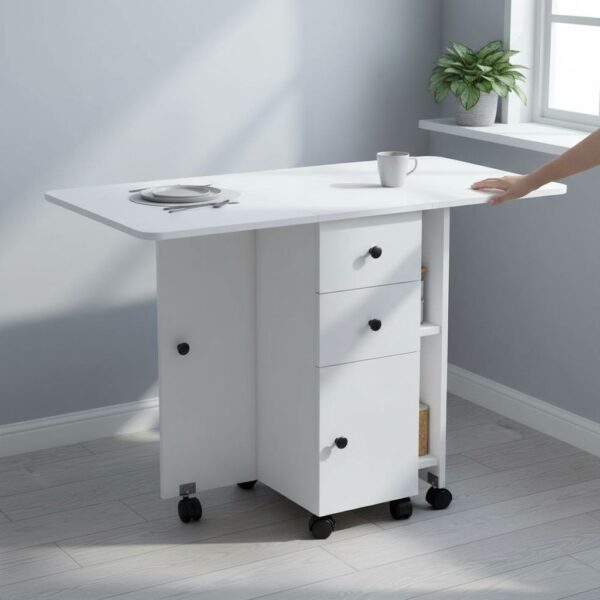
HOMCOM Folding Dining Table is designed for homes where space needs to work harder: it functions as a compact everyday surface, expands when extra place settings are needed, and then folds back down to keep walkways clear. As a furniture solution, it focuses on practical ergonomics—easy reach, stable support, and smooth repositioning—so the table can move between kitchen, dining area, and small flat layouts without becoming a permanent obstacle.
Key characteristics of HOMCOM Folding Dining Table
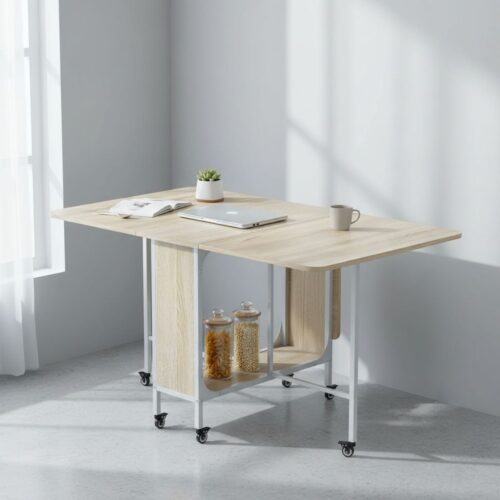
- Drop-leaf top folds to adapt seating and circulation space
- Wheeled base helps reposition the table without heavy lifting
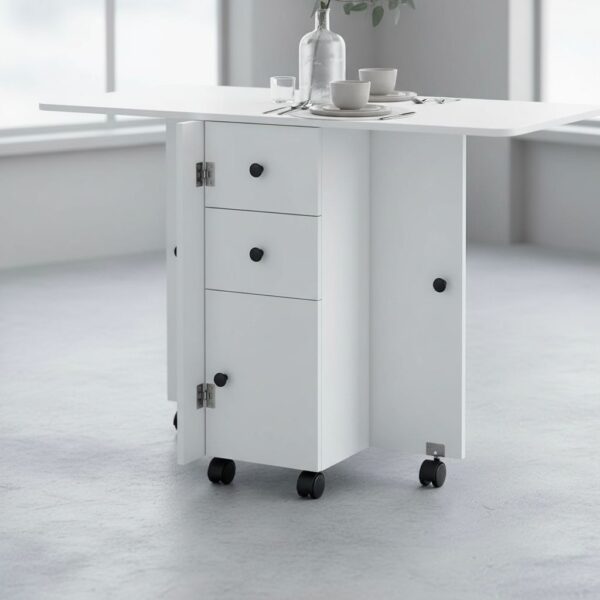
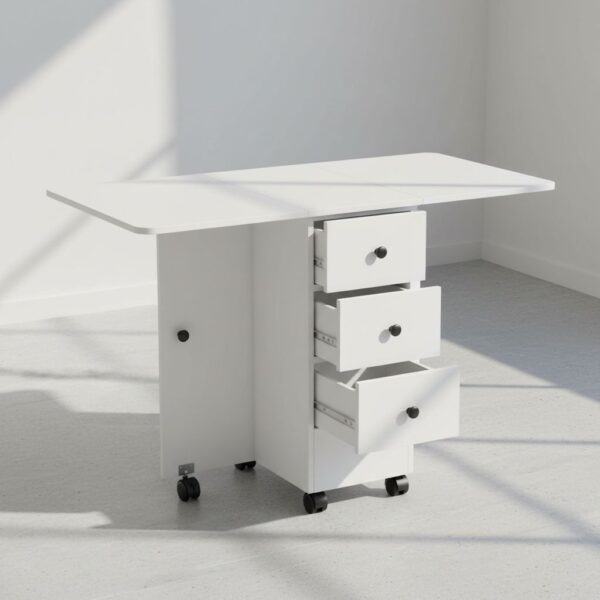
- Integrated drawers and cabinet support everyday dining storage needs
- Open shelf keeps frequently used items visible and accessible
- White finish suits bright, space-conscious kitchen and dining areas
Overview of HOMCOM Folding Dining Table
As a Folding Dining Table by HOMCOM, the layout combines three functions in one footprint: an extendable dining surface, a rolling support base, and built-in storage. The drop-leaf design is the key mechanism. With leaves lowered, the usable depth is reduced, which helps maintain comfortable passage space—an important ergonomic factor in narrow kitchens and open-plan flats where chairs and doors compete for clearance.
When the leaves are raised, the table becomes a more conventional dining surface for shared meals, casual working, or food prep overflow. The wheeled format changes how the table can be used day to day: instead of committing one fixed zone to dining, the table can be moved closer to food preparation areas when serving, then repositioned to keep the room flexible.
Storage is not an afterthought here. Drawers, a cabinet area, and an open shelf create a practical place for tableware, placemats, small appliances, or pantry overflow. From an ergonomics standpoint, integrated storage reduces repeated trips across a small home, and it helps keep the tabletop clearer—useful both for dining comfort and for safer movement around the table edges.
Benefits of HOMCOM Table
The main benefit of this HOMCOM Table is spatial adaptability. A folding top allows the working/dining surface to match the moment: compact for everyday living, expanded for hosting or family meals. This helps maintain a more comfortable circulation path around the furniture—crucial in small rooms where tight corners can cause bumps, snagged clothing, or awkward chair placement.
Mobility is the second practical advantage. With a rolling base, the table can be aligned to the most convenient position for the task: closer to the kitchen when plating, nearer the seating area when dining, or shifted aside to open the floor for other activities. This is particularly useful in multi-use rooms, where furniture has to accommodate different routines over the day.
Built-in storage supports habit-friendly organisation. Drawers suit smaller items that otherwise clutter surfaces, while a cabinet can hide less attractive essentials. The open shelf is valuable for items that need quick access; keeping frequently used pieces within reach reduces bending and twisting, which is a small but meaningful comfort factor during daily use.
For day-to-day comfort, the usability of a folding dining table often comes down to smooth transitions—opening, closing, and moving it without feeling like it is a project. The HOMCOM Dining Table Folding concept supports that rhythm: the table is intended to be adjusted often, not left in one configuration permanently.
Materials and construction of HOMCOM Table
With a piece like HOMCOM Folding Dining Table, build quality is best assessed through how the structure is expected to handle common loads and movements: leaning during conversation, placing heavier serving dishes, or rolling the unit across typical indoor flooring. The drop-leaf form places extra importance on hinge alignment and support points, because leaf edges need to meet the centre section without rocking or catching.
The rolling base also shifts the construction priorities. A mobile table should feel stable when parked, and it should track predictably when moved. In practical terms, the most comfortable experience comes from a base that does not flex under lateral pressure and wheels that roll without sudden resistance. When a table is used in small spaces, controlled movement matters: it reduces the chance of knocking chair legs, skirting boards, or cabinet doors.
Storage elements add their own functional demands. Drawers should open smoothly without requiring excessive pull force, and the cabinet space should be easy to access without forcing an awkward wrist angle or deep bend. The open shelf is the most forgiving storage zone ergonomically, because it offers quick visual confirmation and reduces the need to rummage.
The white finish is a practical choice for compact interiors because it tends to reflect more light and can make furniture visually quieter in the room. For maintenance, light finishes benefit from regular wipe-downs to prevent visible marks; the practical goal is keeping the surface comfortable for food use and pleasant to touch during frequent folding and moving.
How to use this Table
Start by positioning the HOMCOM Table where there is enough clearance to raise the leaves without hitting walls, radiators, or other furniture. In small kitchens and flats, it helps to plan for chair movement as well: a comfortable seating setup needs room for knees and for pulling chairs back without scraping through narrow gaps.
To switch between compact and expanded modes, adjust one leaf at a time and check that the support feels even before placing heavier items. For everyday use, keeping one side folded and the other open can create a practical “half-size” setup: enough surface for two people while preserving a wider walkway.
When moving the Folding Dining Table, reduce the load first—remove heavy items from the top and avoid rolling with open drawers. This protects the feel of the movement and helps prevent sudden shifts in balance. Rolling is most controlled when pushing from a stable point on the frame rather than pulling from a raised leaf edge.
For storage, use the drawers for lighter, frequently handled items such as cutlery, napkins, or small tools, and reserve the cabinet for bulkier pieces. The open shelf works well for items used daily because it reduces repeated opening and closing motions. Keeping weight distributed—rather than concentrating everything on one side—also supports a steadier feel when the table is moved.
Cleaning is simplest when done little and often. Wipe the tabletop after meals, and periodically check that the folding points remain free of crumbs or debris that could interfere with smooth closing. If the table is used for food prep overflow, using a mat or board can reduce surface wear and keep cleanup quicker.
Technical specifications of HOMCOM Folding Dining Table
| Feature |
Details |
| Brand |
HOMCOM |
| Product category |
Tables |
| Product format |
Table |
Frequently asked questions about HOMCOM Folding Dining Table
HOMCOM Folding Dining Table is designed for small homes that need a dining surface that can expand when required and fold down when space matters. Because it combines a drop-leaf top with wheels and built-in storage, most practical questions are about safe unfolding, stability when used as a table for 4–6, and how to care for the surfaces and moving parts in everyday kitchen and dining room use.
How do you unfold and lock HOMCOM Folding Dining Table safely?
Move the table to a clear, level area before unfolding so the leaves can swing without catching on walls or chairs. Open one section at a time, supporting the leaf as it rotates, then ensure the support panels are fully engaged before placing weight on the top. If the table is on wheels, keep the casters from rolling during setup by positioning it squarely and, if the wheels have brakes, engaging them before use. After unfolding, press gently at several points to confirm the surface feels even and stable.
Is the Folding Dining Table by HOMCOM stable enough for everyday meals?
For daily dining, stability mainly depends on three factors: a flat floor, correct leaf support, and controlled wheel movement. With the leaves properly supported, the table is intended to handle typical meal use such as plates, cookware for serving, and light food prep. To reduce wobble, avoid placing heavy loads only on the outer edge of an extended leaf and keep weight closer to the center line. If it is used in a kitchen or dining room with slightly uneven flooring, placing it so all wheels sit evenly helps maintain a firmer feel.
Does the HOMCOM Table roll well, and when should the wheels be locked?
The wheels are most useful for repositioning the table between storage and use, especially in a flat or small space where the table needs to tuck away. For safe dining, the wheels should be locked whenever the table is being used as a surface for eating, writing, or serving, because small side forces from leaning or moving chairs can make a rolling base shift. If the model includes wheel brakes, lock them after moving and unlocking only when relocating. Also avoid rolling it while fully loaded to protect both the wheels and the floor.
How much can the drawers, cabinet, and open shelf realistically hold?
The built-in storage is best treated as convenience storage rather than heavy-duty cabinetry. Drawers typically work well for cutlery, placemats, napkins, and small accessories that are frequently used with dining. The cabinet and open shelf can store items like small serving bowls, a tray, or lightweight pantry goods, helping reduce clutter in compact kitchens. To keep the unit rolling smoothly and to avoid stressing the structure, distribute weight across compartments rather than concentrating it in one drawer or on a single shelf. Keep frequently accessed items in the most reachable positions.
What is the best way to clean and protect the tabletop and storage surfaces?
For routine care, use a soft, slightly damp cloth to wipe the tabletop after meals, then dry it to prevent moisture sitting along edges and seams. In a kitchen environment, wipe spills promptly, especially anything oily or acidic, to reduce the risk of staining. Avoid abrasive pads and harsh cleaners that can dull the finish. Using coasters, placemats, and trivets helps protect the surface from heat and scratches, which matters more on a folding top where edges and joints see repeated contact. Keep the storage areas dry and free of crumbs to protect the runners and hinges.
Is HOMCOM Dining Table Folding comfortable for 4–6 people, and how should chairs be arranged?
Comfort at the table is mostly about leg clearance, knee space, and how far chairs can slide in when the leaves are extended. When seating 4–6, place chairs so that people are not sitting directly at the hinge/support areas, which can reduce usable knee room. If the table is used in a narrow dining room, prioritize two longer sides for the main seating and keep end seating for occasional use. Make sure chairs can move without bumping the storage side, and keep a clear path so diners do not need to twist around corners, improving everyday ergonomics.
What should be checked after assembly to keep the table safe and aligned?
After assembly, recheck that all fasteners are tightened evenly and that the table sits without rocking on the floor. Confirm the folding leaves open smoothly and the supports sit flush, because even slight misalignment can make the top feel uneven when extended. If the unit includes wheels, verify they spin freely and that any locks engage reliably. Open and close drawers and doors to ensure they run without rubbing, which can indicate the frame is slightly out of square. Re-tightening screws after a short period of use is practical, as joints can settle with movement and folding.
User experience with HOMCOM Folding Dining Table
Aggregated user feedback around HOMCOM Folding Dining Table is largely positive, with a clear pattern: it is valued as a space-efficient table that can adapt to changing daily needs. Many comments focus on the practical logic of a folding top combined with mobility, which helps in small kitchens, dining corners, studios, or multipurpose rooms where the same area needs to switch between cooking prep, eating, and occasional work. The overall perception is that the table concept is well-suited to compact living, especially when users accept that a foldable, wheeled design behaves differently from a heavy, fixed dining table in terms of feel and setup habits.
Across repeated discussions, the strongest satisfaction tends to come from the “right expectations” match: people who want a flexible surface that can be expanded when needed and tucked away afterward, rather than a centerpiece table that stays in one place. Storage elements are also frequently mentioned as a reason it becomes part of everyday routines, since it encourages keeping essentials close at hand and reduces visual clutter in small rooms.
Main strengths reported for HOMCOM Folding Dining Table
- Space adaptability: the folding design is repeatedly described as the main value driver, making it easier to reclaim floor space after meals or when the table is not in use.
- Mobility for small homes: wheels are commonly appreciated for allowing quick repositioning between kitchen and dining area, or moving the table aside for cleaning and traffic flow.
- Everyday organization support: integrated storage is often seen as more than a bonus; many users rely on it to keep placemats, utensils, small appliances, or dining accessories in one place.
Perceived strengths
- Multi-purpose usability: beyond dining, the HOMCOM Table is frequently used as a temporary work surface, serving station, or extra prep area, particularly in households that cannot dedicate a separate desk or island.
- Practical footprint management: users often mention that the table helps manage narrow layouts, since the top can be adjusted to the moment—smaller for daily use, larger when guests or family meals require more surface.
- Room integration: in repeated feedback, the overall look is described as easy to blend into common home styles, especially when the goal is a clean, bright furniture piece that does not visually “weigh down” a small room.
Usage nuances to consider
- Stability depends on setup and habits: as with many rolling, foldable tables, users note that the feel can vary depending on floor evenness, how the table is positioned, and whether wheels are secured. For tasks that involve leaning body weight on the edge (for example, heavy kneading or strong lateral pressure), some users prefer to place it where it is least likely to shift.
- Storage and folding workflows take a little planning: a common nuance is that the best experience comes when stored items are kept to what is actually used near the table. Overloading storage or keeping bulky items can make folding, access, and day-to-day organization less smooth than expected.
Who tends to benefit most from HOMCOM Folding Dining Table?
This Folding Dining Table is most often praised by people living in compact spaces who need furniture to change roles throughout the day: studio and flat dwellers, small families in apartments, and anyone with a kitchen-dining area that also acts as a passageway. It also suits users who like to keep surfaces clear and prefer having a defined spot for dining items rather than spreading them across counters. Households that host occasionally (instead of frequently seating a larger group every day) tend to report the best fit, because the folding format supports “expand when needed” living. Conversely, users who prioritize a permanently rigid, heavy dining table feel may be happier with a fixed table style; for them, a foldable wheeled piece can require small behavior adjustments—such as being consistent about wheel positioning and choosing the most stable placement for more demanding tasks.
Recurring sentiment: the table is appreciated most as a flexible, space-saving solution that supports everyday routines when used with realistic expectations.