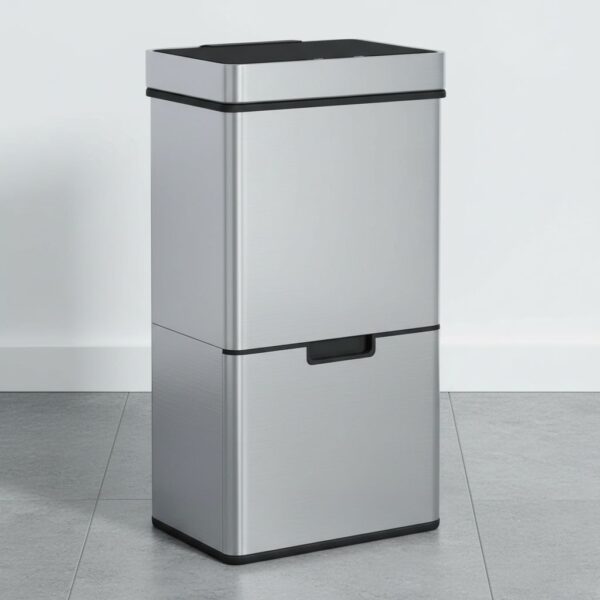
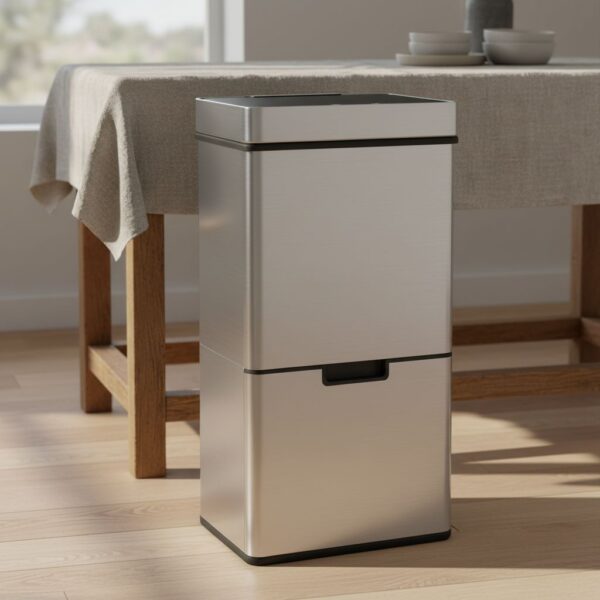
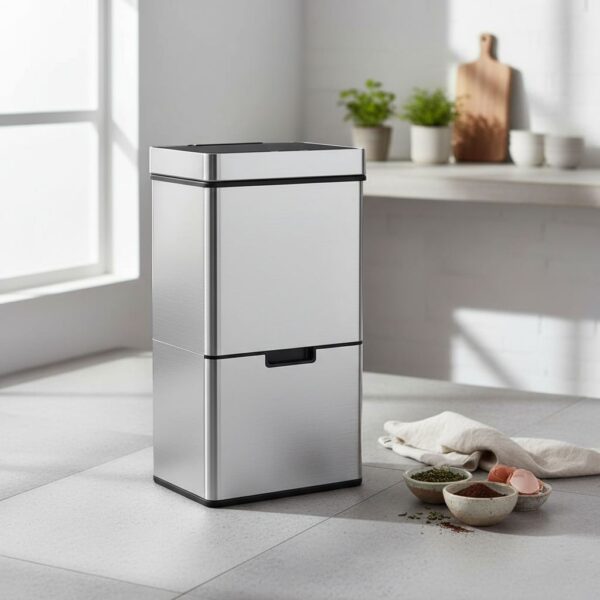
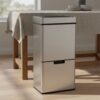
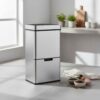
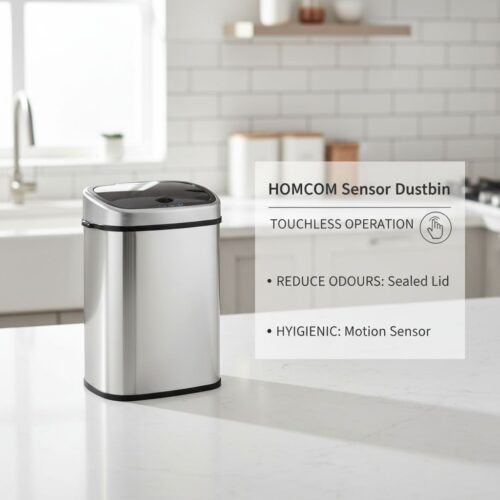
HOMCOM 72L Recycling Sensor Bin Stainless Steel 3 Compartments
HOMCOM 72L Recycling Sensor Bin Stainless Steel 3 Compartments is designed to make day-to-day waste sorting feel simpler and more hygienic, especially in busy kitchens where hands are often full. With three separate compartments and a sensor-operated lid, it supports a cleaner workflow for handling mixed household waste while keeping the top surface usefully sealed between openings.
Key characteristics of HOMCOM 72L Recycling Sensor Bin Stainless Steel 3 Compartments
- Three compartments support straightforward separation of household waste streams.
- Sensor lid reduces hand contact during cooking and clean-up routines.
- Stainless steel body suits modern kitchens and wipes down easily.
- Removable lid helps access compartments for liner changes and cleaning.
- Large 72L capacity suits families and frequent meal-prep households.
Overview of HOMCOM 72L Recycling Sensor Bin Stainless Steel 3 Compartments
As a 72L Recycling Sensor Bin Stainless Steel 3 Compartments unit, the layout is centred on practical segregation: instead of managing multiple smaller bins around the room, three sections sit within one footprint. This matters ergonomically because it reduces repeated steps between stations and helps keep the “waste zone” predictable—useful when moving between sink, prep area, and hob.
The sensor opening mechanism is also a comfort feature, not just a convenience. When a lid can open without gripping a handle, it reduces awkward wrist angles and the need to stabilise the bin with the other hand. In everyday use, that can make disposal feel smoother when carrying peelings, packaging, or damp waste, and it can reduce the tendency to leave lids ajar.
For homes trying to keep odours contained, a consistently closing lid is part of the solution. The bin’s removable lid design supports cleaning access, which is important because the most persistent smells usually come from residue around rims and hinge areas rather than from the compartments themselves.
Benefits of HOMCOM Bin
The main advantage of the HOMCOM Bin approach is behavioural: sorting becomes the default because the compartments are always available in one place. In practice, that can make it easier to keep wet and dry waste apart and avoid cross-contamination that turns recycling into a messier task later.
From a home ergonomics perspective, a sensor lid can reduce “micro-friction” during routines. When people have to touch a lid repeatedly—especially with wet hands or while handling food scraps—they often postpone disposal until the end, leading to cluttered worktops. With the HOMCOM Sensor Bin 72L, disposal can happen in smaller, cleaner steps during prep and cooking, supporting a tidier workspace.
Another benefit is surface maintenance. Stainless steel is commonly chosen for kitchens because it tolerates frequent wiping and typically resists staining better than painted finishes. That said, day-to-day appearance depends on how it is cleaned: a damp cloth followed by a dry wipe helps reduce visible smears and water marks.
Finally, the three-compartment structure can make liner management more organised. Instead of guessing which bag is full, each section can be monitored independently, helping avoid overfilling that strains bags and increases the chance of leaks during removal.
Materials and build logic of HOMCOM Bin
The exterior is presented as stainless steel in the product naming, which aligns with common kitchen requirements: it is generally robust against knocks from chair backs, vacuum cleaners, or busy foot traffic. For durability, what tends to matter most is not only the outer shell but also how the lid and compartment edges are finished, because those are the highest-contact points during daily use.
Within a multi-compartment bin, the lid area does a lot of work: it needs to open reliably, close consistently, and stay aligned so the top doesn’t rock or catch. A removable lid is a practical construction choice because it allows access to the rim and inner edges where residue builds up. It also simplifies deep cleaning, which is particularly relevant when managing wet waste.
In terms of home “fit,” a single integrated body can feel more stable than three separate smaller bins. It reduces the amount of shifting and sliding that can happen when bins are opened and closed throughout the day. If the bin is placed on hard flooring, keeping the base clean and dry helps it sit more securely and reduces movement during use.
How to use this Bin
Place the bin in a location that supports a natural workflow—typically between the main prep zone and the sink. The goal is to minimise turns and steps, because the easier the access, the more consistently the compartments will be used for sorting rather than as a single “catch-all” section.
For practical separation, assign each compartment a clear waste stream and keep it consistent. Many households find it easiest to dedicate one compartment to wet waste and the others to dry recycling and general waste, but the best arrangement depends on local collection rules and how the household cooks. With the HOMCOM 72L Recycling Sensor Bin Stainless Steel 3 Compartments, consistency is what prevents accidental mixing.
Use the sensor opening when hands are occupied or messy, and avoid pushing the lid manually if it is not necessary. That reduces fingerprints and also helps the lid mechanism experience more uniform movement over time. If the lid is removable for cleaning, lift it off periodically to wipe the underside and the rim area where splashes and condensation can collect.
For liner changes, remove bags before they become tightly packed. Overfilled liners are more likely to snag on internal edges and can tear, especially when wet waste adds weight. A simple routine—quickly checking each compartment when taking out food waste—helps keep the system clean and reduces the need for emergency clean-ups.
Cleaning is best done little and often: wipe the exterior with a soft cloth, then dry to reduce streaking. For the interior, a mild cleaning approach and thorough drying helps limit lingering odours. Leaving compartments dry after cleaning is particularly important when the bin is used for wet waste.
Technical specifications of HOMCOM 72L Recycling Sensor Bin Stainless Steel 3 Compartments
| Feature |
Details |
| Brand |
HOMCOM |
| Format |
Bin |
| Product category |
Home |
In daily life, the technical story of a bin is mostly about how it supports habits: the three-compartment layout encourages separation, and the sensor lid reduces contact points that can otherwise make disposal feel unpleasant. If the bin is used in a high-traffic kitchen, pairing it with a simple cleaning rhythm and steady compartment assignments is what keeps the system feeling “easy” rather than fussy.
For households that generate a mix of packaging, food scraps, and general waste, a single 72L unit can be easier to manage than several smaller bins scattered around the room. The HOMCOM Recycling Sensor Bin 72L Stainless Steel 3 Compartments format also keeps the sorting station visually contained, which can help maintain a calmer looking kitchen even when the household is busy.
Frequently asked questions about HOMCOM 72L Recycling Sensor Bin Stainless Steel 3 Compartments
How do you use HOMCOM 72L Recycling Sensor Bin Stainless Steel 3 Compartments day to day?
Place the bin on a flat, stable floor so the lid area has clear space above it. Sort waste as you go by assigning a purpose to each of the three compartments (for example, mixed recycling, general waste, and food waste), then keep the same system consistently to reduce mistakes. If the sensor lid is being used, avoid storing items directly in front of the sensing area, as repeated triggering can drain power and become inconvenient in a busy kitchen. Empty each compartment before it becomes overfilled so bags remove cleanly without tearing.
Is the HOMCOM Bin suitable for separating wet and dry waste without odours?
The HOMCOM Bin can be organised to keep wet and dry waste separate by dedicating one compartment to wetter waste and the others to dry recycling or general rubbish. Practical odour control depends less on the metal body and more on routine: use well-fitted liners, tie off bags promptly, and empty the wet-waste section more frequently than the dry sections. For food waste, adding a small inner bag and removing it daily helps. Wiping the rim and lid underside after leaks prevents residue that can cause lingering smells.
Does HOMCOM Sensor Bin 72L need assembly, and what should be checked first?
For a multi-compartment kitchen bin, setup is usually straightforward, but it is still worth checking a few basics before regular use. Confirm that each compartment is seated correctly and that the removable lid aligns properly so it closes without rocking. If the sensor function is powered, ensure the power source is installed correctly and that the lid can open freely without hitting a countertop overhang. It is also sensible to test the opening motion a few times before placing it in a tight spot, especially in narrow kitchen walkways.
What materials are used in HOMCOM 72L Recycling Sensor Bin Stainless Steel 3 Compartments, and how does that affect durability?
As the name indicates, 72L Recycling Sensor Bin Stainless Steel 3 Compartments by HOMCOM uses a stainless steel exterior, which is a practical choice for kitchens because it resists rust and handles frequent wipe-downs without absorbing odours. Stainless steel also tends to hold its shape better than thin plastics when the bin is moved or lightly bumped. Durability in daily use still depends on treating the lid mechanism carefully: avoid forcing the lid shut, and do not overload one compartment to the point where the bag presses upward against the opening area.
Can 72L Recycling Sensor Bin Stainless Steel 3 Compartments fit standard bin liners?
Three-compartment bins typically work best with liners that match each compartment rather than one large bag. In practice, many households use common “kitchen bin” liners for each section, but the best fit depends on the internal bucket shape and how the bag is held at the rim. A liner that is too small can slip down and interfere with closing; one that is too large can bunch up and catch under the lid. For cleaner changes, choose liners with enough length to fold over the edge securely and tie off without stretching.
Where should the HOMCOM Recycling Sensor Bin 72L Stainless Steel 3 Compartments be placed for comfortable use?
For comfortable, ergonomic use, place the HOMCOM Recycling Sensor Bin 72L Stainless Steel 3 Compartments where it can be approached straight-on without twisting at the hips, ideally near the main prep or cleanup zone. Leave clearance for the lid to open and for hands to drop waste without reaching over obstacles. In compact kitchens, avoid positioning it where cabinet doors, dishwasher doors, or drawer pull-outs will collide with the lid area. If the sensor function is active, placing it away from high-traffic “brush past” paths reduces accidental openings and improves day-to-day convenience.
How should the HOMCOM Bin be cleaned and maintained to keep the sensor and lid working well?
Regular maintenance is mostly about preventing residue build-up around the lid and rim. Empty compartments before liquids pool, then wipe the interior surfaces with a mild cleaner and dry them to avoid moisture sitting in seams. For the stainless steel exterior, use a soft cloth to reduce streaks and avoid abrasive pads that can dull the finish. Keep the sensor area clean and free of splashes; if it becomes dirty, wipe gently with a slightly damp cloth and dry immediately. Also check that liners are not pinched under the lid, as this can strain the closing action.
User experience with HOMCOM 72L Recycling Sensor Bin Stainless Steel 3 Compartments
In aggregated user feedback, HOMCOM 72L Recycling Sensor Bin Stainless Steel 3 Compartments is most often described as a practical, hygiene-focused kitchen bin that makes everyday sorting feel simpler and less messy. The general impression is that the sensor opening helps reduce touch points during cooking and cleanup, while the multi-compartment layout supports routine recycling habits without needing multiple separate bins. Users also tend to comment on the stainless-steel look as a neat, modern fit for kitchens, with day-to-day satisfaction driven more by convenience and organization than by any single standout feature.
After the initial setup, many report that the HOMCOM Bin integrates smoothly into typical household routines: quick disposal while hands are occupied, clearer separation of waste streams, and easier end-of-day tidy-ups. Satisfaction tends to be highest when the bin is placed with enough clearance for the lid to open freely and when the household already has a clear sorting system.
Main strengths reported for HOMCOM 72L Recycling Sensor Bin Stainless Steel 3 Compartments
- Hands-free operation is repeatedly valued in kitchens, especially during food prep or when disposing of wet waste, because it reduces contact with the lid and keeps the exterior cleaner in daily use.
- The three-compartment idea is frequently associated with better organization: users like having a single station for separating recyclables and general waste rather than juggling multiple containers.
- The stainless-steel exterior is commonly seen as easy to live with visually, helping the bin look more like a deliberate kitchen fixture than a purely utilitarian item.
Perceived strengths
- Smoother routine: many comments link the sensor to a faster, more natural motion, which helps when hands are wet or occupied and reduces interruptions during household tasks.
- At-a-glance order: the compartment configuration tends to reduce messy build-up near the sink or worktops, because each waste type has a dedicated place.
- Simpler day-to-day maintenance: several users appreciate the removable lid for managing liner changes and cleaning the key contact areas more comfortably, without having to manoeuvre the whole unit.
Usage nuances to consider
- Placement matters: feedback often notes that sensor lids work best when the bin has sufficient space above and in front; tight corners or low overhangs can make opening less convenient.
- Sorting habits need alignment: households that do not already separate waste may need a short adjustment period to decide what goes into each compartment, otherwise one section can fill faster and reduce the perceived benefit.
Who tends to benefit most from HOMCOM 72L Recycling Sensor Bin Stainless Steel 3 Compartments?
This bin tends to suit households that prioritize hygiene and a tidy workflow in the kitchen—particularly those cooking frequently, managing wet waste regularly, or trying to reinforce recycling routines at home. The 72L Recycling Sensor Bin Stainless Steel 3 Compartments by HOMCOM is also a strong match for shared households where clarity of “where things go” reduces friction: separate compartments can make expectations more obvious and help keep communal areas cleaner. In terms of usage scenarios, it is most appreciated in kitchens with enough open floor space to approach the bin comfortably and allow the lid to operate without obstruction. For users focused on minimizing odors and mess, the sensor-based opening is often perceived as a meaningful day-to-day upgrade because it reduces repeated lid contact during busy moments.
The idea of tidier, more hygienic sorting comes up often, with fewer “messy” actions during the day.