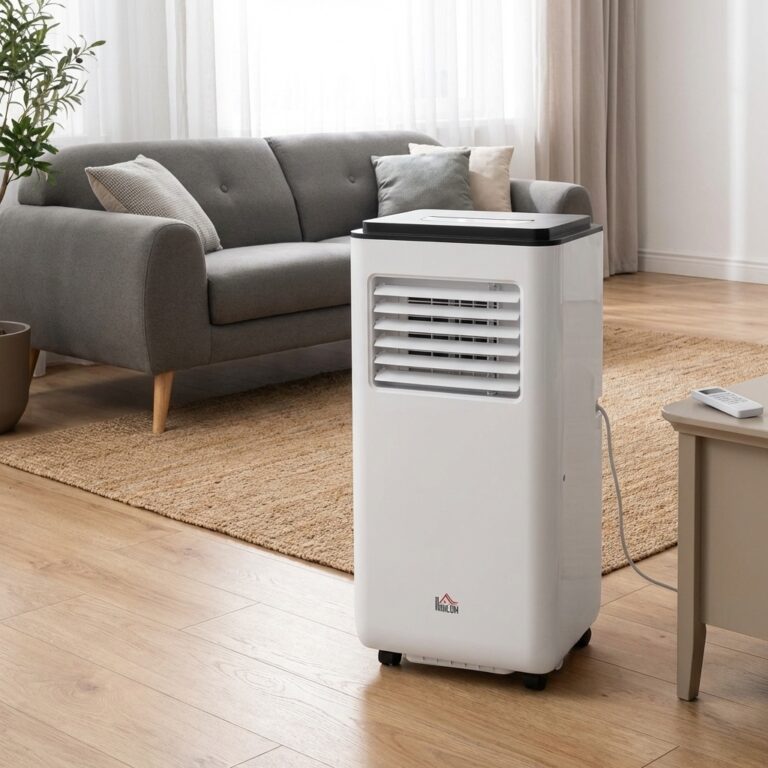
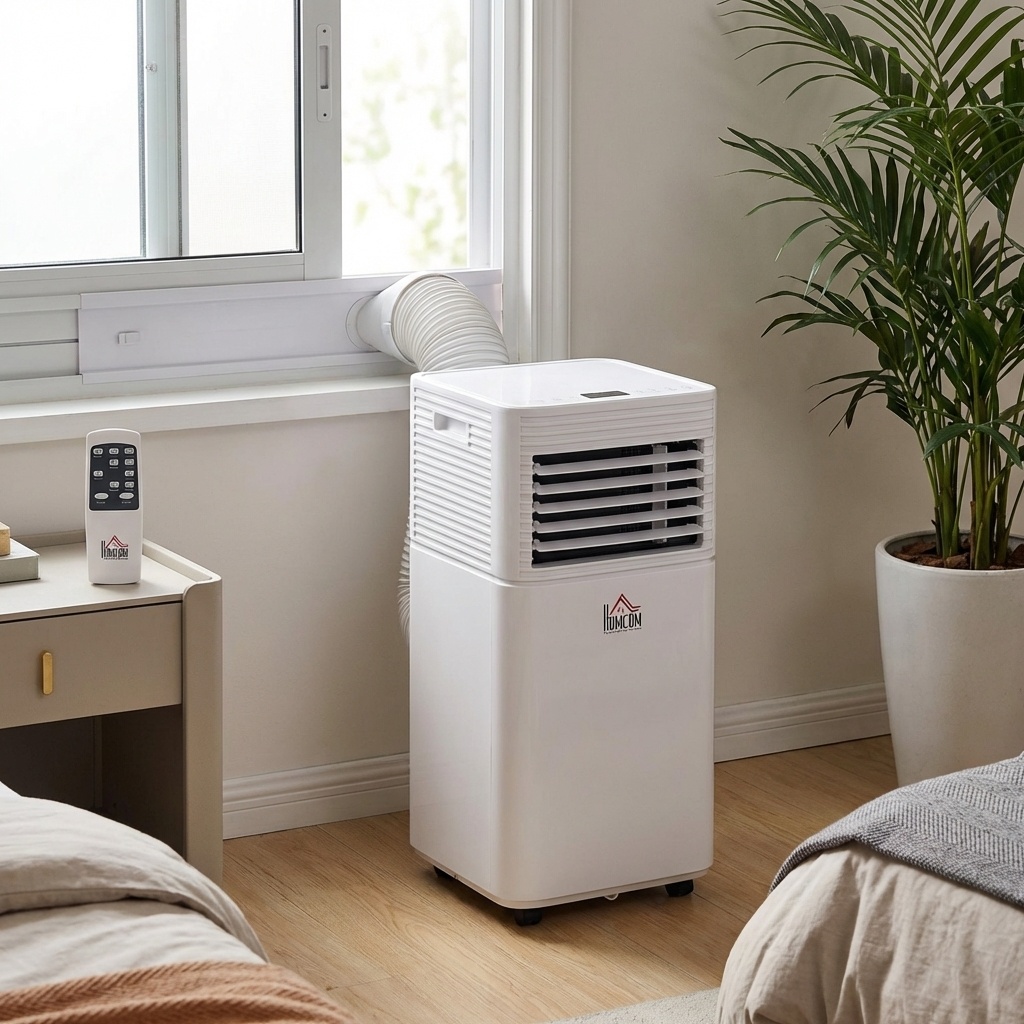
A HOMCOM Air Conditioner often makes sense when you want to cool a specific room without committing to a fixed installation. It fits especially well in rented flats, bedrooms, and home offices where heat builds up. It starts to feel limited when you expect it to drop the temperature by several degrees in open spaces, with doors opening constantly, or where hot air cannot be vented effectively.
Why A HOMCOM Portable Air Conditioner Makes The Shortlist
The intention behind a HOMCOM Portable Air Conditioner is rarely “cool the whole house,” but rather to regain control in one hot spot: the room where you sleep, the living room for a few hours, or a work-from-home office. That focus changes the buying criteria. What matters most is the coherence of the setup (realistic capacity, air outlet performance, window sealing, noise, and drainage) rather than a maximum claim on paper.
There is also a practical reason many people consider a HOMCOM Air Conditioner: the portable format lets you move the unit depending on the time of day. That works well if your home has rotating needs and the route does not involve stairs or tight hallways. In multi-storey homes or with delicate flooring, frequent moving quickly becomes less “portable” in real life.
What You Are Really Evaluating In A HOMCOM Air Conditioner
In a useful evaluation of HOMCOM Air Conditioning, the question is not only whether it cools, but at what comfort cost and under what conditions. A portable unit always works against a structural disadvantage: it expels heat outdoors through a hose, and any air leak at the window or door forces the system to repeat the same work. That is why two people with the same HOMCOM AC can have very different experiences.
Practically, the unit is judged on four areas that genuinely change the outcome:
- Hot air management: the hose and window adapter often matter more than the BTU figure, because poor sealing pushes heat back indoors.
- Noise behaviour: not just loudness, but the sound type (compressor cycling, vibration, fan bursts) and how it feels in a bedroom.
- Humidity and condensation: in humid climates, water handling (tank, continuous drainage) affects how consistently you can run it.
- Everyday use: real mobility, filter access, remote control usability, and stability during long runs.
BTU, Room Size, And Realistic Expectations
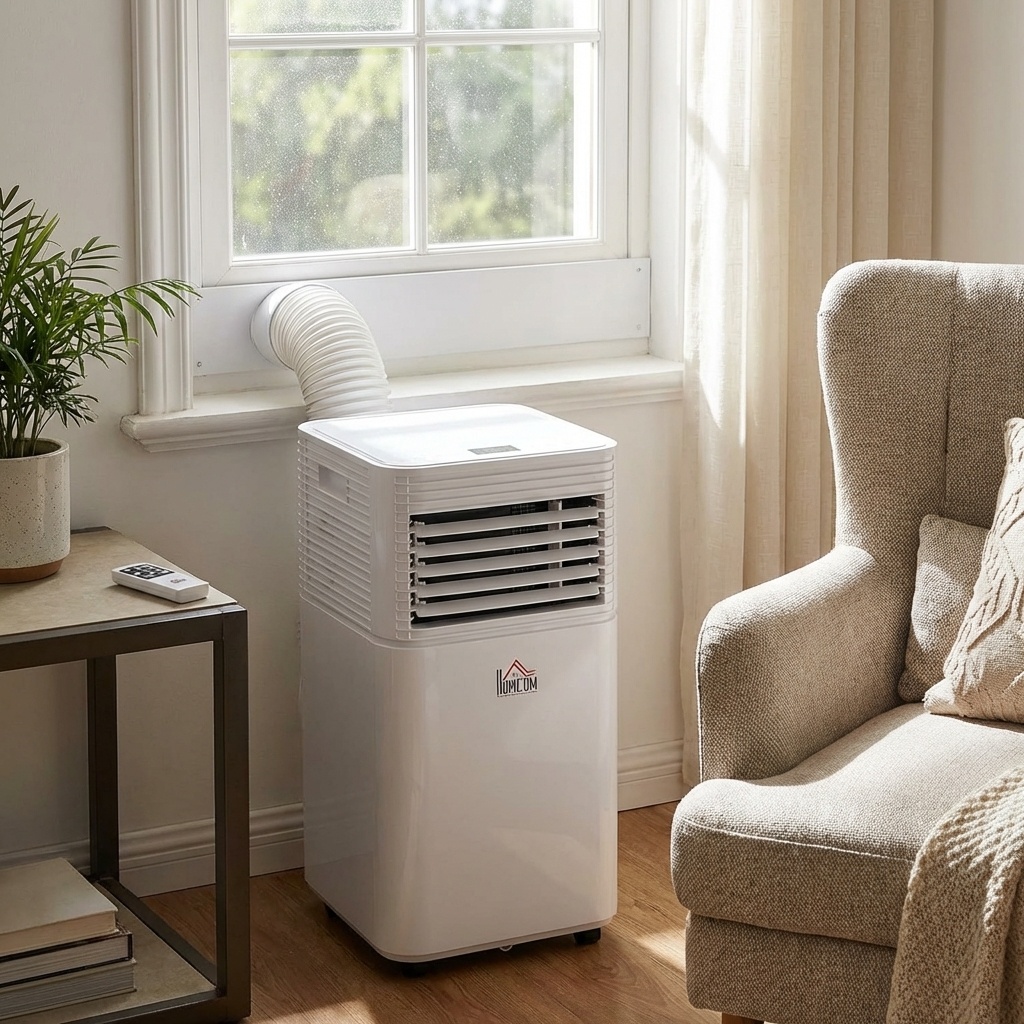
Terms like HOMCOM 9000 BTU, HOMCOM 7000 BTU, or HOMCOM 12000 BTU Air Conditioner are often used as a shortcut for capacity, but it is better to read them as a “likely range” rather than a guarantee. The power you need depends on direct sun, insulation, how many people are in the room, and whether electronics are adding heat.
In practice, a HOMCOM 9000 BTU Portable Air Conditioner typically targets small to medium rooms if you want a noticeable change without expecting miracles. Moving up to a HOMCOM 10000 BTU Portable Air Conditioner or even a HOMCOM 14000 BTU Air Conditioner can make sense when the heat load is higher, but it can also bring a different compromise: larger units, stronger airflow, and sometimes a more obvious acoustic presence. “More BTU” is not automatically better if your goal is sleeping with the unit running.
A Note On The Format: What A HOMCOM Mobile Air Conditioner Is (And Is Not)
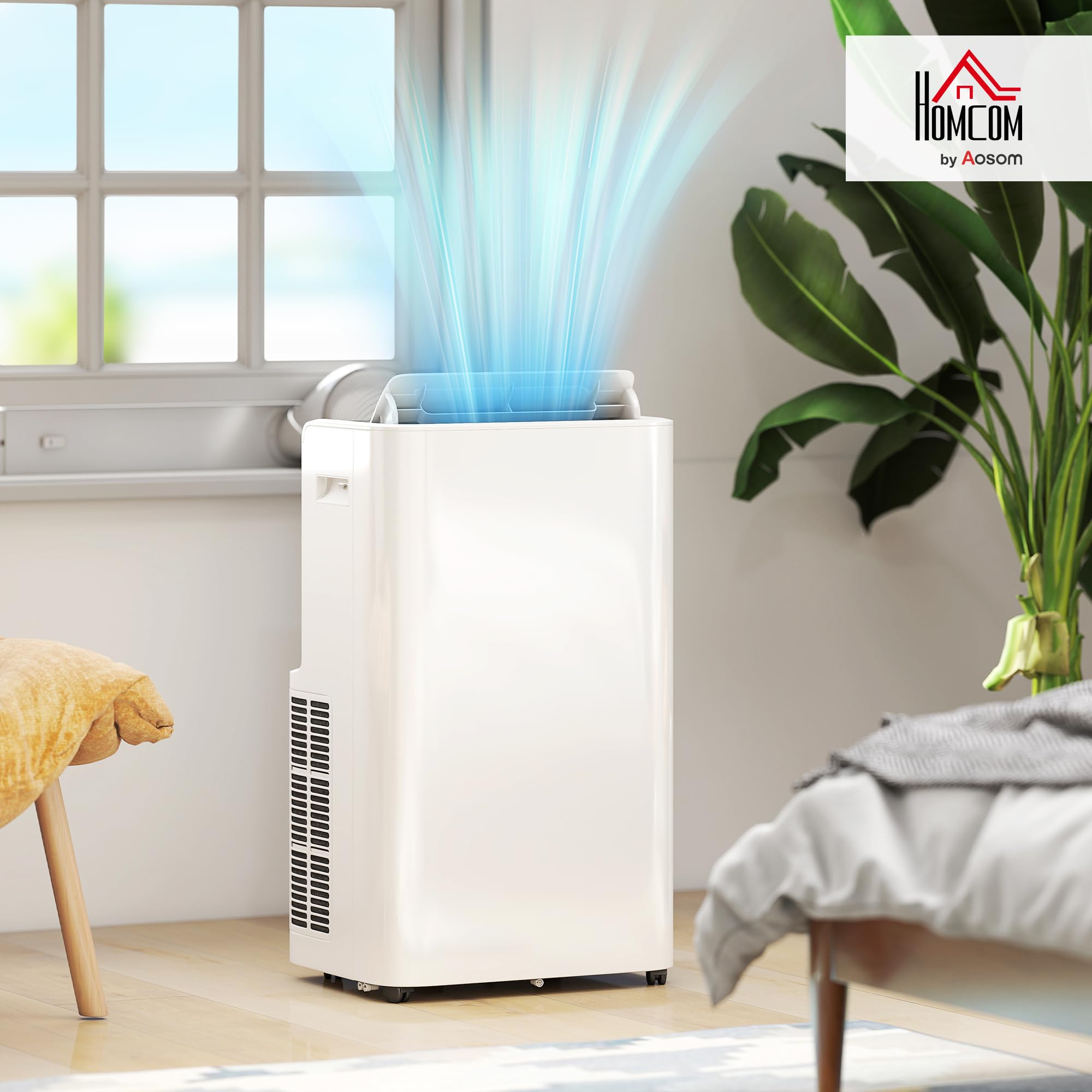
A HOMCOM Mobile Air Conditioner is essentially a compact system that cools indoor air while expelling heat outdoors through a duct. It is not a fan that “feels cool,” and it is not an evaporative cooler; it is a compressor-based cooling appliance, with clear implications for noise, energy use, and the need for proper sealing. Once you understand that from the start, HOMCOM Air Conditioner Reviews read differently: many complaints come from using it in a space that is too large or with an exhaust setup that is not properly resolved.
It also helps to assume that perceived performance depends heavily on home details: window type, available opening space, distance to the socket, and whether the hose can run without sharp bends. A HOMCOM AC Unit can be convincing in a simple room with a suitable window; in a living room with complex glazing or no realistic way to seal, the same unit can feel like it is “always working” without reaching the comfort you want.
What Usually Decides The Experience: Installation And Daily Control
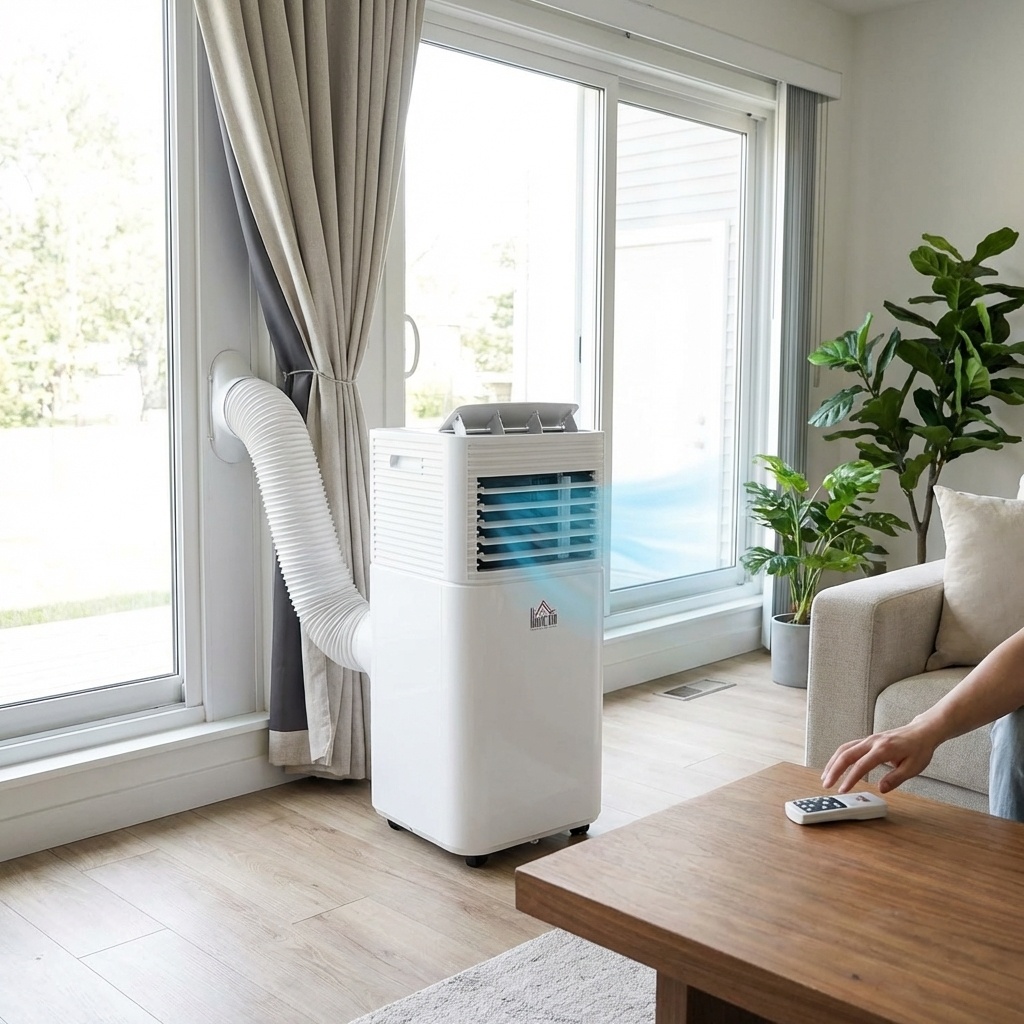
With a HOMCOM Aircon Unit, installation is not a minor step; it is part of performance. If the window is poorly fitted, hot air re-enters and the unit compensates with more compressor time, more noise, and a lower sense of efficiency. That is why, when assessing a HOMCOM Air Con, it helps to think through the real scenario: sliding window, casement window, blinds, insect screen, thermal curtains. Each combination changes how easy it is to seal properly.
In day-to-day use, controls matter more than people expect. A comfortable remote, a reliable timer, and clear mode feedback make it easier to use the unit consistently. When usage becomes “on and off” because it is annoying to manage, results are usually worse: it gets switched on too late, switched off before the room stabilises, and the final impression becomes that the HOMCOM Air Conditioner “is not strong,” when it is really being used outside its strengths.
Information, Manuals, And What Is Worth Having To Hand
To avoid friction, it helps to know that many searches end up at the HOMCOM Air Conditioner Manual. Not out of curiosity, but for typical needs: how to drain in dehumidifier mode, what a code means, or how to clean the filter without dismantling the front. In a serious evaluation, the availability and clarity of that information matters, because it affects whether the unit stays usable through summer, when nobody wants to improvise with a full tank or a confusing setting.
That is the foundation: what you are actually buying when you look at a HOMCOM Portable AC, and what conditions tend to separate a good experience from a predictable disappointment. With that framework in place, it makes sense to look at real-world performance, comfort, and the details that show up after weeks of use.
Real-World Cooling Behavior Of A HOMCOM Air Conditioner
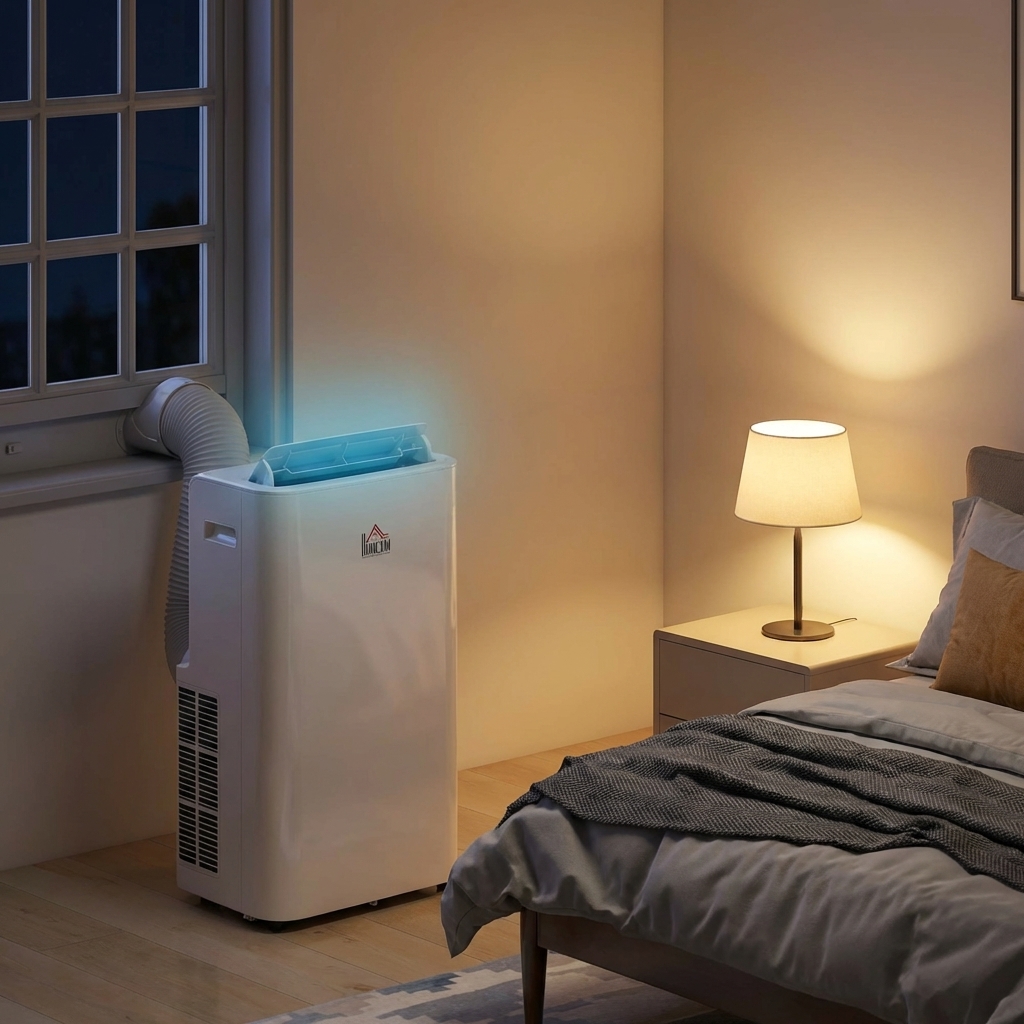
A HOMCOM Air Conditioner generally feels most convincing when the room is already close to manageable and the unit is asked to pull down a few degrees rather than rescue a space that has been heat-soaked all day. In practical terms, performance is shaped less by the headline BTU number and more by how quickly warm outdoor air leaks back in through doors, thin glazing, or a poorly sealed exhaust setup. A HOMCOM Portable Air Conditioner can look underpowered on paper and still feel effective in a bedroom at night, while a higher-rated unit can disappoint in a sun-facing lounge that never stops gaining heat.
In HOMCOM Air Conditioner Reviews, the most consistent “it works” stories tend to come from controlled conditions: a single room, a closed door, and a reasonably short exhaust run. The moment the space behaves like an open-plan area, the same HOMCOM Air Conditioning Unit can start to feel like it is always running but never quite catching up. That is not a flaw unique to this brand; it is how portable systems behave when the load is bigger than the setup can realistically handle.
Where A HOMCOM Portable Air Conditioner Feels Strongest
There is a specific pattern where a HOMCOM Air Conditioner often performs better than expected: intermittent, targeted cooling. Bedrooms, small home offices, and rented rooms are typical wins because the unit can be positioned close enough to the problem area and the door can stay shut.
In those spaces, the strongest practical advantages usually look like this:
-
Fast perceived relief near the airflow because cool discharge air reaches you quickly, even before the whole room stabilises.
-
Flexible placement that suits temporary living situations, where drilling or permanent installation is not realistic.
-
Simple seasonal storage since a HOMCOM Portable AC can be moved out of the way once the heat passes, which matters in smaller homes.
The point to watch is that “feels strong” can be very local. If the goal is a uniform temperature across a larger room, the experience depends heavily on airflow path and whether cool air can circulate rather than short-cycle back into the intake area.
Factors That Change Results More Than People Expect
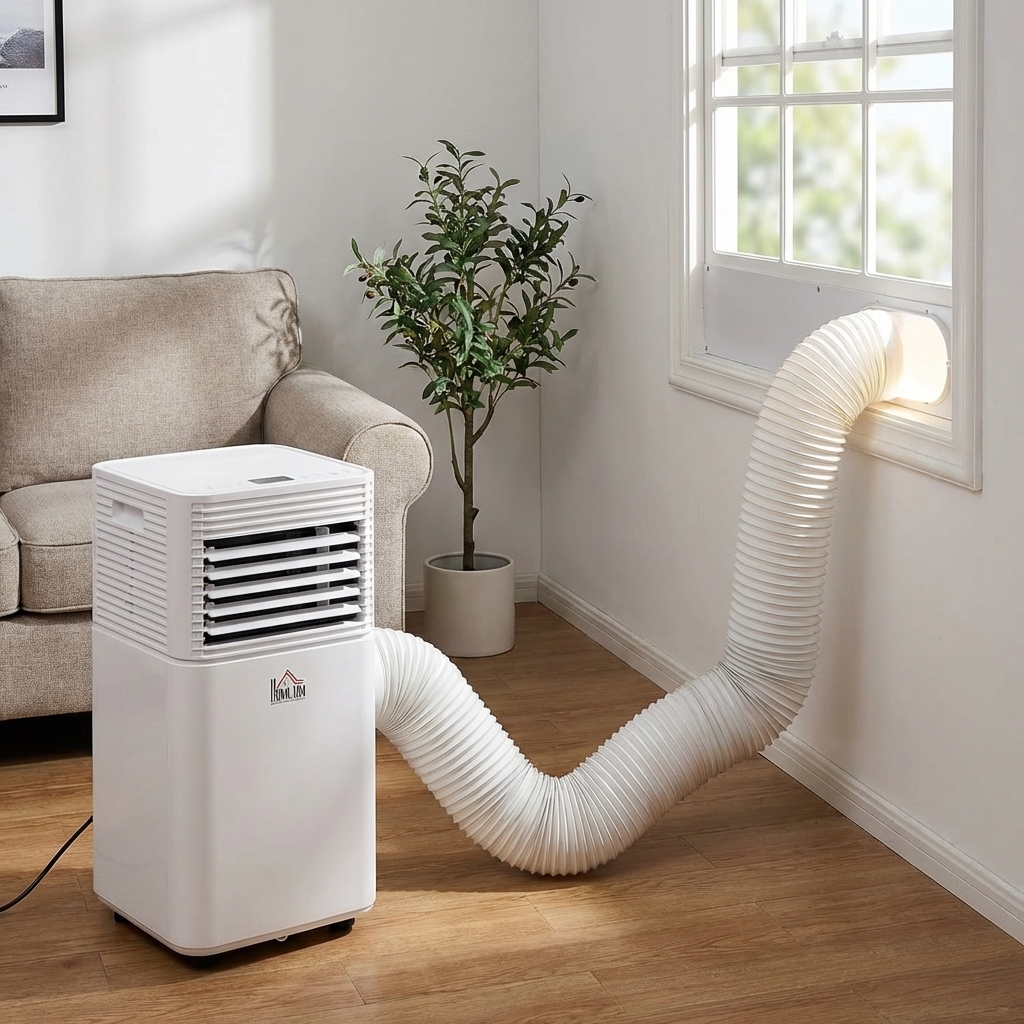
Two HOMCOM Aircon Units with similar ratings can feel different in day-to-day use because setup quality and room behaviour dominate. A portable system is only as good as its hot-air management; if the exhaust is kinked, too long, or leaking at the window, the unit effectively fights itself.
Several variables tend to decide whether a HOMCOM Air Conditioner becomes “enough” or merely “noticeable”:
-
Window sealing discipline; small gaps can matter because the unit is constantly creating pressure differences that invite warm air back in.
-
Solar gain; rooms with direct afternoon sun can outpace what mid-range portable cooling can remove.
-
Internal heat sources; gaming PCs, multiple monitors, cooking nearby, or several occupants increase the load quickly.
-
Door traffic; frequent opening makes the cooling feel inconsistent, which can be misread as weak performance.
These factors explain why someone can describe a HOMCOM Air Con as “great for sleeping” while another user in a different layout calls the same category “not powerful enough.” Context is doing a lot of the work.
Noise, Sleep Comfort, And Daytime Practicality
Even when a HOMCOM Air Conditioner cools adequately, the decision often turns on noise tolerance. Portable units place the compressor and fan in the room, so the sound profile is not just a gentle fan hum; it is a mix of airflow and compressor cycling. For light sleepers, that cycling can be more disruptive than a steady fan, even when overall volume is not extreme.
This is where expectations should be calibrated: a HOMCOM Mobile Air Conditioner can be a reasonable compromise for people who prioritise cooling over near-silence, but it may feel limiting in situations where a quiet bedroom is non-negotiable. The practical workaround is often placement and airflow direction rather than chasing marginal differences between models.
BTU Positioning Across The HOMCOM Range (7000–14000 BTU)
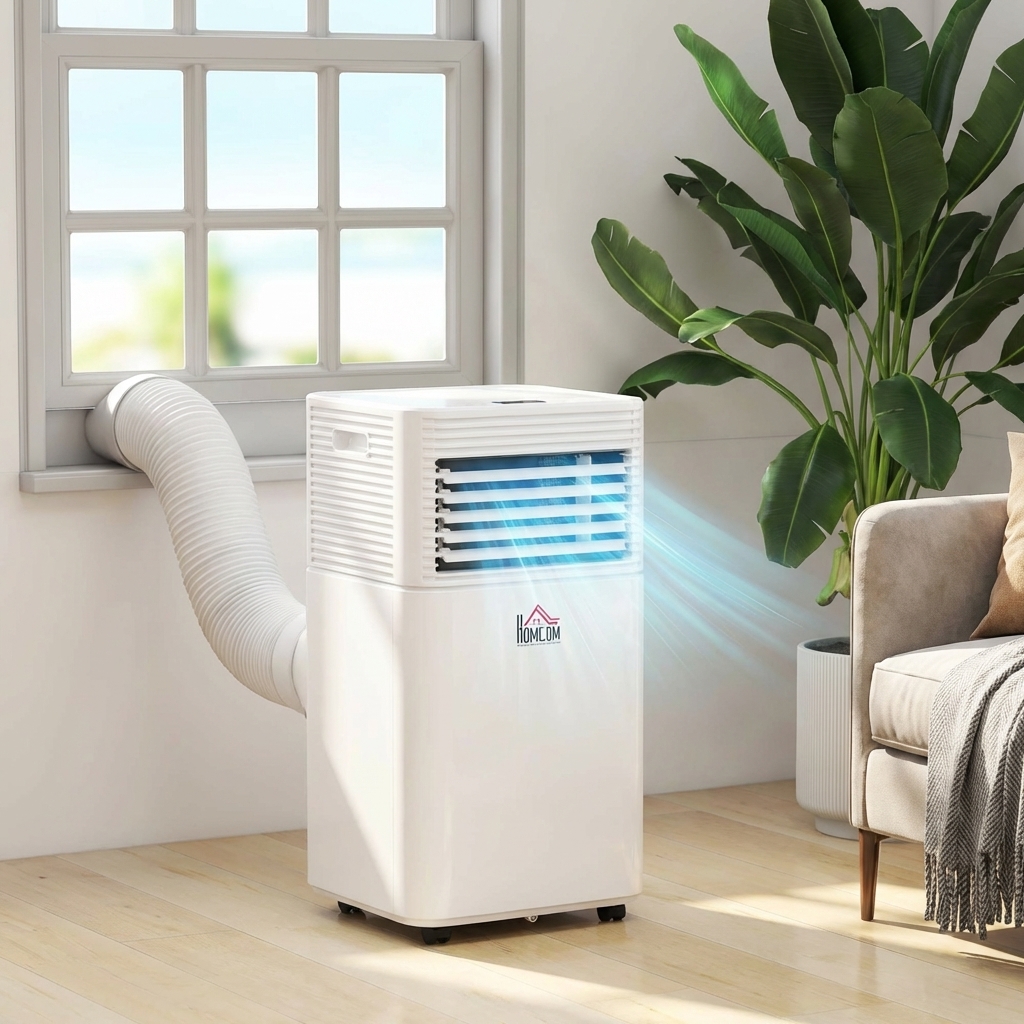
The term HOMCOM Air Conditioner covers a range rather than one single unit in most shopping journeys. In that category sense, the meaningful differences are not abstract specifications; they show up as “what kind of room and heat load can this cope with without feeling constantly maxed out?”
| HOMCOM BTU Tier | Typical Fit In Real Use | When It Can Feel Limiting |
|---|---|---|
| HOMCOM 7000 BTU | Small bedrooms and compact home offices where doors stay closed and heat gain is moderate. | Sun-facing rooms or spaces with high device heat; cooling can feel local rather than room-wide. |
| HOMCOM 9000 BTU / HOMCOM 9000 BTU Portable Air Conditioner | Average bedrooms and studies; often a balanced choice when window sealing is done carefully. | Open-plan areas or frequent door opening; the unit may run continuously without strong pull-down. |
| HOMCOM 10000 BTU Portable Air Conditioner / HOMCOM 10000 BTU | Medium rooms with moderate heat load; tends to recover faster after brief door openings. | High solar gain or multiple occupants; expectations need to stay realistic on peak days. |
| HOMCOM 12000 BTU Air Conditioner To HOMCOM 14000 BTU Air Conditioner | Larger rooms or hotter top-floor spaces, especially where faster temperature drop is the goal. | Poor exhaust management; higher capacity cannot compensate for a leaky window kit and may feel noisy in small rooms. |
This table is less about “bigger is always better” and more about matching capacity to heat load. Oversizing can create its own discomfort if the unit becomes unnecessarily loud for a small bedroom, while undersizing is the classic reason a portable unit feels like it never stops.
Dehumidification: The Quiet Advantage Of A HOMCOM Air Conditioning Unit
In humid spells, a HOMCOM Air Conditioner can feel more effective than the temperature number suggests because removing moisture changes comfort quickly. That matters in bedrooms and coastal climates where the sticky feeling is the real problem. The trade-off is that dehumidification performance is tied to runtime; if the unit cycles off frequently, moisture control can become less consistent.
It also changes the comfort calculation for some users: a slightly higher set temperature can still feel comfortable when humidity drops. This is one reason some HOMCOM Air Conditioner Reviews sound surprisingly positive despite modest capacity claims.
Mobility And Placement: Useful, But Not Frictionless
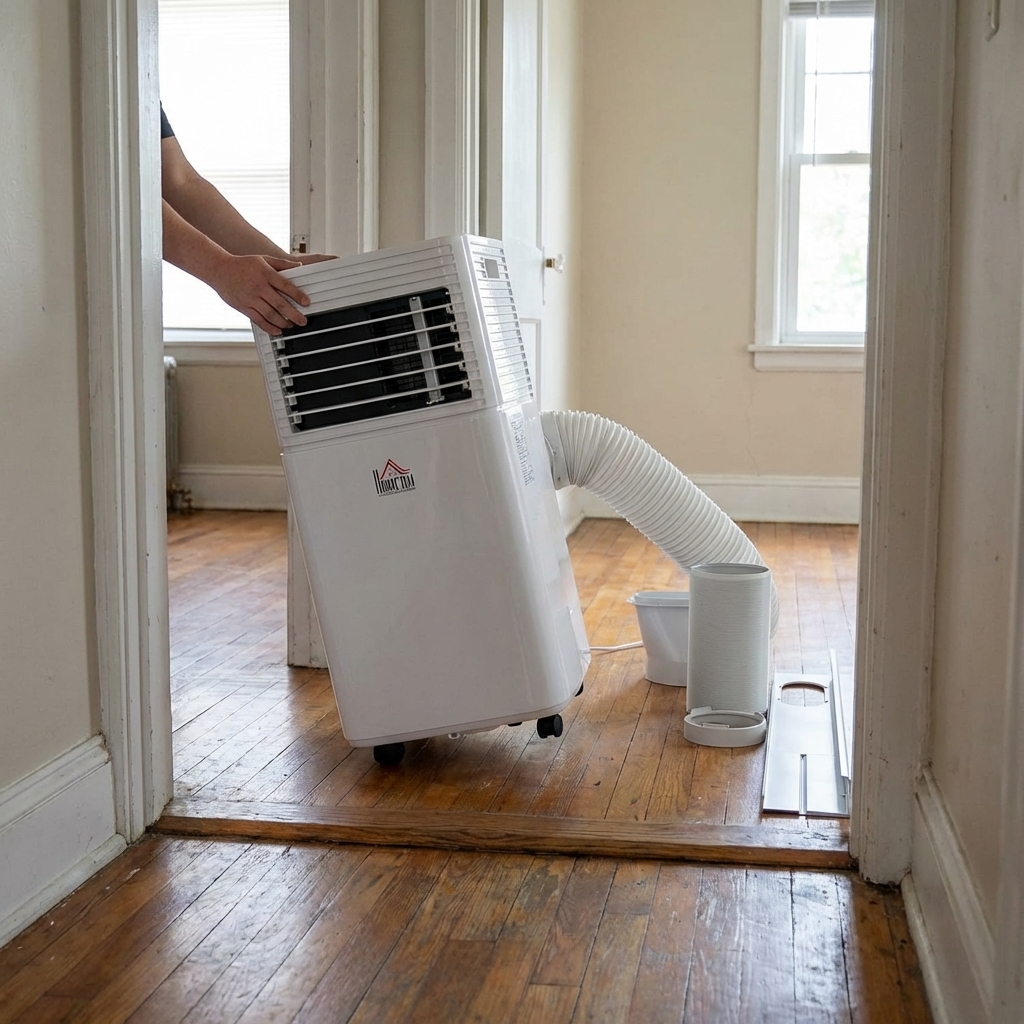
Calling a unit portable can hide the reality that it is portable in short moves, not weightless. Rolling a HOMCOM AC Unit between rooms is straightforward when thresholds are flat and the exhaust kit can be re-seated quickly. In older homes with narrow windows or awkward openings, the “move it as needed” idea can become a weekly irritation, which then reduces how often the unit is actually used.
A practical decision point is whether the home has one main heat-problem room. If yes, a HOMCOM Portable Air Conditioner tends to make more sense because the installation can stay semi-permanent. If the plan relies on daily relocation, the hose and window kit become the real usability bottleneck.
Controls, Remote Expectations, And Manual Support
The day-to-day feel of a HOMCOM Aircon is shaped by control clarity: settings that are easy to adjust in the dark, a remote that responds reliably, and modes that behave predictably. In ownership queries, the HOMCOM Air Conditioner Manual is a common search for a reason; portable units often have mode interactions that are not obvious, especially around fan-only, cooling, and dehumidifying behaviour.
For buyers who dislike “mystery behaviour,” the availability and readability of the HOMCOM Air Conditioner Manual becomes part of the product experience. It is not glamorous, but it reduces frustration when the unit does not appear to cool as expected because it is actually constrained by a mode or a setpoint logic.
Situations Where A HOMCOM Air Conditioner May Not Fit Cleanly
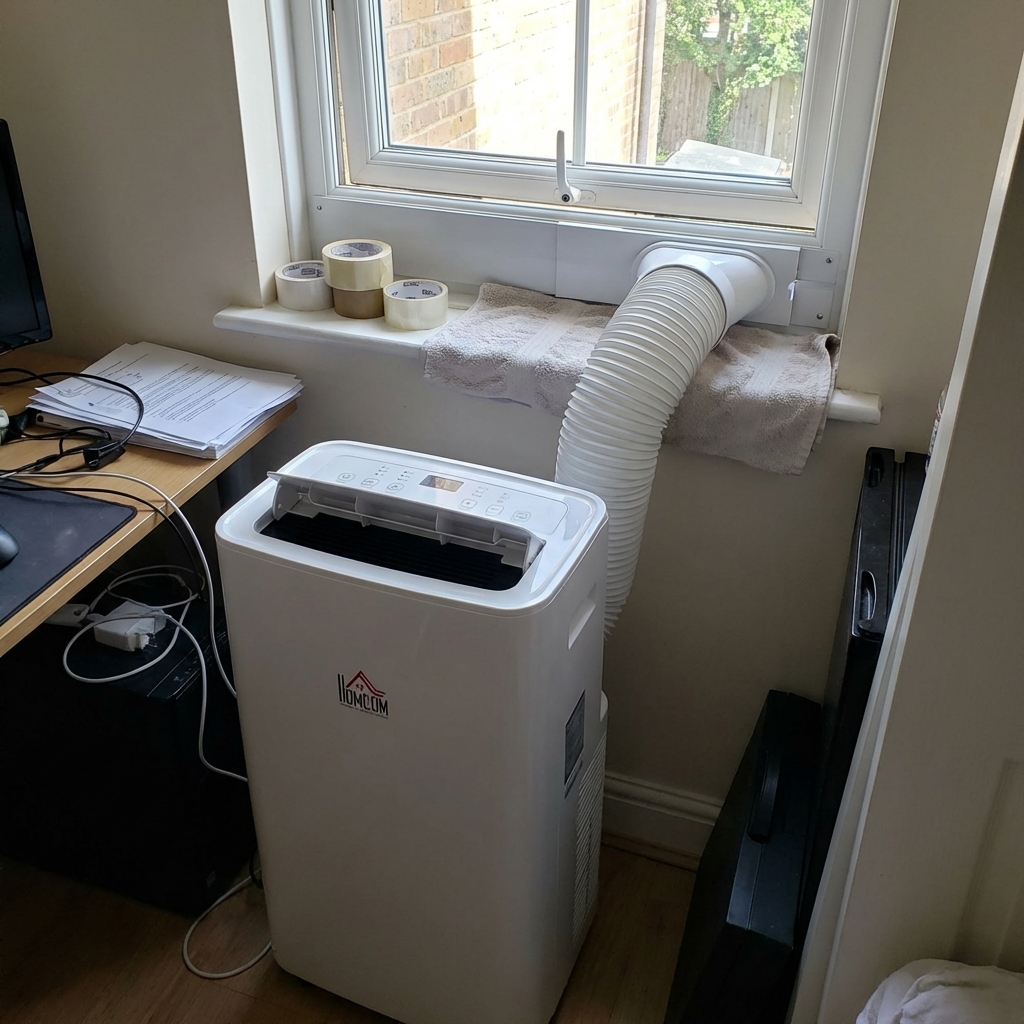
A HOMCOM Air Conditioner can be the right compromise, but there are clear contexts where the category itself starts to look like the wrong tool. Not because it cannot cool at all, but because the compromises become too visible.
These are the most common mismatch scenarios:
-
Open-plan living areas where there is no practical way to isolate the cooled zone, so the unit is always chasing a moving target.
-
Very hot top-floor rooms with strong sun exposure, where even a HOMCOM 12000 BTU Air Conditioner may feel constantly on edge unless shading and sealing are addressed.
-
Users with low noise tolerance; the core limitation is having the compressor indoors, not a specific brand choice.
-
Windows that do not accept standard kits; improvisation can work, but poor sealing can erase much of the benefit.
None of these points automatically disqualify the product, but they do clarify why two households can report very different satisfaction with what is, on paper, the same HOMCOM Air Conditioning Unit category.
HOMCOM Air Conditioner In Real Homes: Where It Makes Sense And Where It Starts To Feel Limiting
A HOMCOM Air Conditioner tends to make the most sense when the goal is targeted comfort in one main room, with expectations set around “noticeable improvement” rather than whole-home climate control. In practical terms, a HOMCOM Portable Air Conditioner is usually chosen because it can be moved, stored, and used seasonally without committing to permanent installation.
It is a better fit in spaces where airflow can be managed: a room with a closable door, a window that can accept an exhaust setup, and a layout that does not force the unit to fight constant heat gain from open-plan circulation. In those conditions, the HOMCOM Air Conditioning approach feels straightforward: cool the occupied zone, then maintain.
It can feel less satisfying when the room is large, sun-exposed, and frequently opened to hallways or kitchens. That is where buyers often expect “AC power” but end up experiencing “AC boundaries.” When reading HOMCOM Air Conditioner Reviews, the most useful ones are the reviews that describe the room, the window situation, and how often the door is opened, because that context predicts performance more reliably than broad star ratings.
Choosing Between Sizes Like HOMCOM 9000 BTU And HOMCOM 12000 BTU Air Conditioner Options
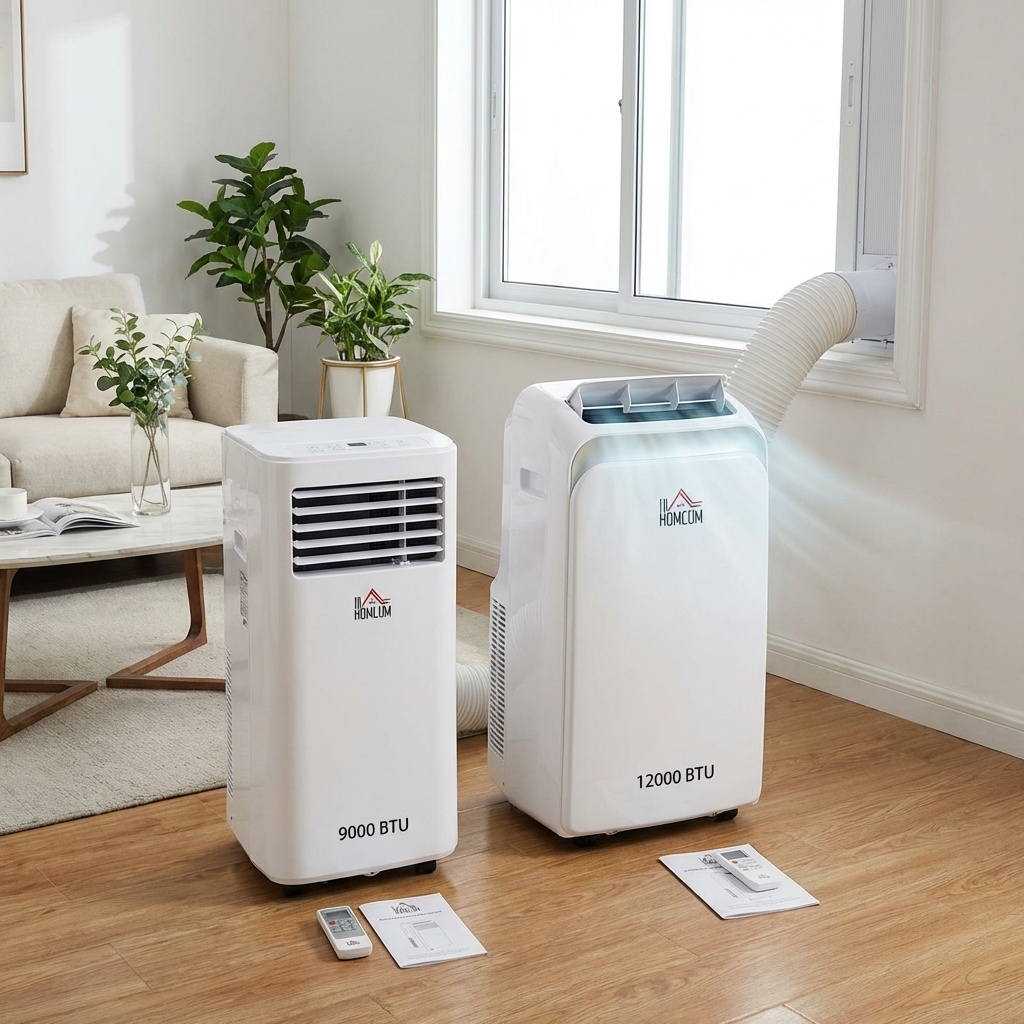
Within the HOMCOM Aircon range, sizing is the decision that most directly determines satisfaction. A smaller unit can be perfectly reasonable for a modest bedroom, but it will appear inconsistent if it is expected to pull down temperature quickly in a warm, larger room. Moving up to something like a HOMCOM 12000 BTU Air Conditioner can be a practical step when the room has higher heat load, but it also tends to bring the usual trade-offs: more weight to move, more noise potential, and a stronger need for a tidy exhaust route.
BTU numbers are not a guarantee of comfort; they are a rough capacity signal. The real-world question is whether the unit can keep pace with the room’s heat gain. For many households, the safer decision is to avoid running a borderline-sized model at maximum output all day, because that is where noise and ongoing wear become more noticeable over a season.
For buyers debating a HOMCOM 9000 BTU Portable Air Conditioner versus stepping up, the most honest rule of thumb is this: if the room already feels challenging in summer (strong afternoon sun, warm top floor, lots of glass), a HOMCOM 9000 BTU unit may cool, but it can feel slower and more easily disrupted by door openings. In more moderate rooms, it can be the more balanced choice.
Practical Ownership Details That Decide Whether The Unit Feels Easy
Day-to-day satisfaction with a HOMCOM Air Conditioner is often decided by small ownership realities rather than the headline cooling claim. Setup and routine handling can be smooth, but only if the room can accommodate the exhaust and the unit can sit where it is not constantly being repositioned.
These are the ownership points that tend to matter most once the novelty wears off:
- Placement discipline matters: if the HOMCOM AC Unit is forced into a corner with poor airflow or a kinked exhaust route, cooling becomes less stable and the unit may run harder than necessary.
- Noise tolerance becomes personal: a HOMCOM Portable AC can be fine for living rooms and home offices, but for light sleepers it may be better as a pre-cool tool before bedtime rather than an all-night companion.
- Window compatibility is not optional: if the exhaust solution is improvised and leaky, expectations should be lowered, because warm air re-enters and undermines the unit’s effort.
- Seasonal handling is part of the deal: storing the unit, keeping the hose and window kit together, and planning where it will live when not in use affects whether it feels convenient or annoying.
People who want fewer friction points usually do better treating this as a “set it up once per season and leave it” appliance. If it is moved daily between rooms, the practical overhead rises quickly.
Reliability Expectations And The Value Of The HOMCOM Air Conditioner Manual
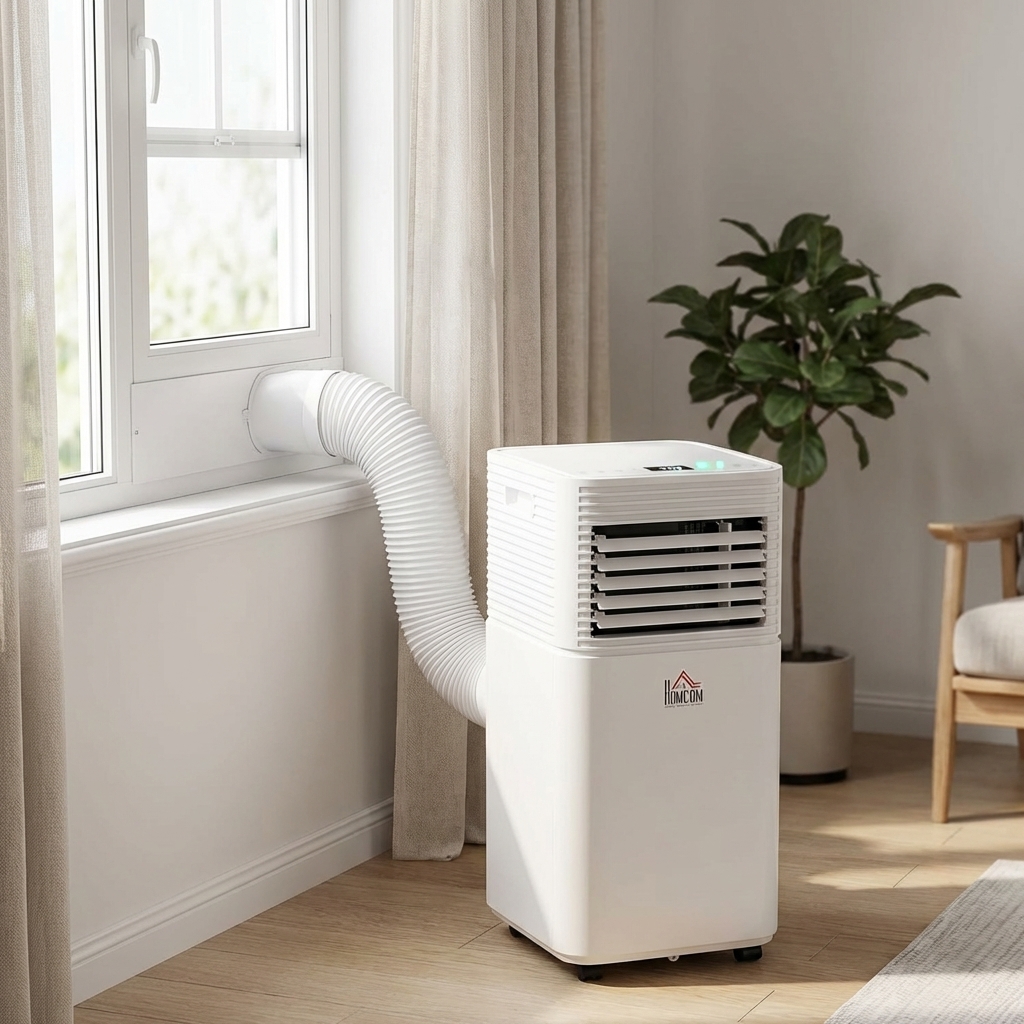
With a HOMCOM Portable Air Conditioner, reliability is rarely about a single dramatic failure; it is more often about avoiding preventable misuse. Many “not cooling” complaints traced in HOMCOM Air Conditioner Reviews end up being installation issues (exhaust leaks), unrealistic room sizing, or settings that do not match the environment.
The HOMCOM Air Conditioner Manual matters more than most buyers expect, because portable AC units are sensitive to setup details. It is also where owners typically find the exact steps for drainage behaviour, error signals, and cleaning intervals. Treating the manual as optional tends to create a cycle of “it worked last week, now it feels weaker,” even when the underlying cause is simple.
If the buying decision hinges on low-maintenance ownership, it is worth acknowledging that a HOMCOM Air Conditioning Unit asks for basic routine attention. Not constant, but not zero either.
Who The HOMCOM Air Conditioner Is For, And Who Should Look Elsewhere
A HOMCOM Air Conditioner is a sensible choice for a buyer who wants room-level cooling without permanent installation, accepts the normal portable-unit compromises, and can set up a clean exhaust route. It is also a rational option for renters or for occasional-use spaces where central systems are not available or not worth upgrading.
It may not suit households that want quiet, invisible comfort, or those trying to cool a large open-plan area as if it were a fixed system. In those cases, even a higher-capacity HOMCOM Mobile Air Conditioner can feel like it is always chasing the room rather than controlling it.
The clearest expectation to hold: a HOMCOM Air Conditioner can deliver meaningful relief when the room and setup cooperate. If the room is poorly suited, the unit will still run, but the experience can feel like constant management rather than effortless comfort.
FAQ: HOMCOM Air Conditioner Questions That Usually Come Up Before Buying
Is A HOMCOM Air Conditioner Worth It Compared With Other Portable AC Units?
A HOMCOM Air Conditioner is typically worth it when the room is appropriately sized, the exhaust setup is tight, and the goal is targeted cooling rather than whole-home performance. If the room is demanding, value drops because the unit has to run harder and the comfort gain may feel smaller.
What Should Be Checked First If A HOMCOM Portable Air Conditioner Is Not Cooling Well?
Start with the exhaust path and window seal quality, because leaks and backflow can erase a lot of cooling effect. Next, sanity-check the room size and whether doors are being left open, since that can make even a capable unit feel inconsistent.
Does A HOMCOM 9000 BTU Portable Air Conditioner Make Sense For A Bedroom?
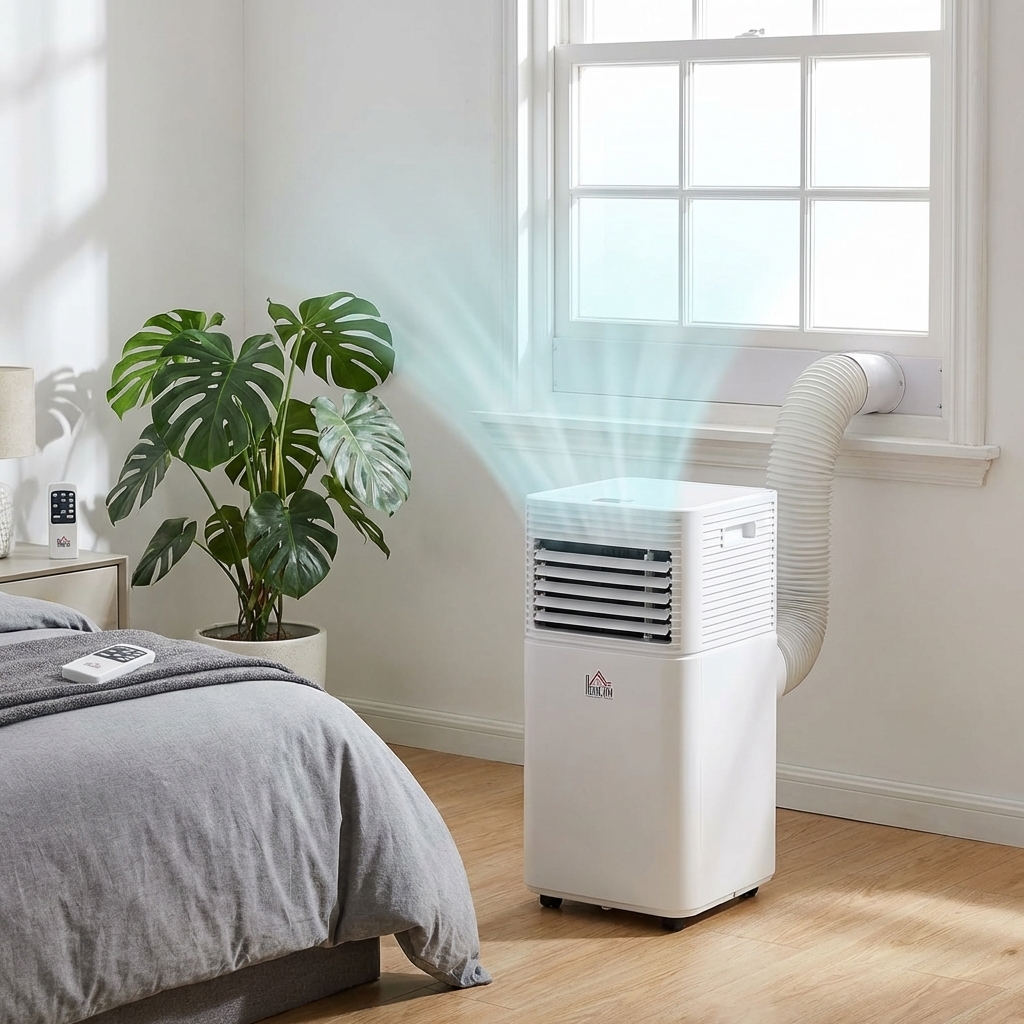
It can, especially for a typical-sized bedroom with a closable door and manageable sun exposure. If the room runs hot or is larger than average, stepping up capacity usually reduces slow-cooling frustration more than tweaking settings does.
Do Owners Really Need The HOMCOM Air Conditioner Manual After Setup?
Yes, because it is the fastest way to interpret drainage behaviour, maintenance intervals, and any error indicators without guessing. The manual also helps avoid common setup mistakes that get mislabeled as performance problems.
Are HOMCOM Air Conditioner Reviews Reliable For Predicting Noise Levels?
They are useful when reviewers describe where the unit was used (bedroom versus living room) and how sensitive they are to sound. Noise perception varies widely, so the best signal is consistent feedback tied to a similar room and usage pattern.