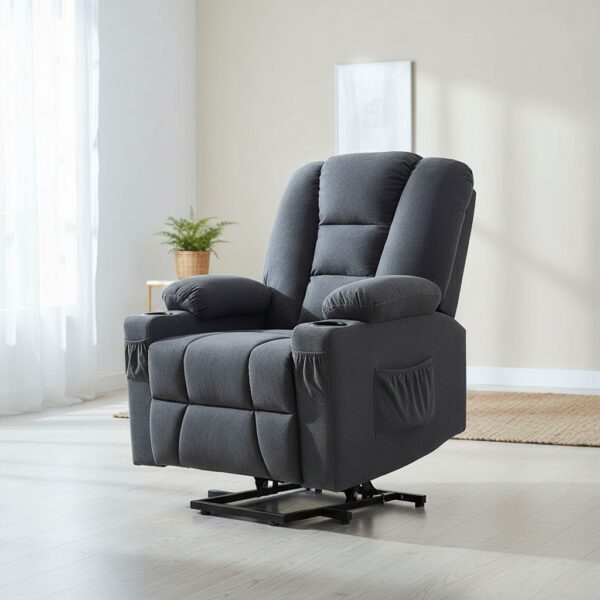
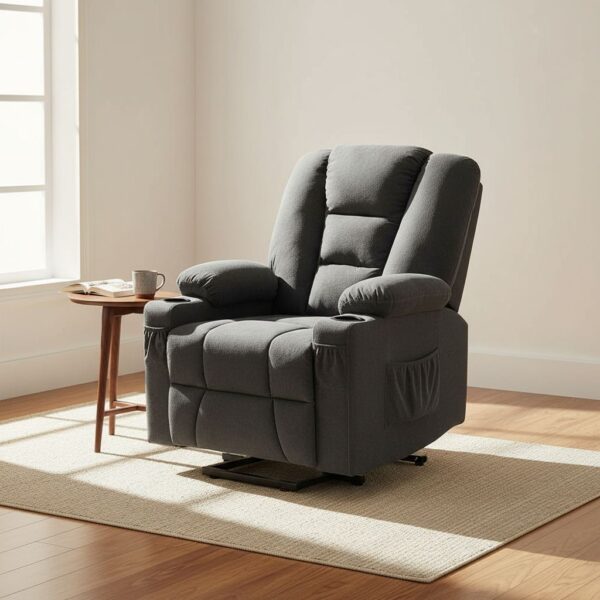
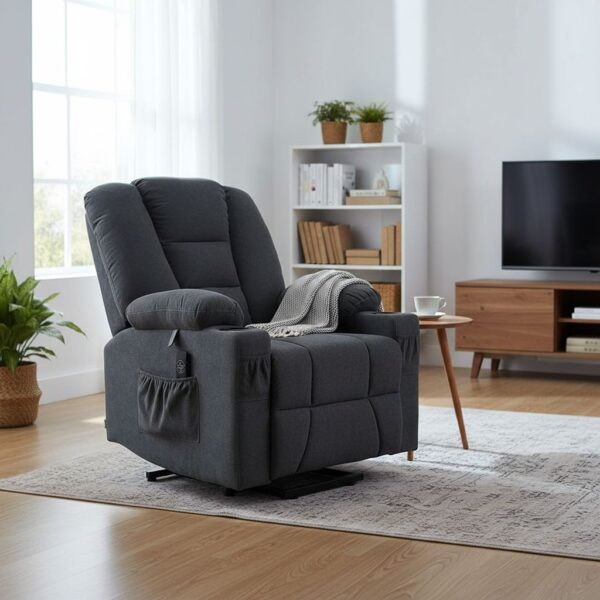
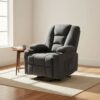
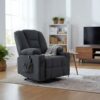
HOMCOM Oversized Riser and Recliner Chairs for the Elderly
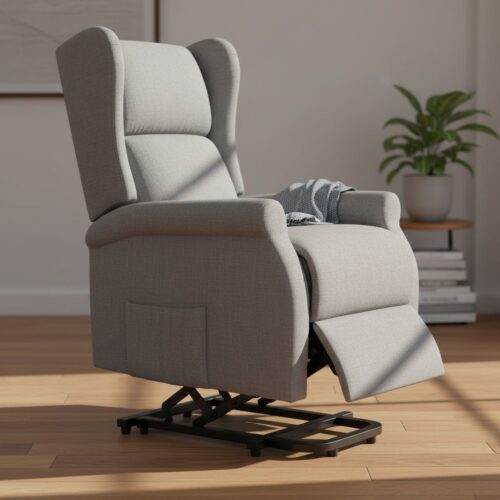
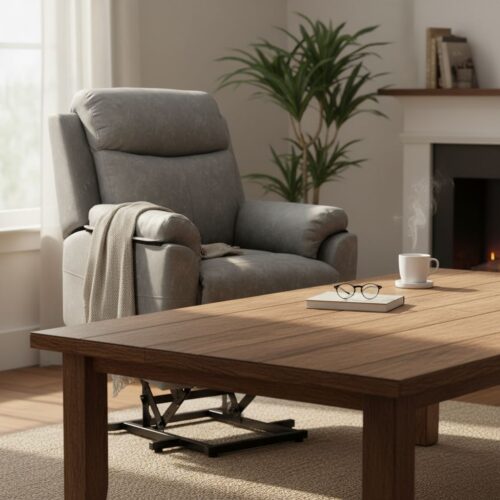
HOMCOM Oversized Riser and Recliner Chairs for the Elderly is designed as a supportive living-room lift chair that prioritises easier sit-to-stand transitions and relaxed reclining in one piece. For homes where comfort needs to be paired with practical day-to-day usability, the combination of powered lift assistance, a reclining function, and a hand-held remote helps keep adjustments straightforward and repeatable.
Key characteristics of HOMCOM Oversized Riser and Recliner Chairs for the Elderly
- Powered lift assistance supports safer, more controlled standing transitions.
- Reclining function adjusts posture for reading, resting, or television.
- Remote control keeps seat positioning changes simple and consistent.
- Side pockets and cup holder keep essentials within easy reach.
Overview of HOMCOM Oversized Riser and Recliner Chairs for the Elderly
As Oversized Riser and Recliner Chairs for the Elderly, this model focuses on two common comfort problems in everyday seating: getting up from a low seat and maintaining a comfortable posture for longer periods. Lift chairs address the first issue by raising the seat base to reduce the amount of knee and hip effort needed to stand. Reclining addresses the second by allowing the backrest angle to change, helping distribute pressure more evenly than a fixed upright chair.
In normal use, the goal is not only “softness”, but stable support. A chair can feel plush yet still be difficult to use if the controls are awkward or if the sitting position encourages slumping. The lift-and-recline format is especially relevant in a living room where the chair is used frequently, often for longer sessions, and where small practical details—like storage pockets—reduce repeated reaching and bending.
The fabric upholstery and charcoal grey finish are a pragmatic pairing for shared spaces. Fabric tends to feel less cold to the touch than some alternatives, which can matter for comfort in cooler rooms. A darker neutral tone also suits many interiors while being more forgiving of day-to-day marks than very light colours.
Benefits of HOMCOM Oversized Riser and Recliner Chairs for the Elderly
HOMCOM Riser and Recliner Chairs are typically chosen for functional comfort: the chair is meant to adapt to the person, rather than forcing the person to adapt to the chair. The key benefit is the way powered movement can reduce strain, particularly during repeated stand-sit cycles across the day. When seat height and leverage are improved through lift assistance, the user can stand with less momentum and fewer abrupt movements, which generally feels more controlled.
Reclining provides posture variation. Even without specifying angles, the ability to shift from upright to a more open hip angle can help reduce the feeling of stiffness that comes from staying in one position. For many people, the most comfortable setup changes depending on the activity: upright for conversation, slightly reclined for television, and more reclined for resting.
The remote control is more than a convenience feature; it supports repeatability. When controls are simple, users are more likely to make small adjustments that improve comfort—rather than staying in a “good enough” position. In ergonomics terms, small posture changes over time can be valuable because they alter pressure points and reduce continuous loading in one area.
Everyday usability also comes from the integrated storage features. With side pockets, items like glasses, a book, or a TV remote can be kept close. The cup holder reduces the need for an extra side table, and it helps keep drinks stable and within reach—useful in living rooms where furniture is arranged around a central seating area.
Materials and build of HOMCOM Oversized Riser and Recliner Chairs for the Elderly
HOMCOM Oversized Riser and Recliner Chairs Elderly uses fabric upholstery, which affects both comfort and maintenance expectations. Fabric generally provides a softer, more breathable contact surface than many smooth coverings, and it can feel less slippery when shifting position. For users who reposition frequently—adjusting hips back in the seat or changing shoulder posture—this can help them feel more secure and “anchored” rather than sliding forward.
From a build-quality perspective, comfort is a combination of padding and structure. The chair needs enough cushioning to reduce pressure at the pelvis, thighs, and upper back, but also enough underlying support to prevent bottoming out or excessive sagging. In lift chairs, stable support is particularly important because the seat moves under load; a well-supported seat base helps the lift action feel controlled and predictable.
Practical features such as side pockets and a cup holder are also part of the construction logic. They are positioned to reduce repeated twisting and reaching—movements that can be uncomfortable for some users when done frequently. Keeping small items on the chair itself can simplify the immediate environment around the seat, which is helpful in tighter living rooms.
Colour choice matters in real homes. Charcoal grey is typically easier to integrate with mixed wood tones, metal accents, and neutral rugs, and it often looks consistent under different lighting conditions. This helps the chair feel like a normal part of the living room rather than a purely clinical aid, while still keeping function central.
How to use this Riser and Recliner Chairs
For day-to-day use of Oversized Riser and Recliner Chairs for the Elderly HOMCOM, start with a stable placement on a flat floor, leaving enough clearance behind the chair for the backrest to recline. A lift chair needs space to move without contacting walls or nearby furniture, and adequate clearance helps prevent scuffs and avoids restricting the recline path.
When sitting down, the most controllable approach is to back up until the legs touch the front of the seat, then lower slowly into the chair rather than dropping. Once seated, use the remote control to fine-tune the position. Small adjustments matter: the ideal upright position typically keeps the pelvis supported at the back of the seat, with the feet able to rest comfortably and the shoulders supported without forcing the head forward.
When standing, use the lift function to bring the seat up until it provides a helpful forward-and-up support. The aim is to stand with controlled effort, using the chair’s assistance to reduce strain. Hands can be placed on the armrests for stability, but the movement should remain steady rather than rushed.
For reclining, adjust gradually and pause at a few positions to find what suits the activity. A slightly reclined posture can reduce pressure through the lower back for some users, while still allowing easy conversation or TV viewing. If the user tends to slide forward when reclined, reposition by shifting the hips back in the seat before reclining further, which helps maintain back support.
For everyday organisation, keep frequently used items in the side pockets to reduce repeated reaching to low tables. The cup holder can be reserved for lidded drinks to minimise spill risk, especially when the chair is being adjusted.
Technical specifications of HOMCOM Oversized Riser and Recliner Chairs for the Elderly
| Feature | Details |
|---|---|
| Brand | HOMCOM |
| Product category | Recliners |
| Product format | Riser and Recliner Chairs |
Specifications are most useful when they help set expectations for real-life placement and use. If room space is limited, prioritise measuring the intended spot and ensuring there is enough clearance for reclining movement. For comfort, consider how the chair will be used most: frequent sit-to-stand support, longer seated sessions, or both. This helps determine where the chair should sit in the living-room layout—close enough to everyday essentials, but with enough space behind it for smooth reclining.
For maintenance, fabric upholstery typically benefits from regular light vacuuming to reduce dust build-up in seams and around the seat. Address small spills quickly to minimise staining, and avoid harsh scrubbing that can roughen the fabric surface. Keeping the remote in the side pocket when not in use also reduces the chance of it slipping between cushions or being misplaced.