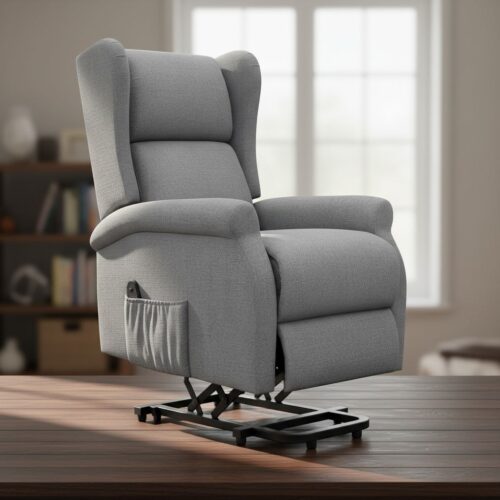
HOMCOM Retro Accent Chair
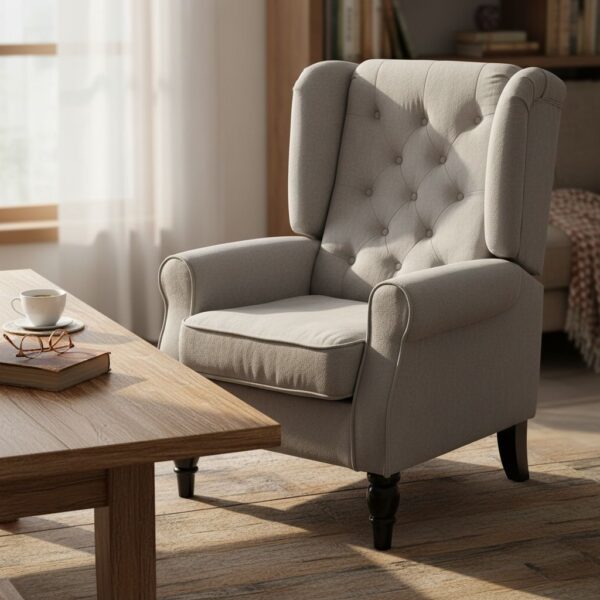
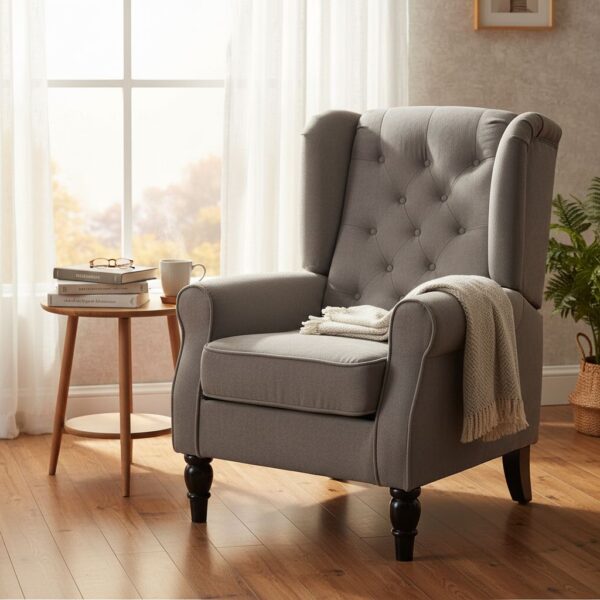
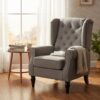
HOMCOM Retro Accent Chair is designed to bring a classic wingback silhouette into everyday living spaces without feeling heavy or formal. The high back and wrapped sides create a naturally supportive sitting zone, while the button-tufted look adds structure that suits both modern and traditional rooms. Used as a reading chair, a bedroom corner seat, or a living-room accent piece, it’s the kind of chair that visually anchors a space while still prioritising comfort.
Key characteristics of HOMCOM Retro Accent Chair
- Wingback shape helps reduce draughts and supports shoulder positioning.
- Button-tufted back maintains a tailored look through regular use.
- Wood frame provides a stable base for daily sitting.
- Grey upholstery blends easily with warm woods and cool-toned interiors.
- Accent-chair proportions suit corners, bay windows, and smaller rooms.
Overview of HOMCOM Retro Accent Chair
As a Retro Accent Chair, the overall design focuses on a defined backrest, supportive sides, and a seat that feels contained rather than open and flat. That “enclosed” sensation is a big part of why wingback styles work well for reading or relaxing: the chair encourages a slightly more upright posture than deep lounge seating, which can be helpful for neck and upper-back comfort over time.
The product’s visual language is intentionally retro, but the neutral grey upholstery keeps it versatile. In practical room planning, grey is a forgiving choice: it tends to hide minor daily marks better than very light fabrics and pairs cleanly with both black metal and natural wood finishes. Placed under a floor lamp or beside a side table, the chair reads as a dedicated seating spot rather than spare furniture.
Because this is an accent format, it is best thought of as a personal seat for one person at a time—ideal for zoning a room. In open-plan layouts, a HOMCOM Chair like this can help define a reading area or a conversational corner without needing a large sofa footprint.
Benefits of HOMCOM Chair
The most immediate ergonomic benefit is the wingback profile. On a wingback armchair, the side panels can help guide the shoulders into a centred position, which many people find more comfortable for reading, knitting, or scrolling on a tablet. This shape also gives a sense of privacy in busier rooms, since the sides visually and physically frame the sitter.
The high back is another practical advantage. A taller backrest supports more of the thoracic spine (upper back) than low-backed accent chairs, which can reduce the urge to slump. For short sitting sessions, this can feel simply “cosy”; for longer sessions, it can translate into less neck fatigue—especially when paired with a small lumbar cushion if extra lower-back support is preferred.
The wood frame contributes to stability. In day-to-day use, frame rigidity matters because it affects how the chair responds when sitting down or shifting position. A stable frame tends to feel more reassuring and can reduce squeaks or wobble that often develop when a chair flexes excessively.
Finally, the button-tufted design is not only decorative. Tufting helps keep the upholstery and internal padding visually organised so the backrest maintains its structured look. In a living room or bedroom, this can help the chair continue to look “pulled together” even with frequent use.
Materials and construction of HOMCOM Chair
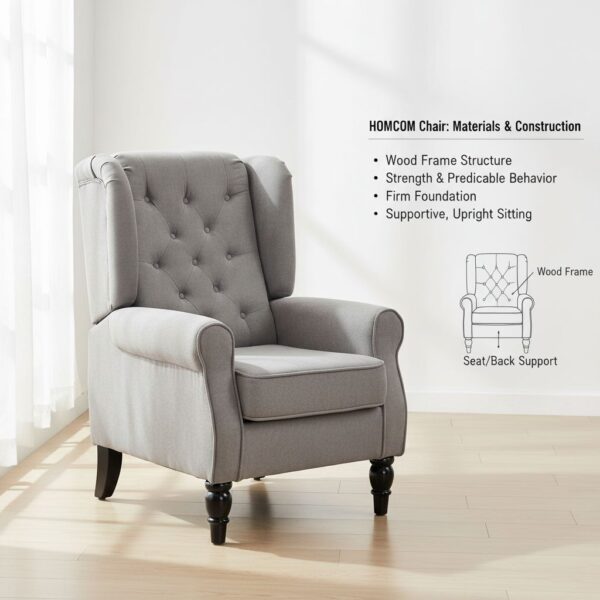
HOMCOM Retro Accent Chair uses a wood frame as the underlying structure. From a furniture-performance perspective, a wood frame is valued for its balance of strength and predictable behaviour under load. It typically provides a firm foundation for the seat and back, which can be beneficial when the goal is a supportive, upright sitting feel rather than a sink-in lounge effect.
The upholstered exterior is designed to feel soft to the touch while keeping the silhouette crisp. With accent chairs, upholstery tension and seam placement matter: a well-defined wingback line helps the chair keep its intended posture support, while the upholstered arms and sides make contact points feel less abrupt than exposed wood.
Button tufting on the backrest influences how the surface wears. By creating anchored points, tufting can limit large-scale shifting of the fabric on the back panel. The practical implication is that small wrinkles may appear with use—as with most upholstered seating—but the overall back tends to keep a tailored, segmented look rather than becoming uniformly loose.
The combination of a shaped back, side wings, and structured frame means the chair is particularly suited to “task relaxation”: sitting to read, chat, or enjoy a drink, rather than sprawling. That’s not a limitation so much as a design intent typical of a HOMCOM Accent Chair Retro style.
How to use this Chair
Position the chair where the wingback sides can do their job. In practical terms, placing it slightly away from a direct draught source (like a frequently opened door) and near a light source (floor lamp or window) makes it more comfortable and more likely to be used daily. A small side table within easy reach supports better posture because it reduces repeated leaning and twisting to pick up items.
For sitting comfort, aim for full back contact: hips back in the seat, shoulders resting into the backrest. If a more upright posture is desired for reading, add a small lumbar cushion to support the natural curve of the lower back. If the seat feels slightly firm at first, a thin seat pad can soften pressure points without changing the chair’s supportive character.
To protect the upholstery in high-use households, consider consistent habits rather than heavy interventions: avoid sitting on sharp items in pockets, keep metal rivets or rough denim seams from repeatedly rubbing the same spot, and rotate where you sit if only one seat position is used. A throw draped over the back can reduce wear on the upper contact area while keeping the retro look intact.
Maintenance is simplest when handled little and often. Vacuum the upholstery using a soft brush attachment to remove dust from seams and tufted areas. For small marks, spot-clean gently and avoid over-wetting; excessive moisture can leave water rings on some fabrics and may take longer to dry in tufted sections.
Technical specifications of HOMCOM Retro Accent Chair
| Feature |
Details |
| Brand |
HOMCOM |
| Product category |
Chairs |
| Product format |
Chair |
In everyday styling, this Retro Accent Chair by HOMCOM works best when it has a little breathing room around it so the wingback outline is visible. If used in a bedroom, it can serve as a comfortable spot for putting on shoes or winding down with a book; in a living room, it can balance a sofa by adding a single-seat option that feels more structured and supportive.
For a cohesive look, pair the grey upholstery with one or two textures already present in the room—such as a wool throw, a matte ceramic lamp base, or a wood side table. This keeps the chair integrated rather than looking like a standalone piece. The wingback form naturally reads as a “feature seat”, so a simple surrounding layout often looks most intentional.
Overall, HOMCOM Retro Accent Chair Wingback is best approached as a comfort-focused accent piece: supportive back shape, stable framing, and a classic tufted aesthetic that fits into daily use without demanding constant attention.
Frequently asked questions about HOMCOM Retro Accent Chair
How should HOMCOM Retro Accent Chair be used so it stands stable?
HOMCOM Retro Accent Chair should be placed on a level, firm surface so all legs are evenly loaded and there is no wobble. On soft carpets, it can help to choose a position where the legs do not sink in. For ergonomic sitting, it is recommended to bring the hips back to the backrest and place the feet flat on the floor; this distributes pressure across the seat more evenly. The chair is intended as an accent and reading chair, not as a step stool or a surface for heavy objects.
Is the HOMCOM chair easy to assemble, and what should you watch for during assembly?
Assembly is generally manageable if you work step by step and do not fully tighten the connection points straight away. A practical approach is to start screws hand-tight and only tighten them evenly at the end; this helps align the frame and armrests cleanly. Make sure the chair stands straight before everything is finally secured. After assembly, a quick stability check is recommended: gently test the armrests and backrest to confirm all connections are secure.
What materials are typically used for the frame and upholstery on HOMCOM Retro Accent Chair Wingback?
For this type of chair, a wooden frame and a padded seat and back section are characteristic; on HOMCOM Retro Accent Chair Wingback, the wingback shape is also used, which can provide some guidance at the head and shoulder area. The visible button tufting is a construction detail that fixes the upholstery at defined points and helps control how the fabric settles. In everyday use, this typically means a more structured look and better shape retention of the upholstered surface, although the indentations should be vacuumed regularly so dust does not collect there.
How durable is the HOMCOM Chair in everyday use, and what causes the most wear?
Everyday durability in an accent chair depends mainly on frame rigidity, the joining method, and even loading over time. With the HOMCOM Chair, it is sensible to avoid concentrated extreme loads: do not sit on the armrests, do not drop heavily onto the front edge of the seat, and do not pull or carry the chair by the upholstery. Side-to-side rocking is often underestimated, for example when only one side is loaded; this can loosen connections over time. Periodically re-tightening screws (after the first weeks and then occasionally) supports stability.
Is the Retro Accent Chair suitable for longer sitting, reading, or home working?
The Retro Accent Chair is primarily designed as a comfortable seat for short to medium sitting times, such as reading or as an extra chair in a living room or bedroom. For longer sitting, it depends on whether the seat height suits your body and whether the backrest provides enough lower-back support. If needed, a small lumbar cushion can help improve posture. For focused desk work, an accent chair is usually only a limited fit, because fine-tunable ergonomics (seat height, tilt, armrest height) are typically not available.
What are the dimensions of the Retro Accent Chair by HOMCOM, and how can you check fit in a room?
The specific dimensions are not provided in the available product data. To check fit reliably anyway, a simple room test helps: mark the intended footprint on the floor with masking tape (width and depth) and also plan the movement space in front so standing up remains comfortable. Armrest height in relation to a side table or windowsill is also important. If you need exact measurements, it is best to take them directly from the manufacturer’s technical product description and include seat height and seat depth, as these values strongly influence sitting comfort.
How should the HOMCOM Accent Chair Retro be cared for to keep the fabric and button tufting clean?
For the HOMCOM Accent Chair Retro, regular dry cleaning is the gentlest approach: vacuum with an upholstery nozzle, especially in the button-tufted indentations and along seams. Treat stains as early as possible, test first on an inconspicuous area, and avoid soaking the fabric to prevent water marks and damp padding. Avoid rubbing; instead, blot gently. The wooden frame can usually be wiped with a slightly damp cloth and then dried. Prolonged direct sunlight can change the look of upholstery over time; a location with lower UV exposure is typically easier to maintain.
User experiences with HOMCOM Retro Accent Chair
The general impression around HOMCOM Retro Accent Chair is predominantly positive, with a clear focus on appearance, sitting feel, and the way the chair immediately adds character to a corner or reading spot. In recurring user feedback, it stands out that this model is often chosen as an accent piece in the living room or bedroom, where it is especially appreciated for its retro look and relatively compact presence in the space. At the same time, it comes through that expectations align best when the chair is seen as a comfortable accent chair for short to medium-length sitting sessions, rather than as a primary lounge chair for long evenings.
In placement and day-to-day use, users regularly mention that the chair looks visually “finished”: the design with a high back and button detailing is seen as a clear style choice that combines well with both modern and classic interiors. Most comments focus on the balance between decorative and functional: the chair should not only look good, but also feel stable and provide pleasant support. In that context, the back shape, armrests, and overall finish are most often mentioned as factors that determine comfort and the overall experience.
Main advantages according to users of HOMCOM Retro Accent Chair
- Style and appearance: the retro silhouette with high back and button details is often cited as a reason for purchase and as an eye-catcher in the room.
- Supportive sit: the backrest and sides regularly give users a feeling of being “enclosed”, which is pleasant for reading or a coffee moment.
- Practical as an accent chair: as a standalone chair, it is easy to position in a corner, next to a sofa, or by a dressing table without making the room feel heavy.
Noted strengths
- Stable feel: the combination of a wooden-frame concept and the wingback shape gives many users a sense of sturdiness when sitting down or standing up.
- Interior-friendly design: the chair is often described as a model that looks “neat”, making it suitable for spaces where a tidy, calm look is preferred.
- Good role within a seating area: users often mention that this type of chair is ideal as a second seat or as an addition to a larger sofa setup.
Points to consider in use
- Match comfort expectations to sitting time: those looking for a very soft, deep lounge chair for stretching out may find this type of accent chair more supportive than plush. This is not necessarily seen as negative, but it is something to keep in mind beforehand.
- Space and positioning: because of the wingback shape, the chair can be visually present. In smaller rooms, it is often recommended to choose placement carefully (for example, angled in a corner) so walkways remain clear.
Who is HOMCOM Retro Accent Chair typically best suited for?
The chair is especially suitable for users who want a distinctive accent chair with a retro character and a supportive sit. In living rooms, it often works well as an extra seat next to the sofa, for example for conversation, coffee, or reading. In bedrooms, it is regularly used as a chair by a window, as a clothing chair with a “neater” look, or as a compact reading spot. For longer sitting sessions, it helps if the user prefers slightly firmer support rather than a deep, soft lounge feel. For those who value a well-kept look in the interior—where the chair looks tidy from multiple angles—the HOMCOM Chair is generally a good fit.
Recurring in feedback: a chair that is mainly chosen for its characterful look and that tends to perform best in daily use as a comfortable, supportive accent spot.