
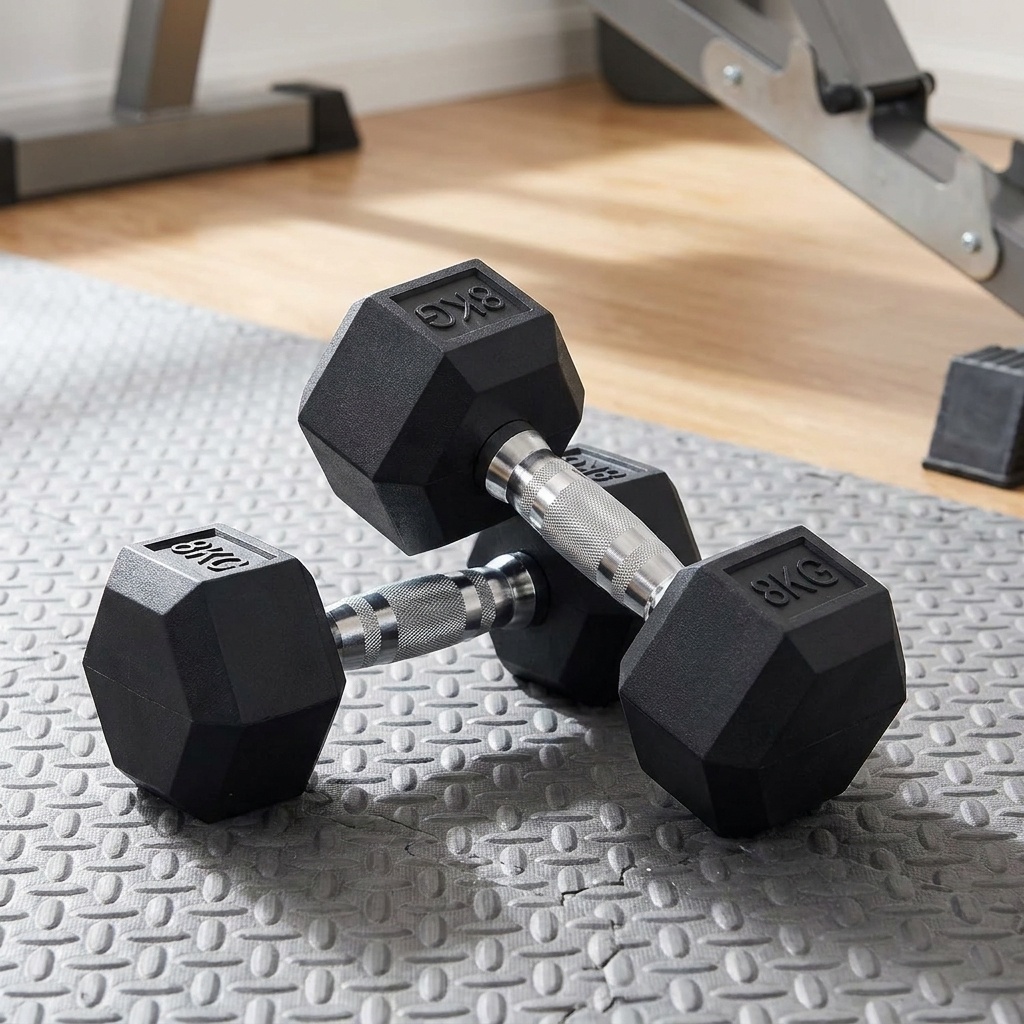
HOMCOM dumbbells tend to make the most sense for home users who want stable, floor-friendly hex heads and a no-fuss feel in the hand, without paying the usual premium for big-name gym brands. The main strength is day-to-day usability: the rubber hex shape sits still between sets and is kinder to most floors than bare cast iron. The trade-off is refinement. Handle finish, head-to-handle alignment, and long-term cosmetic wear can vary more than on higher-priced lines, so expectations should stay realistic for intensive use.
That framing matters because “HOMCOM dumbbells” is usually a search for value, not novelty.
For this review, the anchor reference is the HOMCOM Rubber Hex Dumbbell set line (the common pairs like 2×4 kg through 2×10 kg). The same practical checks also apply to the heavier single-pair listings (12.5 kg, 15 kg, 17.5 kg, 20 kg) and the adjustable 2-in-1 set that converts between dumbbell and barbell.
Quick orientation, so the right expectations land early:
- These are home-gym free weights. They suit controlled lifting, not repeated dropping.
- “Hex” is about stability and storage. It also reduces rolling hazards in small rooms.
- Rubber helps with noise and floors, but it can scuff, smell briefly, and show wear.
- Adjustable sets save space, but collars and plate fit become the deciding details.
When HOMCOM Dumbbells Make Sense (And When They Don’t)
HOMCOM dumbbells tend to make the most sense for home users who want stable, floor-friendly hex heads and a no-fuss feel in the hand, without paying the usual premium for big-name gym brands. The main strength is day-to-day usability: the rubber hex shape sits still between sets and is kinder to most floors than bare cast iron. The trade-off is refinement. Handle finish, head-to-handle alignment, and long-term cosmetic wear can vary more than on higher-priced lines, so expectations should stay realistic for intensive use.
That framing matters because “HOMCOM dumbbells” is usually a search for value, not novelty.
What “HOMCOM Dumbbells” Usually Refers To in Real Listings
In practice, HOMCOM dumbbells show up online in three shapes of decision. First are fixed rubber hex pairs in lighter steps, often bought as matched pairs for bilateral work. Second are heavier rubber hex pairs sold as a single weight choice, aimed at fewer movements but higher loading. Third are adjustable sets that bundle plates, a short handle, and sometimes a connector to build a barbell.
That mix can confuse buyers, because the word “set” is used loosely. A “set” might mean one pair of dumbbells, or it might mean a kit with multiple plates and configurations. The price can look oddly close across listings for that reason.
For home layouts, the shape matters as much as the kilograms. Hex heads park safely on the floor. Round heads don’t. In smaller flats, that single detail often decides whether dumbbells get used daily or become a nuisance.
Mapping The HOMCOM Rubber Hex Lineup: Fixed Pairs, Heavier Pairs, And Adjustable Kits
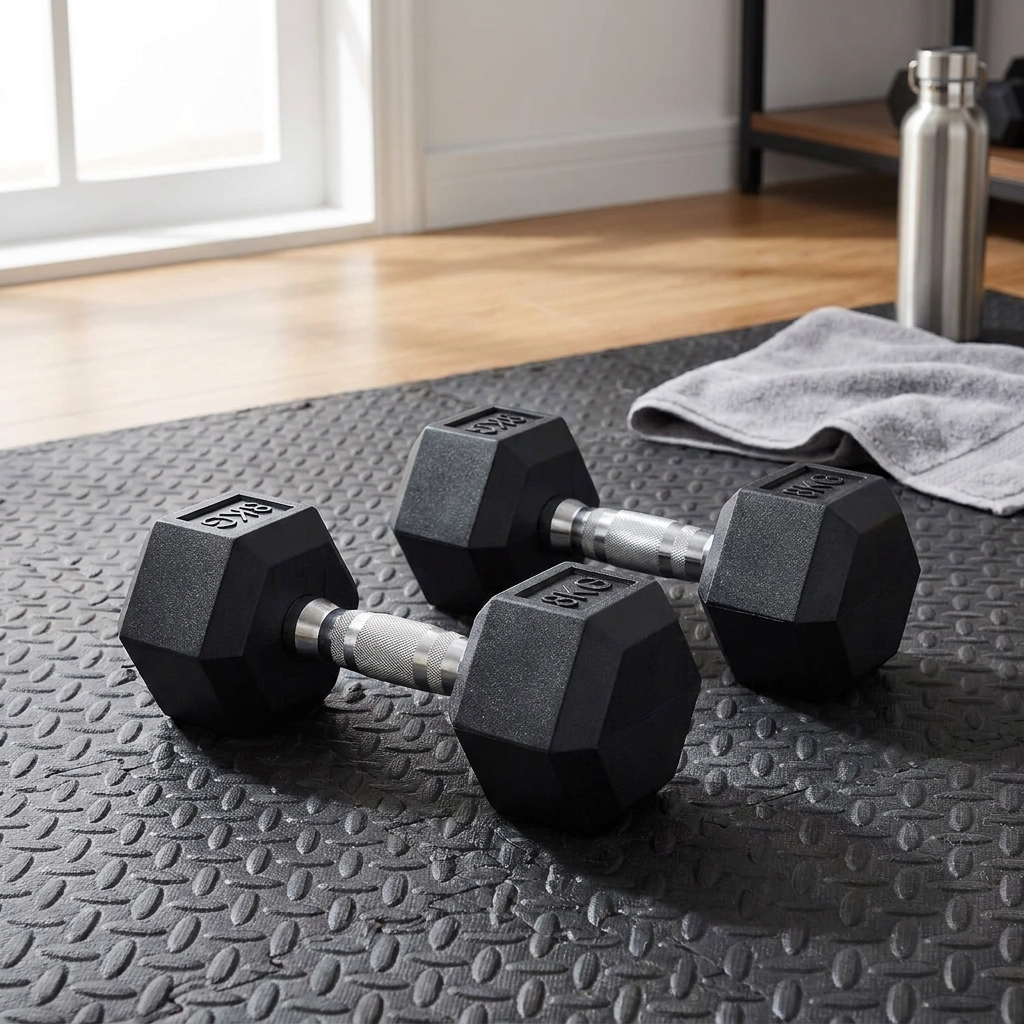
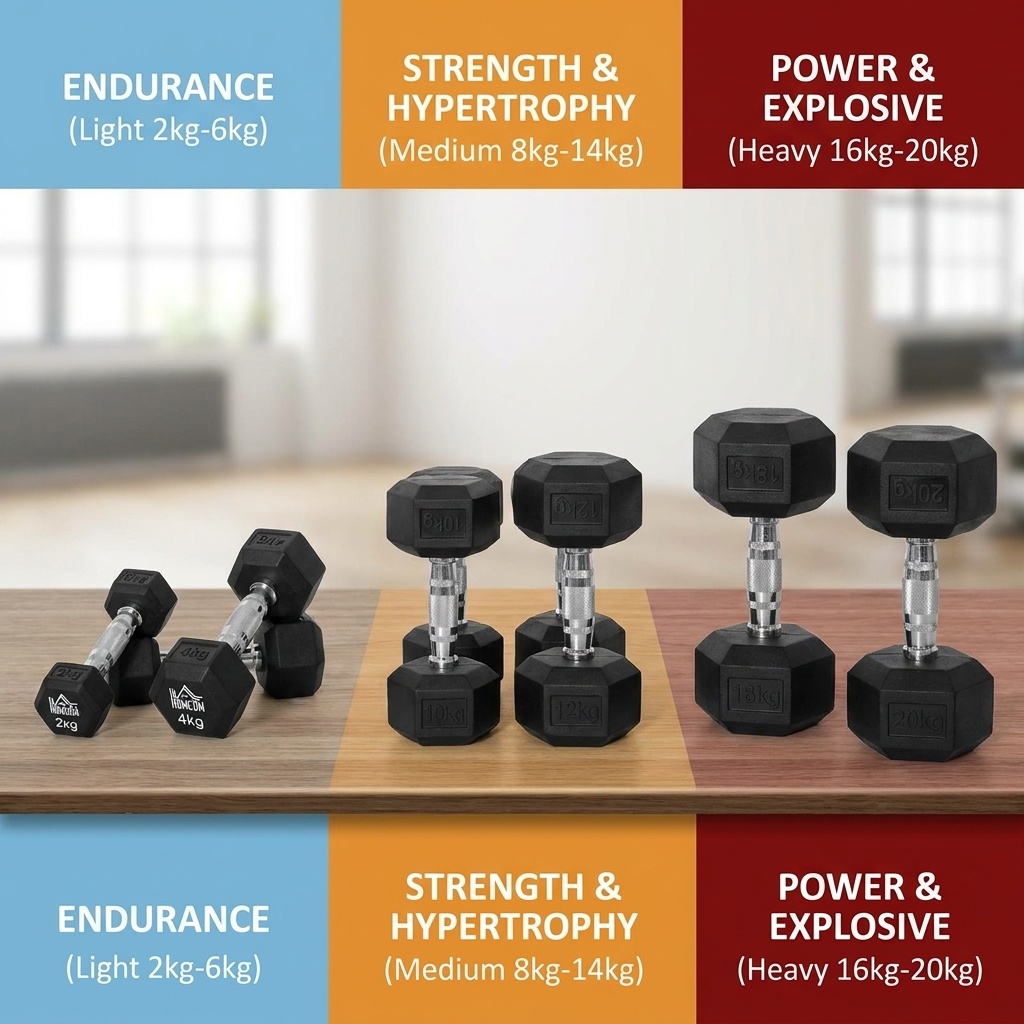
The most common HOMCOM Rubber Hex Dumbbell listings cluster around fixed pairs in 4 kg, 5 kg, 6 kg, 8 kg, and 10 kg per dumbbell. Those are typical “do-most-things” weights for general strength and hypertrophy work at home, provided the program uses tempo, pauses, and unilateral variations as load increases.
Then come the heavier fixed pairs. Listings often offer 12.5 kg, 15 kg, 17.5 kg, and 20 kg options (sometimes also shown as “2×” versions). These are the point where the handle feel and head security start to matter more, because the consequences of wobble and imperfect balance increase quickly with load.
The adjustable 2-in-1 kit sits in a different lane. It usually comes in total-kit weights like 15 kg, 20 kg, 25 kg, and 30 kg. It’s a space play. The decision pivots on the collars, plate tolerance, and how often changes are needed during a session.
At-A-Glance Comparison of Common HOMCOM Dumbbells Options
| Option Type | Typical Listing Weights | Decision Signal |
| Fixed Rubber Hex Pair (lighter steps) | 2×4 kg, 2×5 kg, 2×6 kg, 2×8 kg, 2×10 kg | Good Fit for high frequency training and quick sessions; Not Ideal if load must climb fast |
| Fixed Rubber Hex Pair (heavier singles) | 12.5 kg, 15 kg, 17.5 kg, 20 kg (often shown as 2× options) | Good Fit for fewer movements with higher loading; Conditional if grip comfort is sensitive |
| Adjustable 2-in-1 Dumbbell/Barbell Kit | 15 kg, 20 kg, 25 kg, 30 kg total kit weight | Good Fit for tight storage and mixed exercises; Not Ideal for fast supersets with many changes |
The Main Product Reference: What The HOMCOM Rubber Hex Dumbbell Pair Is
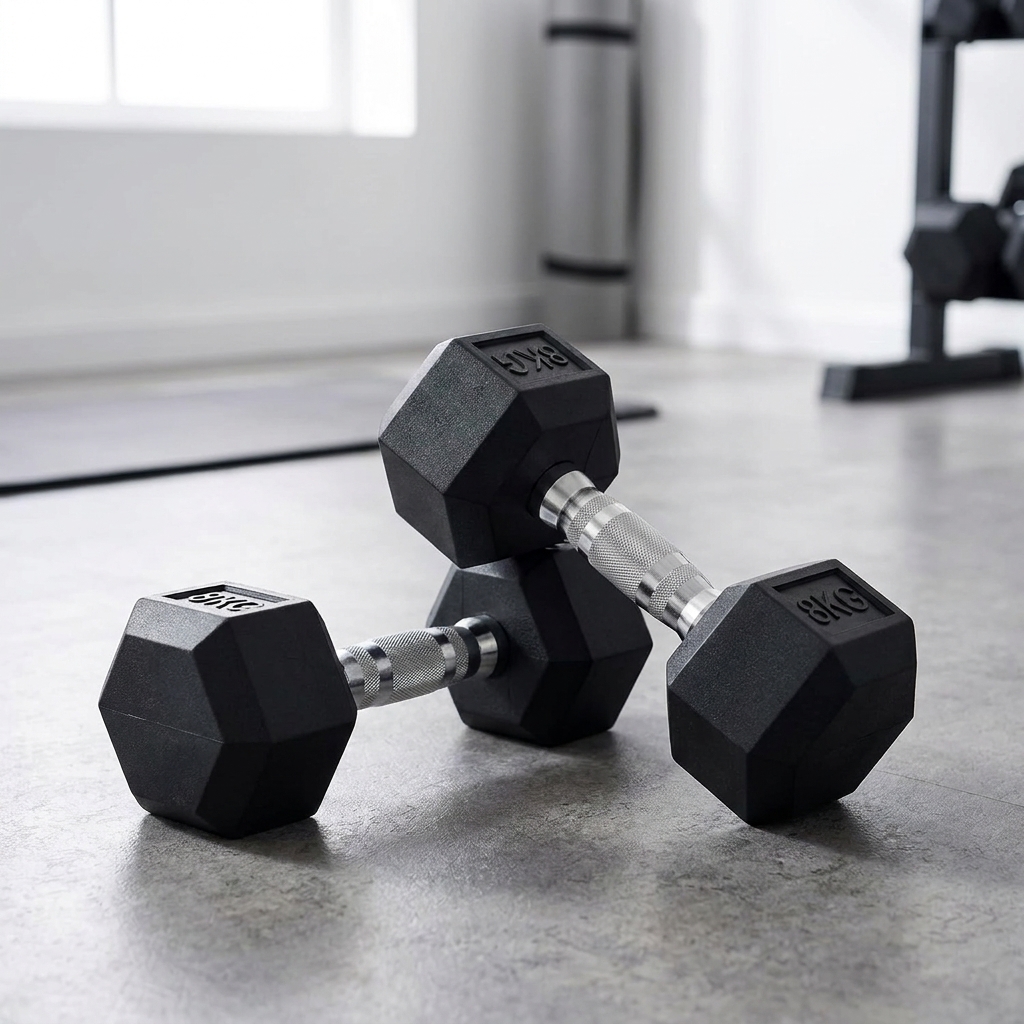
The core reference here is a fixed rubber hex pair with a knurled handle and anti-roll heads, sold in common increments up to 2×10 kg. It’s the most “grab and go” interpretation of HOMCOM dumbbells. No collars. No plate swapping. That simplicity is the point.
One practical note: the listing price for a given pair can sit close to other weights that look “bigger” at a glance, so the safe comparison is always total kilograms received, not the headline number alone. A 2×10 kg pair is 20 kg of rubber-coated weight in the room. That’s a meaningful mass for a small home gym corner.
For a concrete reference point, the HOMCOM Rubber Hex Dumbbell set listing can be found as HOMCOM Rubber Hex Dumbbell.
Evaluation Criteria Used For HOMCOM Dumbbells (So The Review Stays Grounded)
Rubber hex dumbbells look similar across brands. The differences show up in small, repeatable details that affect daily use. The evaluation here is built on eight checks that matter in a typical UK home setting with laminate, tile, or sealed wood floors.
- Materials And Coating: rubber compound feel, seams, and how the coating bonds to the head.
- Handle Diameter And Knurl: comfort for smaller hands, bite for sweat, and whether knurling feels sharp.
- Balance And Head Alignment: whether the dumbbell wants to “tip” in presses or rows.
- Durability Under Normal Home Use: controlled sets, occasional taps, and long rest-on-floor periods.
- Noise And Floor Protection: impact sound, rolling noise, and risk of marking surfaces.
- Storage Reality: how they sit under a bench, in a corner, or on a basic rack.
- Usability And Safety: anti-roll behaviour, hand fatigue points, and pinch risks on adjustables.
- Value Signals: price per kilogram, returns, and whether replacement parts exist for kits.
These criteria don’t assume commercial-gym abuse. They assume repeated home use, where annoyance is often the thing that stops consistency.
Rubber Hex Construction: What It Gets Right For Homes
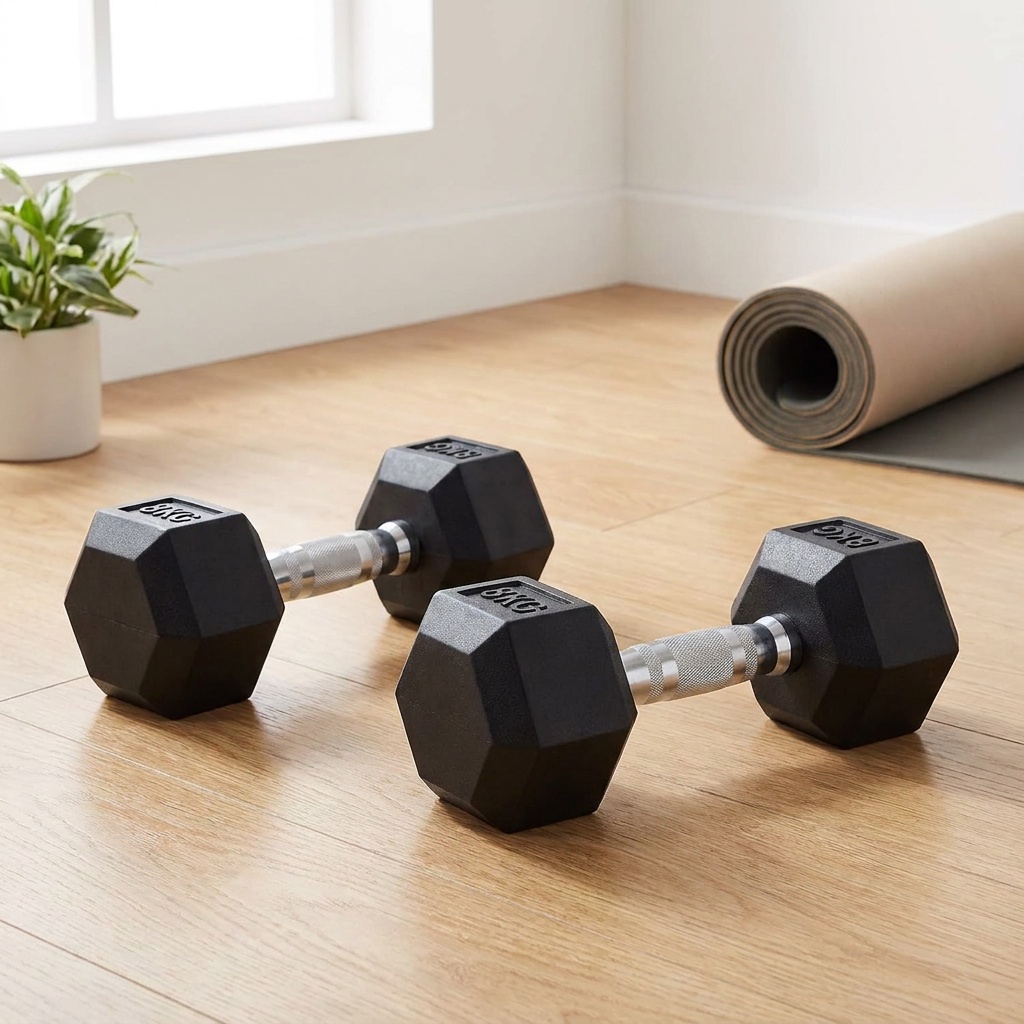
Hex heads do two useful things. They stop the dumbbell from wandering across the floor, and they create flat faces that sit more predictably when the weight is parked mid-session. That matters in small spaces and around pets or children, even when the training area is “out of the way.”
Rubber coating changes the sound profile too. It dulls the sharp crack that bare cast iron can make on hard flooring. It also reduces cosmetic damage to skirting boards and door frames from accidental bumps.
But rubber isn’t silent. A 10 kg dumbbell set down carelessly still thuds. And rubber can mark light walls if it rubs repeatedly.
Handle Feel And Grip: Where HOMCOM Dumbbells Tend To Land
Most HOMCOM dumbbells in the rubber hex style use a steel handle with knurling. That’s the correct direction for training, because smooth chrome handles can become sketchy once sweat builds. Knurling also helps lighter users who rely on grip more than absolute load.
Comfort depends on two things that rarely show in photos: handle diameter and the edges of the knurl pattern. A slightly thicker handle can reduce finger cramping on higher-rep work, but it can also fatigue smaller hands faster during carries and rows. And aggressive knurling can feel “grabby” in the first weeks.
Gloves solve one problem and add another. They reduce bite, but they can reduce feedback and increase slip if the glove material is slick.
Flooring, Noise, And Storage: The Quiet Practicalities
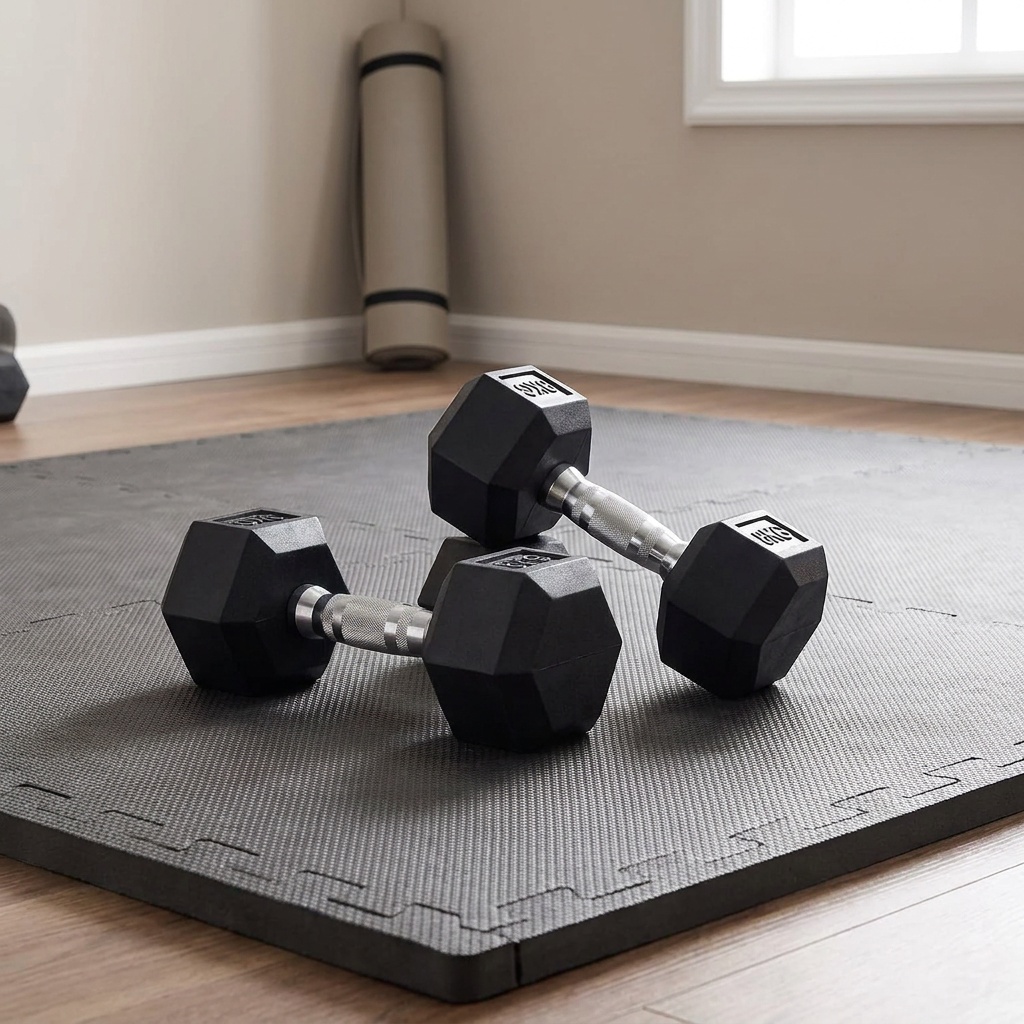
In many UK homes, the limiting factor isn’t strength. It’s the room. Rubber hex dumbbells are a sensible compromise when the training space shares a wall with neighbours or sits above another flat.
For floors, the safer baseline is still a mat. Even rubber-coated heads can dent softer laminate if dropped from height, and grit trapped under the head can act like sandpaper. A simple 10 mm to 15 mm rubber gym mat reduces both noise and surface risk. It also makes the dumbbells feel more stable when parked.
Storage is straightforward with fixed hex pairs. They stack neatly, but stacking isn’t ideal long term. A basic rack keeps heads from rubbing and stops the rubber from getting shiny in one contact spot.
Setting Expectations For Durability: Controlled Use Versus Dropping
Fixed rubber hex dumbbells are built for controlled lifting. That includes presses, rows, hinges, squats, and carries. It does not include repeated overhead drops or letting the dumbbells free-fall at the end of sets.
When rubber-coated heads fail early, it’s usually from impact, not from lifting. The head can separate, the coating can tear, or the handle-to-head joint can loosen. Those outcomes are less common with careful use, and more common when dumbbells are treated like bumper plates.
That distinction matters for value. A budget-friendly pair that lasts years under controlled use can be a better buy than a pricier pair that still gets abused and fails.
Where The Adjustable 2-in-1 Set Fits In The HOMCOM Dumbbells Range
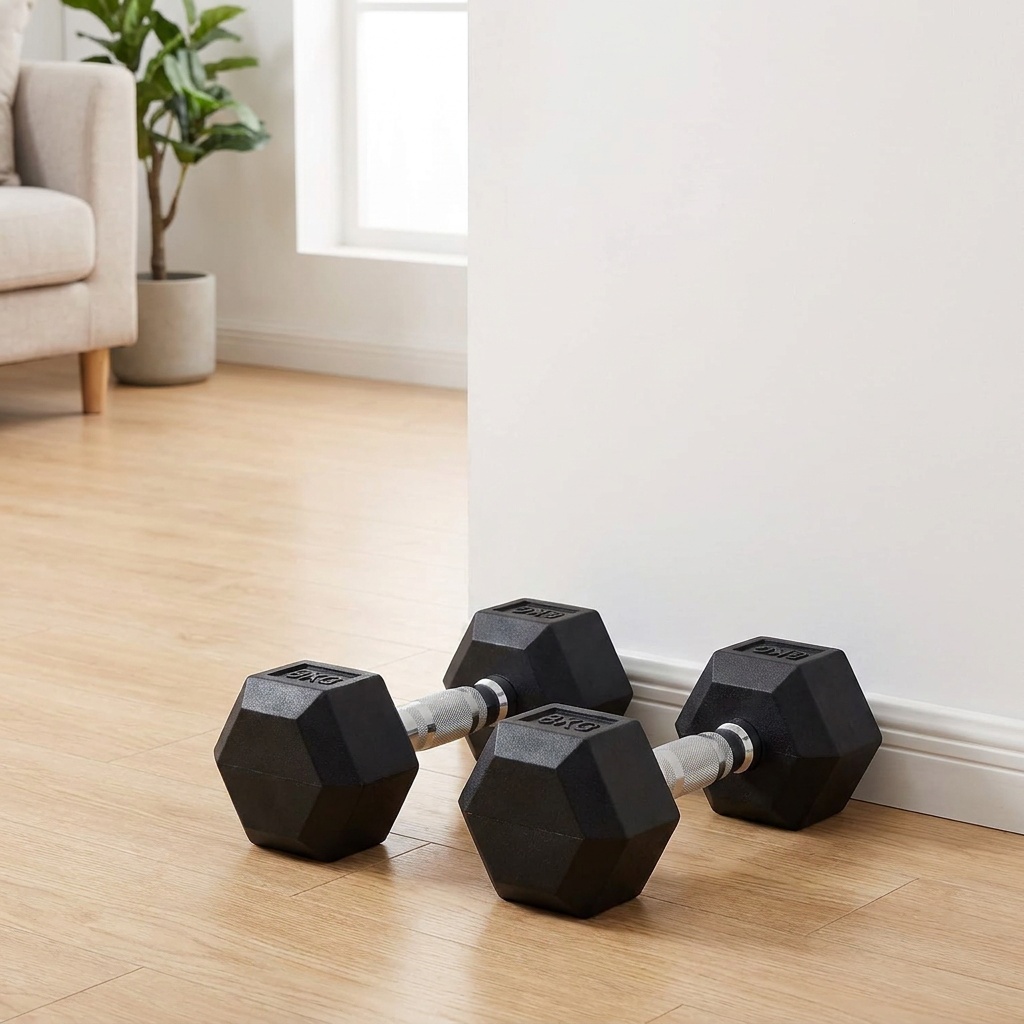
The adjustable kit exists for one reason: storage efficiency. A single kit that reaches 20 kg, 25 kg, or 30 kg total weight can replace several fixed pairs in a small room. That’s attractive in rentals, where a full rack isn’t welcome.
But adjustables introduce setup friction. Collars must be tightened. Plates must sit flush. And the time spent changing load can break the rhythm of training, especially for supersets or timed circuits.
Safety is also more user-dependent. If collars aren’t fully secure, plates can shift. That feels minor at 5 kg. It feels very different at 15 kg.
Materials And Coating: What You Notice On Floors And In Hand
On HOMCOM dumbbells in the rubber-coated hex style, the real value shows up in two places: odour and coating integrity around the edges. Rubber usually softens contact with the floor and reduces the sharp metal-on-surface crack, but batches don’t always age the same. If the coating is thin or poorly bonded, corner scuffs show up sooner and the surface can feel slightly tacky over time, especially in warmer rooms.
In a home with engineered wood or laminate, rubber helps, but it doesn’t replace a dense mat. Repeated impacts still mark floors if drops happen. For sensible home use (placing down, not throwing), the approach works well.
It’s also worth checking the head-to-handle join. On a hex dumbbell, that area takes stress from side rests and twists. If play develops there, you’ll hear small clicks when you swap hands.
Handle Diameter And Grip: Where Comfort Gets Decided
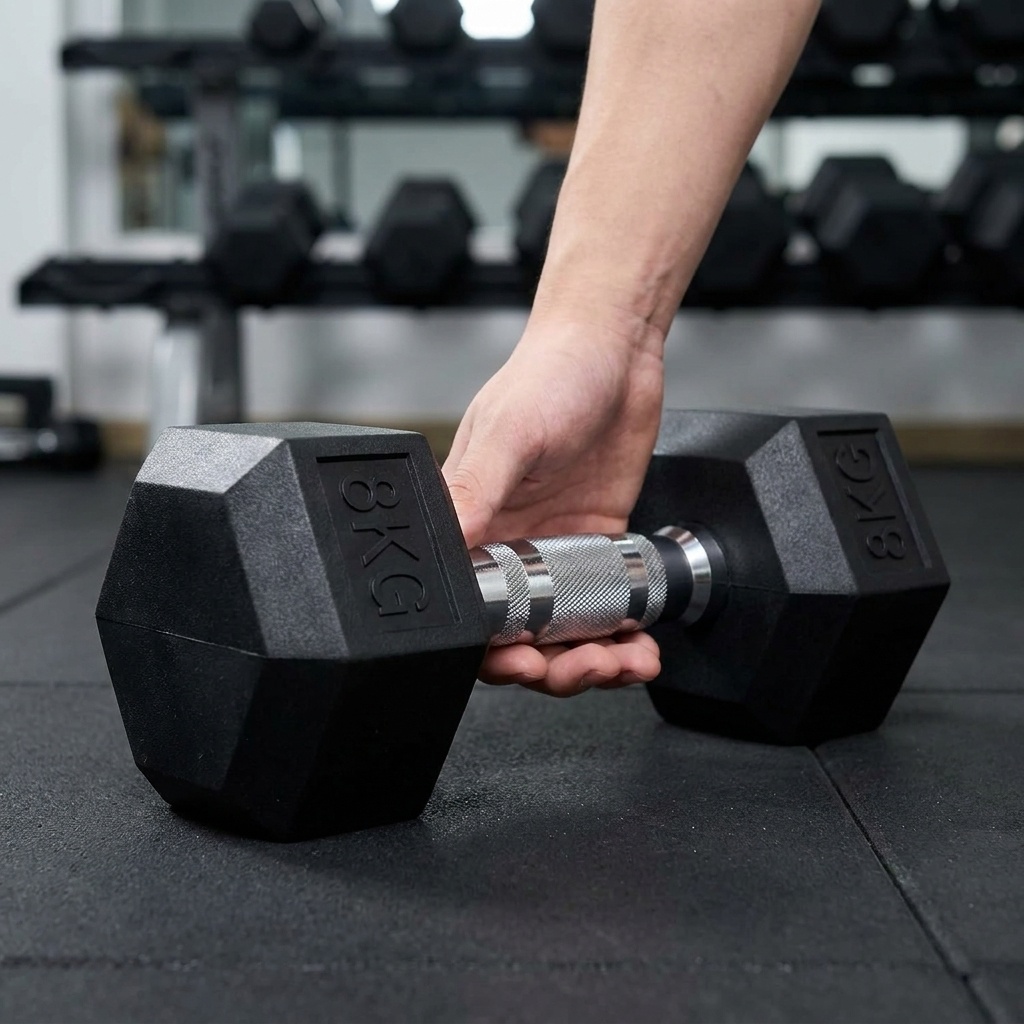
The knurled handle on the HOMCOM Rubber Hex Dumbbell usually gives a direct, secure grip, but comfort depends on your hand size and the load. As a general reference, a handle diameter around 28–35 mm tends to suit most adult hands for set work without forcing an overly hard pinch.
At moderate weights (for example, 2×4 kg, 2×5 kg, or 2×6 kg), the knurl often feels friendly even without gloves. As you move into heavier pairs, the same knurl can feel more aggressive if you’re squeezing hard on pulls or long sets.
There’s another variable. Rubber heads can transfer dust and residue onto the handle if the dumbbells are stored stacked or against dusty surfaces. It’s not a big deal, but it changes grip feel.
Balance And Anti-Roll: A Real Advantage, With Caveats
The hex shape stops the weight from rolling when you set it down. At home, that isn’t cosmetic. It’s safety and flow.
In moves like supported rows, elevated-hand press-ups, or quick transitions, the anti-roll shape reduces surprises. Still, it doesn’t guarantee the dumbbell always sits perfectly flat. If the floor has a seam, a slope, or a soft rug, the hex can settle on an edge and sit slightly tilted.
On HOMCOM dumbbells, mass distribution usually feels stable for straight-line movements. In rotational work (for example, cleans with a turn or presses with a very active wrist), small asymmetries show up more. Manufacturing tolerance and internal fit drive that.
Durability In Home Use: What It Handles And What Not To Ask Of It
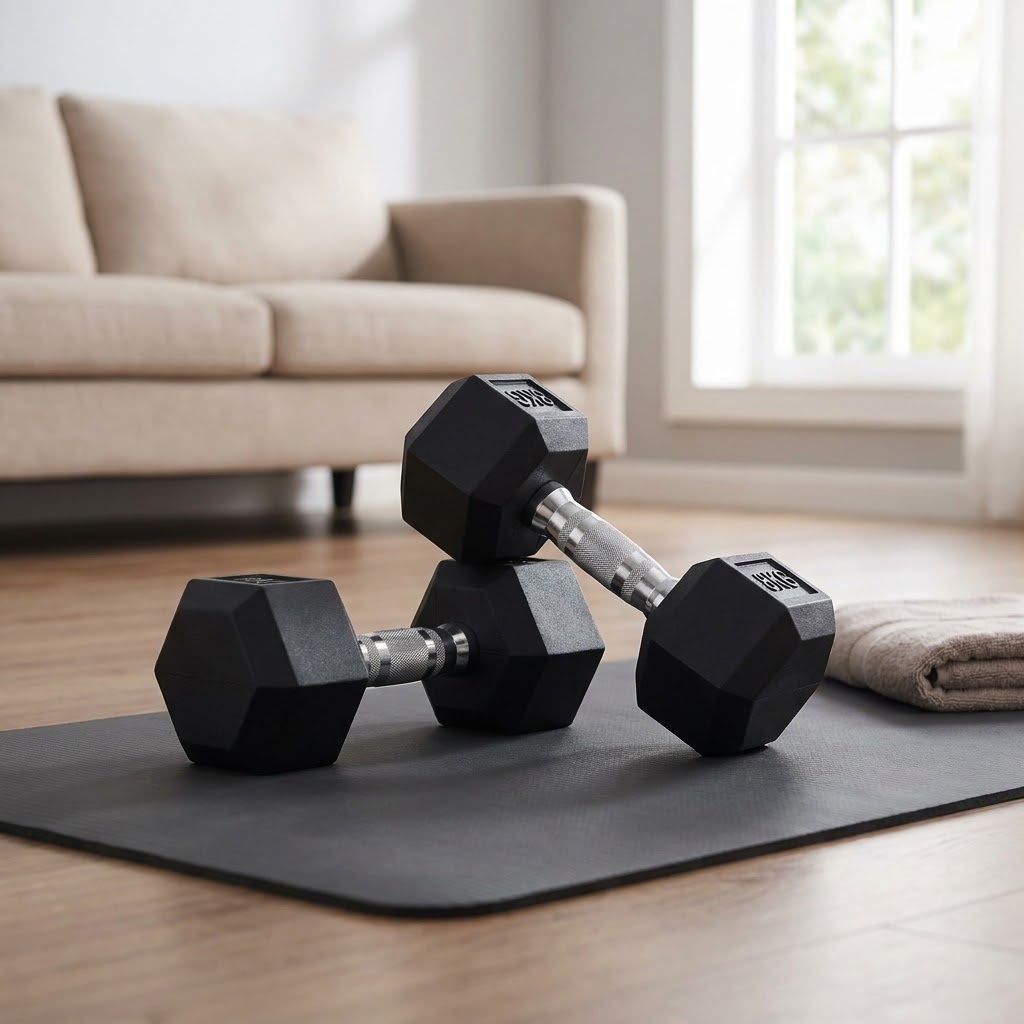
A HOMCOM Rubber Hex Dumbbell set is built for repeatable home use, not drops from height. Rubber protects, but it doesn’t perform miracles.
In a home setting, typical wear shows up in three spots: head corners (rubs), coating edges (bumps into skirting boards), and the handle knurl (sweat and harsh cleaning). With simple cleaning (a lightly damp cloth, then dry), the handle tends to stay in good shape.
What shortens life fastest is leaving weights “alive” on the floor and nudging them with your foot, or always resting them on the same edge. Small spaces make that habit common. It shows up later as marks and small surface cracks.
Noise And Floor Protection: When Rubber Isn’t Enough
Rubber reduces noise, but noise doesn’t only come from impact. Floor vibration and building resonance matter too. In flats with lighter construction or neighbours below, even a “soft” set-down can travel.
A high-density base works better than something spongy. A thin yoga mat is often too soft and can transmit more than expected. A dense rubber mat, or a simple platform with board and rubber that sits flat, tends to stabilise the setup.
On HOMCOM dumbbells, the hex shape helps because you can place them down with control. If your training includes the weight touching the floor every rep, the room matters more than the coating.
Mapping The HOMCOM Dumbbells Range: Fixed, Heavy Pairs, And Adjustable
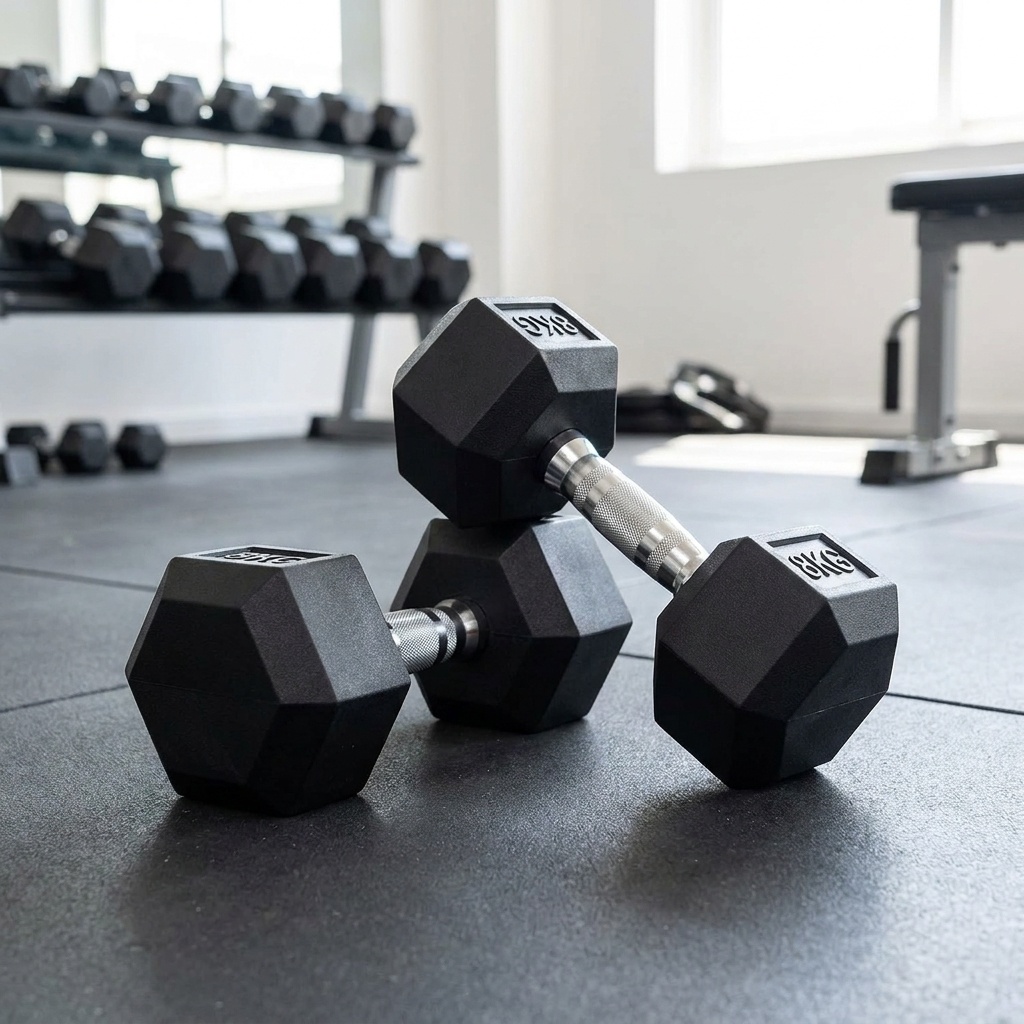
Within HOMCOM dumbbells, three families show up most often, and they change the buying decision. Choosing a fixed pair isn’t the same as choosing an adjustable system with parts.
- Fixed rubber hex dumbbells: usually sold as a pair at a specific weight, or as a set with multiple pairs (for example, 2×4 kg up to 2×10 kg). They suit anyone who wants speed and zero setup.
- Heavier fixed hex pairs: options around 12.5 kg, 15 kg, 17.5 kg, or 20 kg per dumbbell, aimed at people who already know their working loads. They take more space and need a more serious landing zone.
- Adjustable 2-in-1 sets: kits that combine dumbbells and a short bar configuration. You get versatility, but you also accept slower changes and more pieces to check.
Fixed hex pairs behave like “furniture” at home: pick up, use, put away. Adjustables behave like a system. That changes day-to-day living with the kit.
Quick Comparison Of HOMCOM Options: Where Each One Fits
| Option Within HOMCOM Dumbbells | Best Fit For | Can Fall Short For |
|---|---|---|
| Fixed rubber hex (multi-pair set) | Varied routines, fast changes, households with more than one user | Tight spaces without storage; higher total spend if you want much heavier loads |
| Heavy fixed pair (12.5–20 kg per dumbbell) | Dumbbell basics for strength, users with known working loads | Fine progression; if the weight is too high or too low, there’s no middle step |
| Adjustable 2-in-1 (15–30 kg depending on version) | One kit to progress, tighter budgets, occasional use | Training with constant changes; low tolerance for setup and checking collars |
Adjustable Systems: Collars, Play, And Day-To-Day Safety
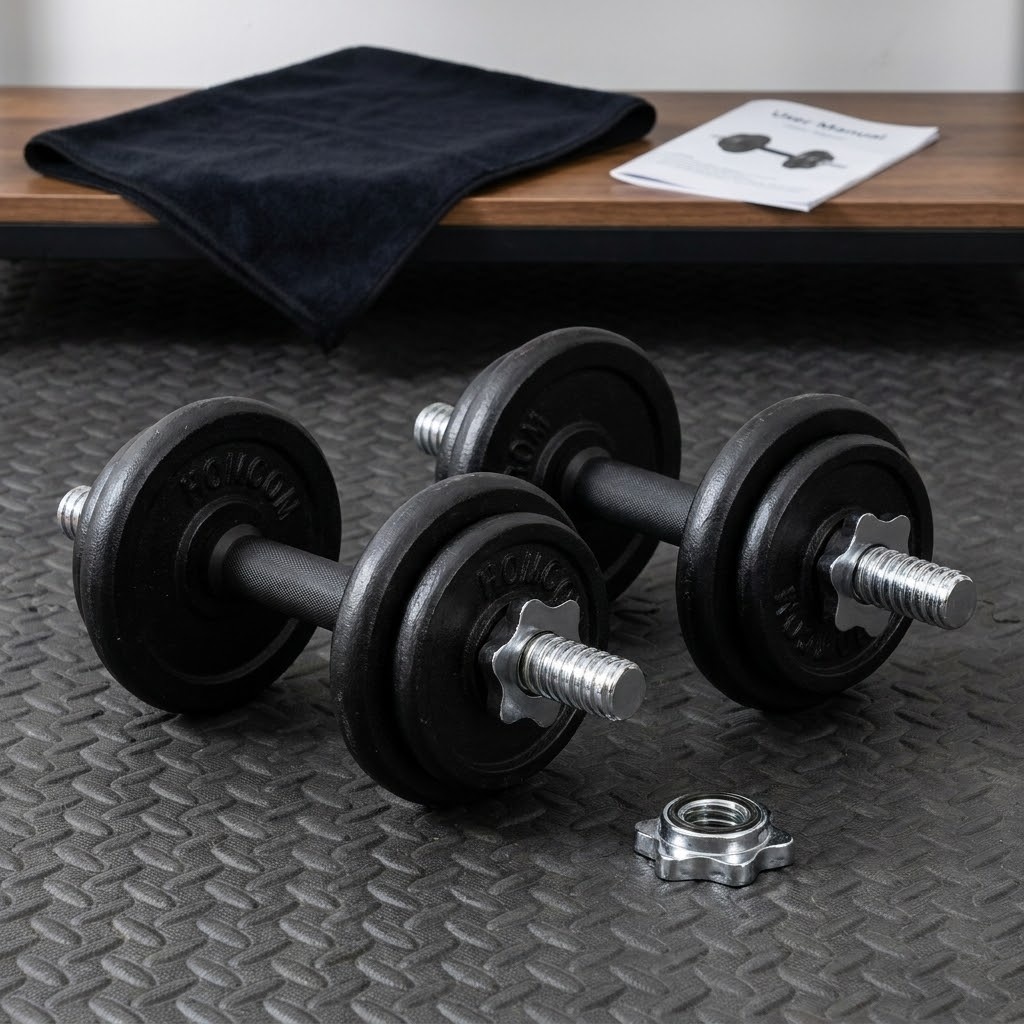
On adjustable HOMCOM dumbbells, the experience depends on the collar. A reliable collar stops plates from shifting and cuts noise. It also reduces wear, because small vibrations mark contact surfaces over time.
Two behaviours matter: side-to-side play when you lift, and whether the build stays aligned when you rotate your wrist. A little movement can be normal. A clear rattle means the load no longer feels like one piece.
As a practical habit, checking tightness before each session and again after the first couple of sets is usually enough. At home, that routine prevents surprises. It also stops the “I’ll fix it later” spiral.
Plate Tolerances And Wobble: When You’ll Notice It
On a fixed hex dumbbell, tolerance barely shows. On an adjustable, it shows fast.
Variation usually comes from the relationship between the handle shaft diameter, the plate seat, and the collar itself. If the kit fits well, the weight behaves predictably. If it doesn’t, wobble builds, and it gets amplified overhead and in unilateral work.
Slow reps make wobble easier to tolerate. Fast reps and direction changes make it annoying before it becomes dangerous. For many users, that’s the real limit: confidence in the build, not the maximum load.
Storage And Footprint At Home: The Factor People Underestimate
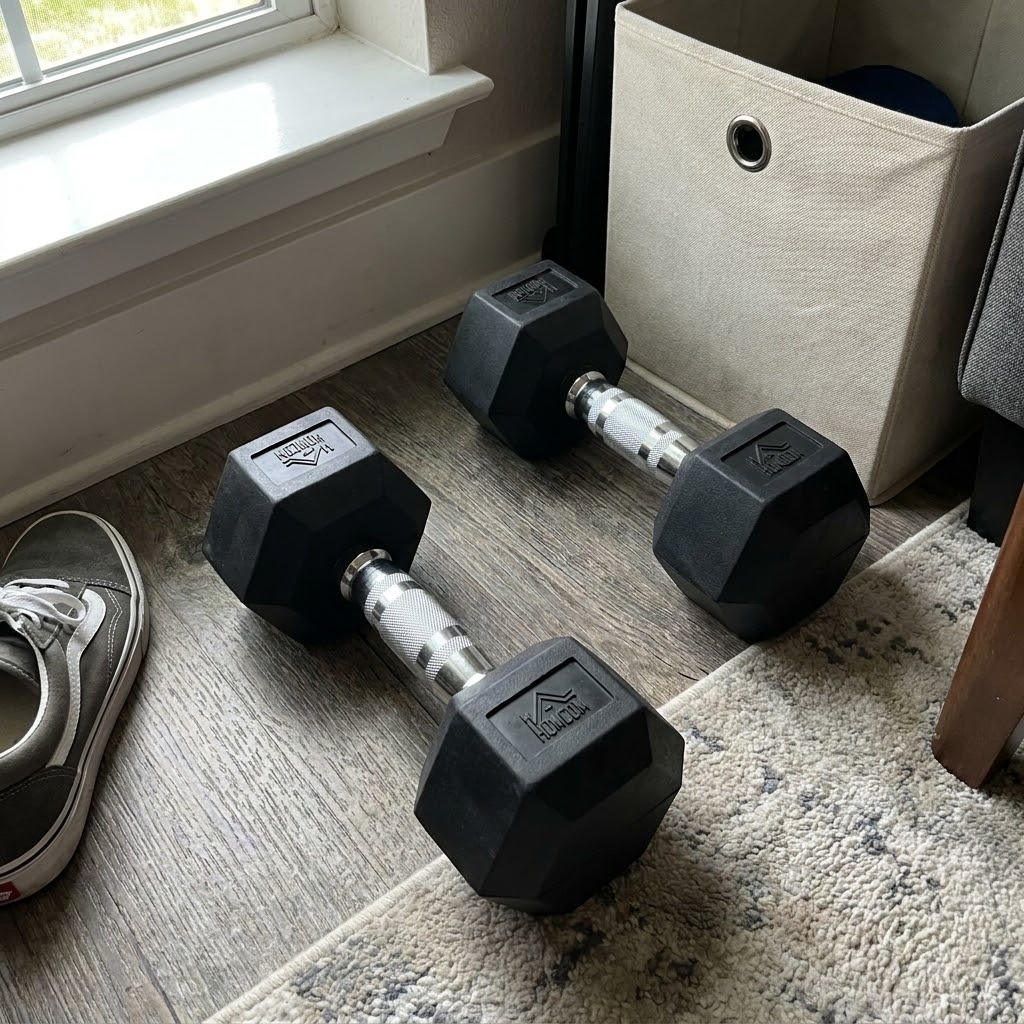
A set of HOMCOM dumbbells in hex format takes up floor area, even if it doesn’t look like much online. Pairs stack poorly without support. Left on the floor, they become obstacles.
In smaller flats, a corner with a protective base and one simple rule helps: no loose weights in walkways. For a multi-pair set, a vertical stand or a low shelf with a strong board changes daily use more than an extra kilogram of load.
There’s a practical difference here. Adjustable kits reduce volume, but add loose parts. If you’ve got children or pets, those parts need a closed or high storage spot.
Ergonomics In Use: Long Sets, Posture, And Forearm Fatigue
With dumbbells, grip fatigue arrives earlier than people expect. And it isn’t always “lack of strength.” Sometimes it’s diameter, knurl, or sweat.
On HOMCOM dumbbells with knurled handles, friction helps. But in long hypertrophy sets, knurling can punish your hands if you squeeze too hard. For rehab-style control work, a gentler grip surface can feel better, even if it gives up some security.
Wrist clearance matters too. If the head is bulky for the weight, some close-to-body moves (hammer curls, close-grip pressing) can brush the forearm. That’s geometry, not a defect.
Price Per Kilogram, Shipping, And Returns: How To Read Value Without Fooling Yourself
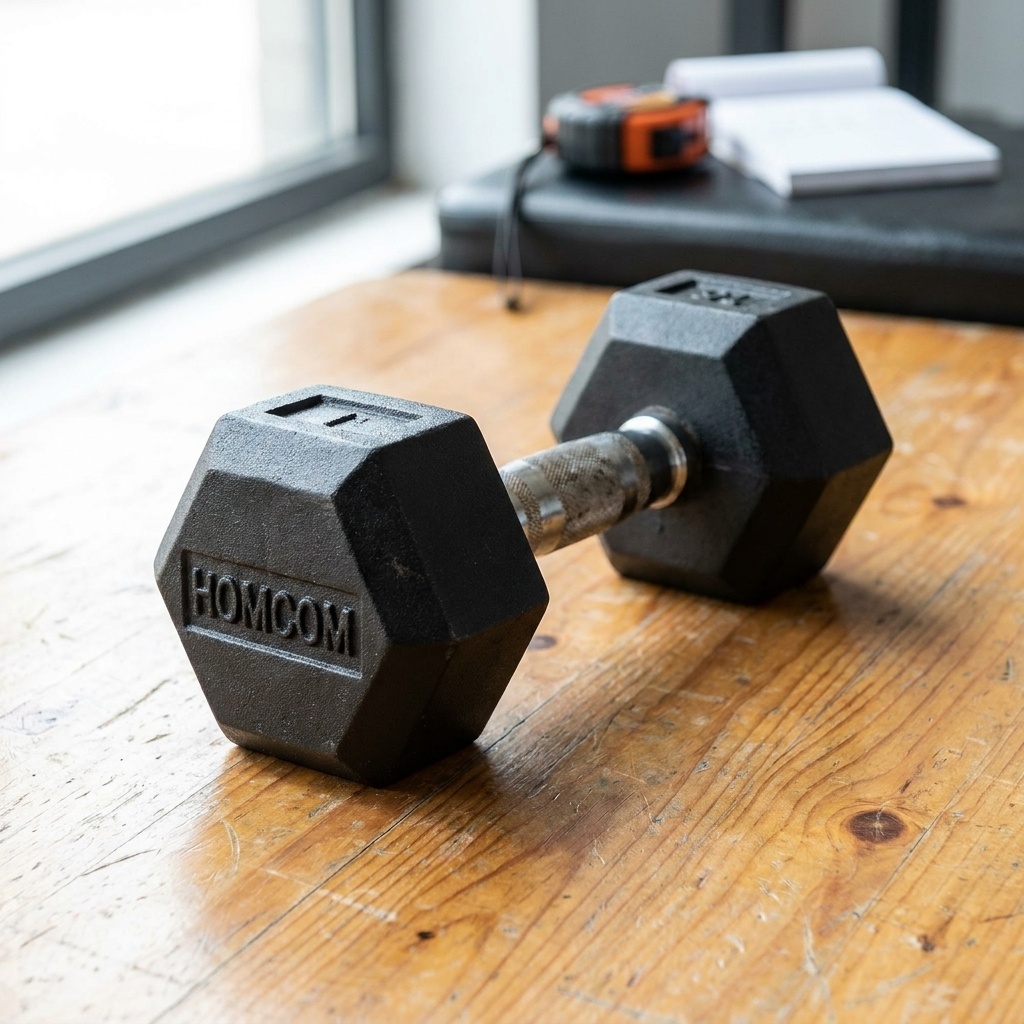
With HOMCOM dumbbells, “price per kilogram” helps spot deals, but it doesn’t define the experience. A cheap set with a coating that marks quickly can feel expensive in frustration, not pounds.
As a reference in the UK home market, a range below about £2–£3 per kg often signals aggressive deals or compromises in finish, while above about £4–£6 per kg you’re paying more for brand, consistency, or logistics. The sweet spot shifts with total weight and type (fixed versus adjustable).
Online, packaging and transport matter more than with many products. Heavy items that take knocks in transit can arrive scuffed. Check the coating and handles immediately, and test for odd play on first use.
Authenticity And Replacement Parts: Small Details That Prevent Headaches
On platforms like Amazon, authenticity is usually fine when the seller and fulfilment are clear. Still, with HOMCOM dumbbells it’s worth watching for simple signals: consistent labelling, uniform finish, and no extreme chemical smell after a few days of airing out.
On adjustable kits, the practical question is whether you can replace collars or nuts. They aren’t always sold separately. When they aren’t, one small missing part can sideline the whole kit.
Keeping proof of purchase and documenting condition on arrival reduces friction if you need a return.
Two HOMCOM Options For Context: When The Choice Changes
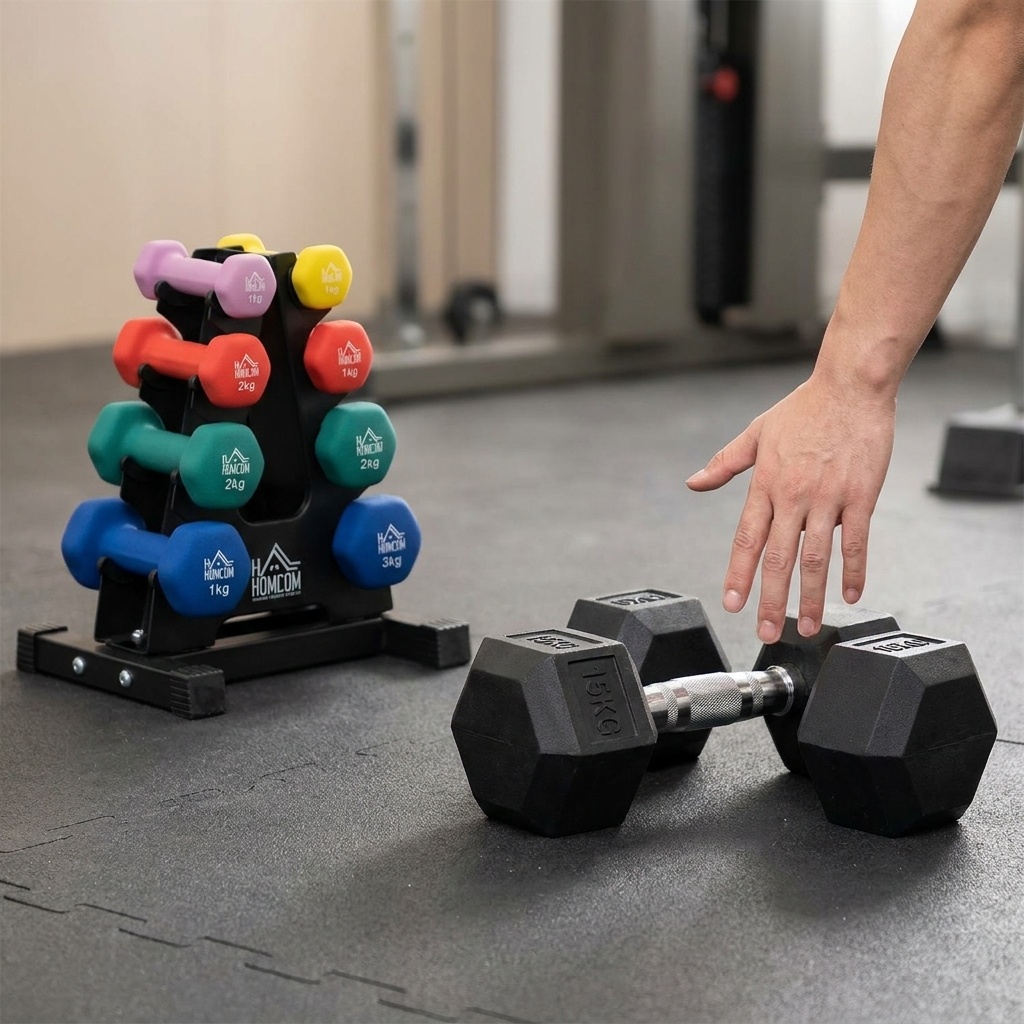
For anyone torn between a multi-pair set and a heavy fixed pair, the shift isn’t the kilogram. It’s the training style.
The multi-weight set format like HOMCOM Rubber Hex Dumbbell tends to fit when there are multiple users or when you alternate exercises with different loads in the same session. A heavier fixed pair in the 12.5–20 kg range feels more direct for strength basics, with less kit around it. An adjustable 2-in-1 makes sense when space is the main constraint and you’re fine spending time assembling and checking.
When HOMCOM Dumbbells Fall Short Versus Alternatives
In the home segment, alternatives like Bowflex (fast-change adjustables), PowerBlock (a different adjustable architecture), Decathlon Domyos (broad range and its own logistics), or York Fitness (classic iron) come up for specific reasons.
- If you need load changes in seconds, systems like Bowflex or PowerBlock are usually quicker than plate-and-collar adjustables.
- If you want gym-style durability for intensive use and controlled drops, mid-to-high tier options tend to hold tighter tolerances and more consistent coatings.
- If local availability and easy returns matter most, retailers like Decathlon can be simpler in some cases.
HOMCOM dumbbells usually win when the goal is equipping a home setup at a controlled cost without fuss. They don’t cover every profile.
Weight Selection By Goal: Strength, Hypertrophy, And Rehab
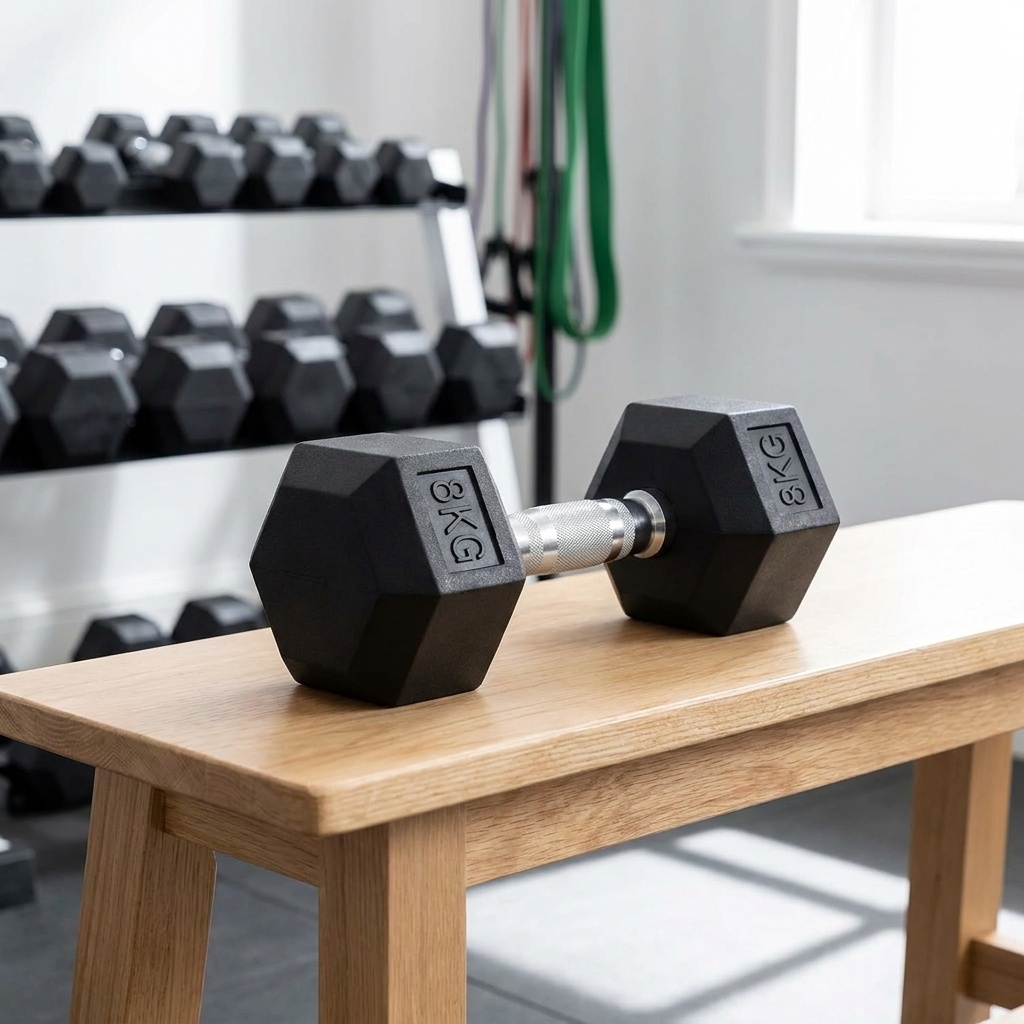
Choosing load isn’t about being “strong.” It’s about the stimulus you want and the control you have.
For hypertrophy at home, smaller jumps reduce technical cheating. A set with multiple pairs often makes sense if you train in the 8–15 rep range with good form. For strength, many people run out of runway quickly with lighter pairs and end up wanting 15–20 kg per hand or more, depending on the lift.
For rehab or return after injury, big jumps punish form. An adjustable can help you fine-tune, but only if the system doesn’t add instability. If you’re constantly thinking about collars, attention shifts away from posture and control.
Safe Use Guidelines: Drops, Surfaces, And Progression Pace
At home, safety is decided more by the room than by the dumbbell.
- Avoid dropping from height. Placing down with control protects the coating and the floor.
- Use a stable base. Soft surfaces increase wobble and make awkward landings more likely.
- Progress reps before kilos when technique still changes session to session.
On adjustable HOMCOM dumbbells, checking collars before you start isn’t fussiness. It’s part of correct use.
HOMCOM Dumbbells At Home: A Realistic Verdict By Space And Training Rhythm
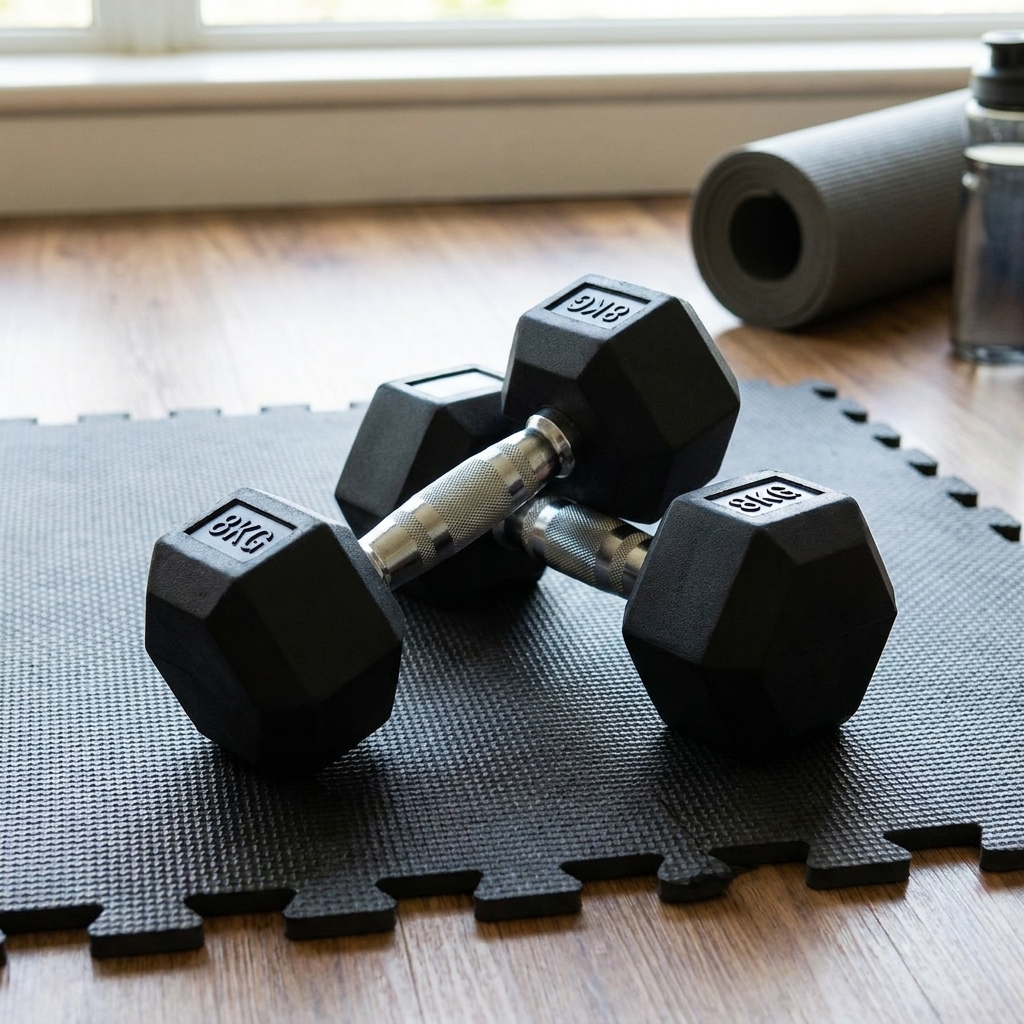
Across HOMCOM dumbbells, the strength isn’t sophistication. It’s solving home training with a reasonably quiet, stable format when you pick the right type. Rubber-coated hex dumbbells tend to fit flats with tile or laminate and routines where weights rest on the floor between sets. The adjustable 2-in-1 makes sense when space is tight and you accept slower changes.
For most homes, rubber hex is the low-friction choice day to day. It’s heavy enough, it doesn’t roll, and it stores without a fight.
But HOMCOM dumbbells aren’t the answer for intensive use with frequent drops, very heavy loading, or constant weight changes. In that case, look at tighter-tolerance lines and faster adjustable systems.
Who Should Choose These HOMCOM Dumbbells (And Who Shouldn’t)
Fit depends less on “level” and more on context. HOMCOM dumbbells work best when the goal is consistency and order at home, not squeezing every second out of a session.
They fit well for:
- Homes where noise matters: rubber coating reduces impact and vibration versus bare metal.
- Training with pauses and control: moderate strength work, basic hypertrophy, or circuits where one weight stays in play for multiple moves.
- Smaller spaces: a pair of hex dumbbells or a limited set integrates more easily than bulky systems.
- People who value stable set-downs: the hex shape prevents rolling when you park them on the floor.
They may not fit for:
- Anyone who wants very fast load changes: plate-and-collar adjustables slow the pace, even with practice.
- Anyone training hard onto the floor: if you’ll drop from height, neither rubber coating nor collars are built for that.
- Very large hands or sensitive wrists: handle diameter and knurl feel can vary between units and batches.
- Anyone chasing gym-level weight precision: home lines can have small weight tolerances.
That filter matters more than any star rating. It prevents disappointment.
What To Expect From Rubber Hex Versus The Adjustable 2-in-1
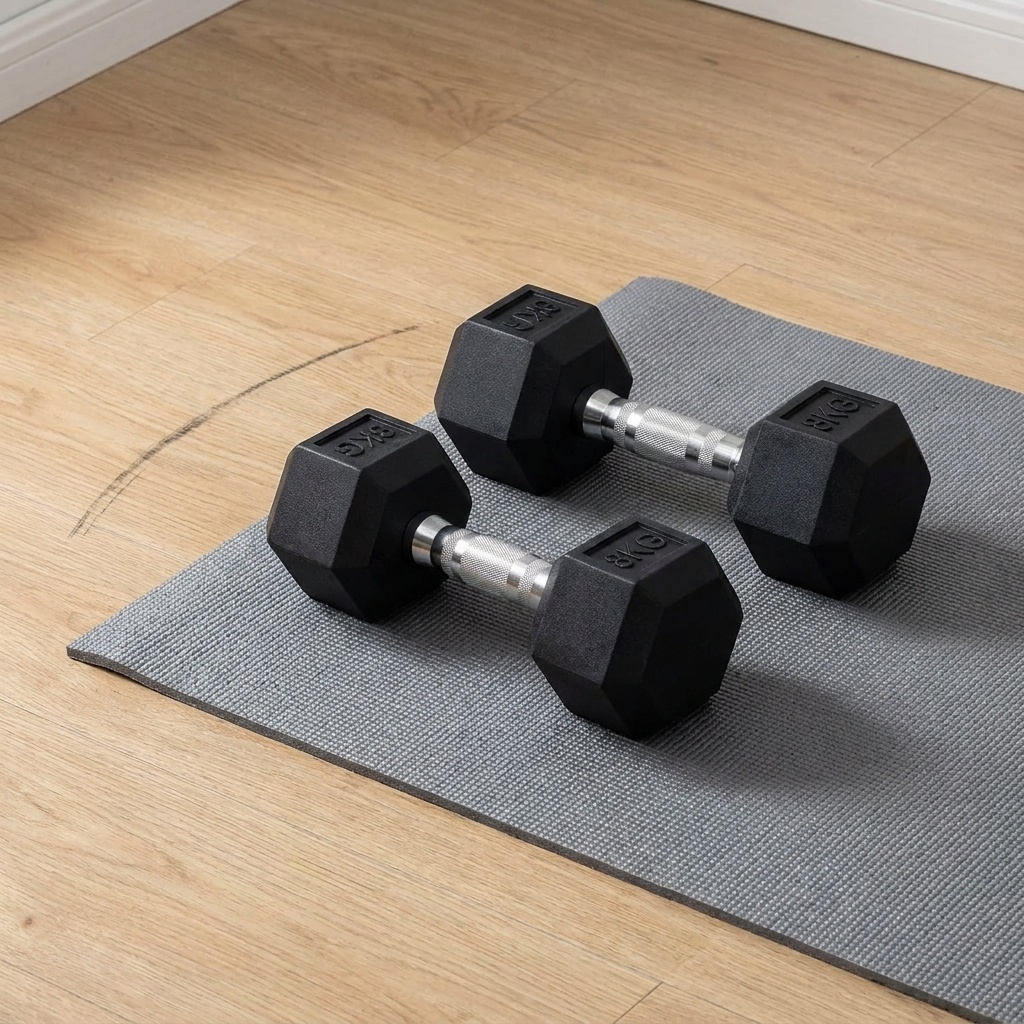
Within HOMCOM dumbbells, format defines the experience. With rubber hex, use is direct. Pick up, set down, repeat. The coating protects floors, but it can still mark softer laminate if you drag it. Lift and place. Don’t slide.
The adjustable 2-in-1 adds load flexibility in less space. It also demands discipline: check collars, tighten evenly, and accept that the build can feel longer than a fixed dumbbell. In moves where inertia shows up (for example, quick direction changes), a fixed dumbbell usually feels cleaner.
The practical decision often looks like this: if you train in blocks with one weight, adjustable doesn’t annoy. If you change weight every exercise, fixed hex pairs feel smoother.
Home Safety: Collars, Tolerances, And Floors
Safety here isn’t dramatic, but it is specific. On adjustable systems, the collar is part of the workout. If it isn’t seated properly, you get play, noise, and wobble. That can fatigue wrists early. It also raises pinch risk when you reposition plates.
On fixed dumbbells, safety comes down to grip and set-down. Aggressive knurl improves control with sweaty hands, but it can irritate during long sessions without gloves. Rubber coating helps floors, but it doesn’t replace a mat on cold tile or delicate laminate.
A sensible home rule: don’t drop at the end of a rep. Control protects floors, coatings, and internal joins. It also cuts noise a lot.
Quick Table: HOMCOM Dumbbells Options And What They Fit
The table below isn’t a catalogue. It’s a way to see how the experience changes by format and load range.
| Option Within HOMCOM Dumbbells | Format | Load Range (As Listed) | What You Notice In Use | Best Fit |
|---|---|---|---|---|
| HOMCOM Rubber Hex Dumbbell Set | Fixed, hex, rubber-coated | Pairs 4–10 kg | Doesn’t roll, stable set-down, fast handling | Frequent home training with fixed weights |
| HOMCOM Rubber Hex Dumbbell (higher pairs) | Fixed, hex, rubber-coated | 12.5–20 kg (and double-pair options depending on listing) | More bulk per dumbbell, harder to store | Moderate strength work without an adjustable system |
| HOMCOM 2 In 1 Adjustable Dumbbells Weight Set | Adjustable, with bar option | 15–30 kg (depending on option) | Slower changes, needs collar checks | Limited space and need for multiple load steps |
One value detail: with prices like £30.99, £31.99 and £28.26 in typical listings, “price per kilogram” can swing a lot depending on whether it’s a fixed pair or an adjustable kit with multiple components. Check total included weight, not just the big number in the title.
Value And Buying Without Surprises: Price Per Kilogram, Shipping, Returns, And Authenticity
With HOMCOM dumbbells, value becomes clear when you answer three questions: how much total weight arrives, how much of the box is “structure” (bars, collars) versus usable load, and what it costs to return if it doesn’t fit. With heavy items, return shipping can wipe out the savings if you don’t check first.
To buy with less uncertainty:
- Confirm total weight included in the package, not just the advertised range. On adjustables, some weight can be in bars and hardware.
- Check return terms and who pays carriage. On heavy loads, return shipping is a real factor.
- Verify seller and listing details. On Amazon, checking “Sold by” and “Dispatched by” reduces origin issues.
- Look for real photos of handle finish and coating. They help you judge feel and noise.
On warranty and spares, adjustable kits make replacement access matter more than fixed dumbbells. If you can’t replace collars or plates, one small part can sideline the set.
Alternatives When HOMCOM Dumbbells Don’t Fit
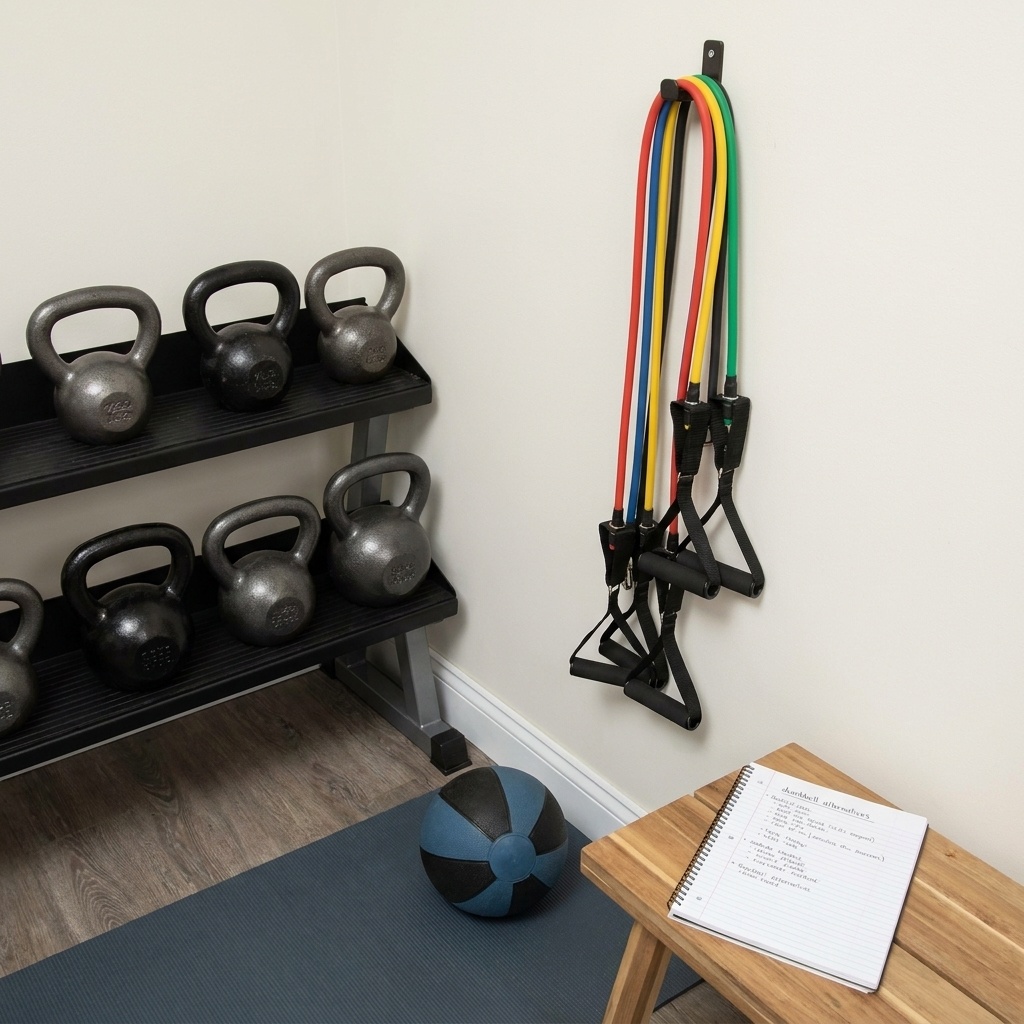
The home dumbbell market has three clear tiers, and each one matches a different priority.
If you want a similar budget with a focus on availability and variety, Amazon Basics often comes up for rubber hex. If you want a jump in manufacturing consistency and a more gym-like feel, Rogue Fitness (for example, its hex dumbbell lines) and Eleiko sit in a different price bracket, with tighter tolerances and durability. If you want a fast, compact adjustable system, Bowflex SelectTech is the common name, with the trade-off of more mechanical complexity and cost.
The useful comparison isn’t “better or worse.” It’s about use. Calm training with floor concerns suits home rubber hex. Heavy, frequent progression usually rewards spending on tighter-tolerance builds.
An Editorial Close On HOMCOM Dumbbells: The Most Sensible Choice In Most Homes
For a typical home, the most sensible option within HOMCOM dumbbells is usually the fixed rubber-coated hex dumbbell. It’s stable, it reduces noise, and it avoids collar hassle. That supports consistency, which drives results.
The adjustable 2-in-1 only makes sense when space is tight or you need a spread of loads without filling a room. You trade speed for flexibility, and you’ll spend more attention on setup.
If you want hard, fast training with lots of weight changes, this home-focused approach will feel limiting. Other lines fit that better.
Frequently Asked Questions About HOMCOM Dumbbells
Are HOMCOM Dumbbells Suitable For A Flat With Neighbours Below
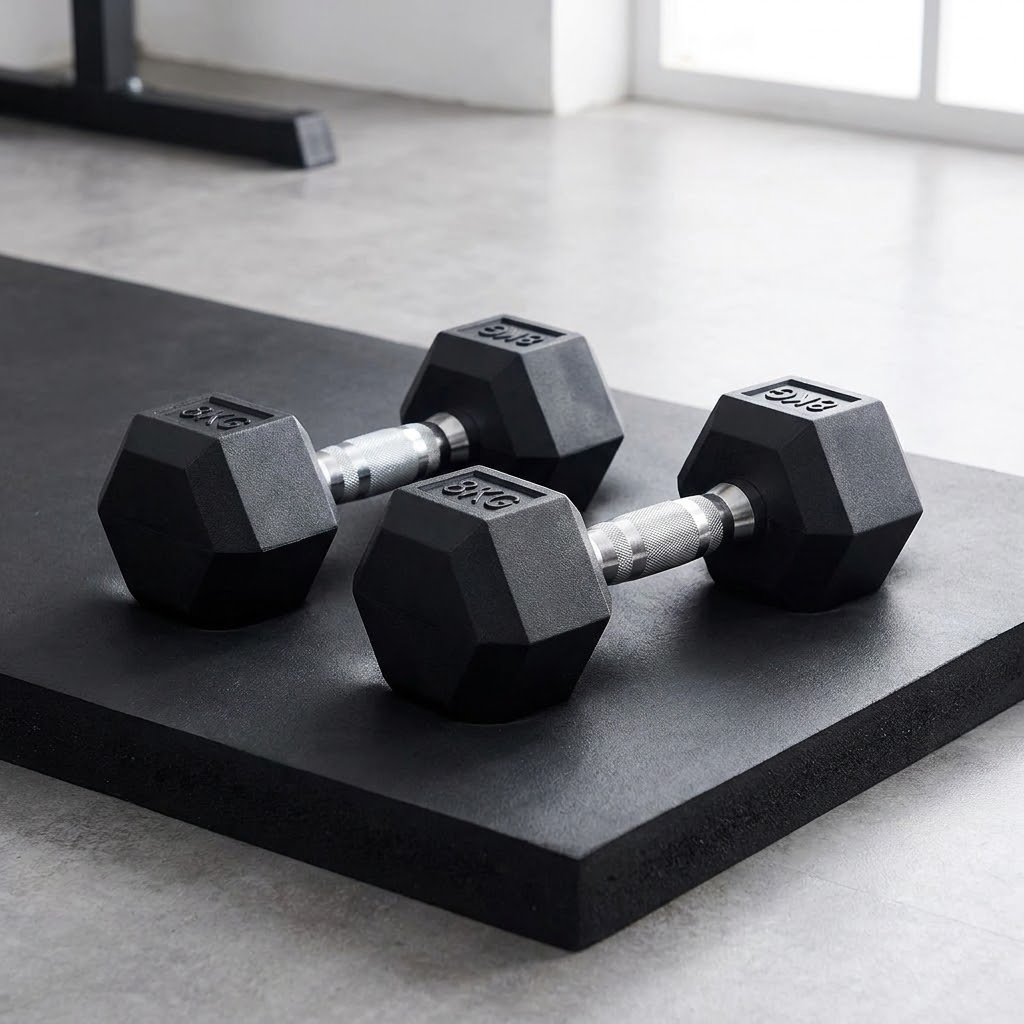
The rubber-coated hex versions usually fit better because they soften set-downs. A dense mat still helps with vibration and noise. Avoiding drops makes the biggest difference.
What Does It Mean For A Dumbbell To Be Hex-Shaped In Daily Use
It means it won’t roll when you set it down. That improves safety and keeps the space tidier. Transitions between sets also feel quicker.
How Much Does Knurling Change The Grip Experience
It changes control with sweaty hands and affects forearm fatigue. More aggressive knurl grips better but can irritate on long sessions. Gloves change the feel, sometimes for the better, sometimes not.
Is It Normal For Rubber Coating To Smell At First
It can happen with new rubber, especially right after unboxing. Airing out for 24–72 hours usually reduces it a lot. Storing them in a closed space from day one can make the smell linger.
On Adjustables, How Often Should You Check The Collars
Before each block of sets and after changing plates. It’s a quick habit. If you hear metal noise or feel play, stop and re-tighten.
What Should You Check About Shipping And Returns When Buying Weights
Return cost and method matter more than with many items. Weight increases return shipping cost. Check whether the seller covers carriage or whether it falls to you.
How Do You Avoid Marks On Laminate Or Delicate Floors
Lift and place rather than dragging. A rubber mat or dense rug protects and also reduces noise. On softer floors, hex corners can mark if you twist the dumbbell on the spot.
Why Can The Weight Feel Different Between Units
Home lines can have manufacturing tolerances. A small difference won’t change training much, but it can show up in very controlled movements. If the difference feels obvious, check the item you received and the return policy.
What Training Style Gets The Most From This Type Of Dumbbell
Block-style sessions that keep the same weight for multiple sets tend to feel smooth. Workouts with constant load changes suit multiple fixed pairs or a very fast adjustable system. Rhythm matters.